Tuesday, August 9, 2022

Random Photos From The Pyramid

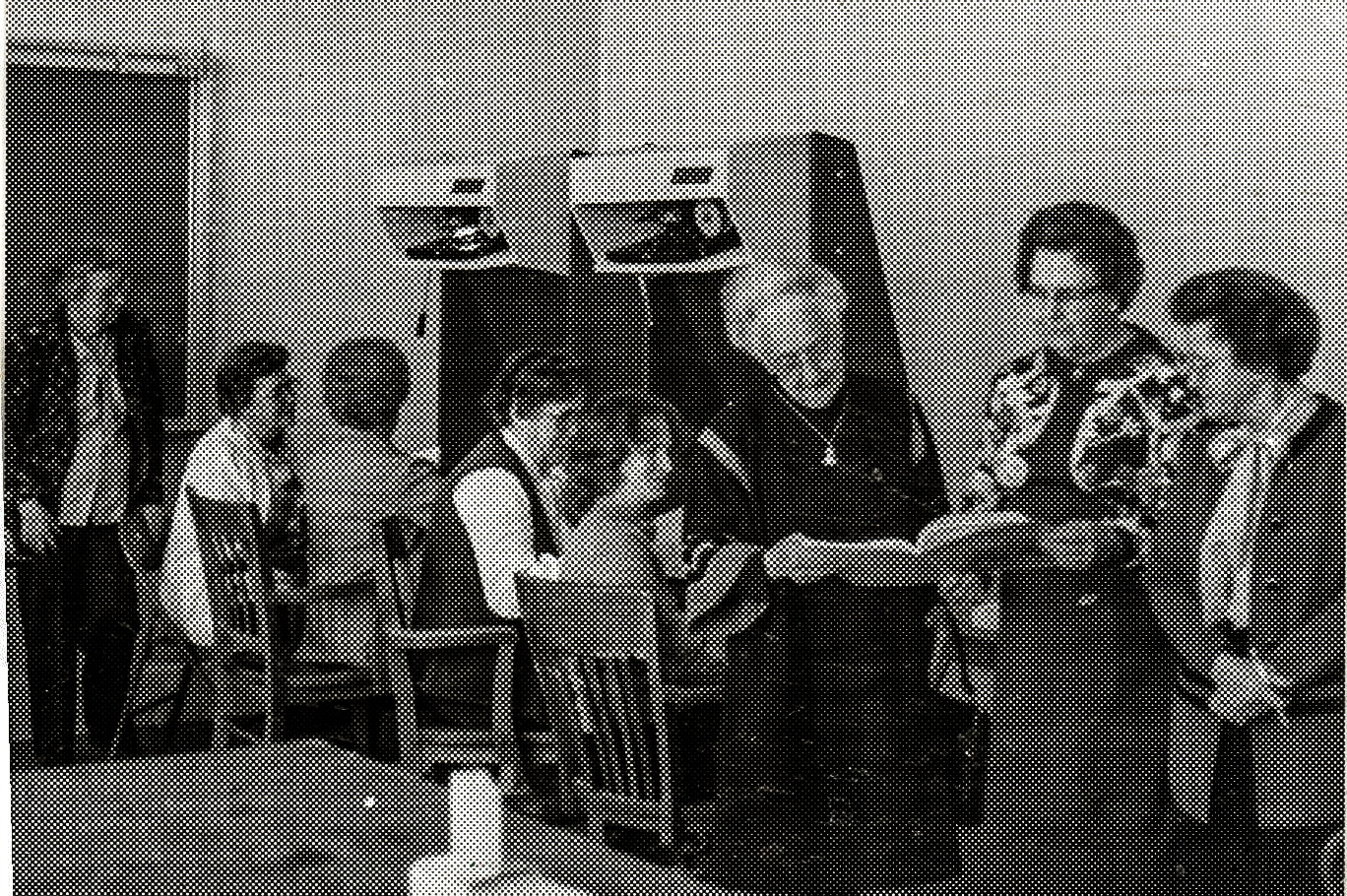
 No Names were given in these photos.

When the Mt. Pleasant Pyramid Office was moved

to Springville these photos were given to us to
share at the Relic Home.  Some do not have names 
or descriptions.  Let us know if you can add
any details. 


Moroni Elementary


Max Blain Painting


Tuesday, August 2, 2022

Leo Larsen's Description of the Flood of 1946~~~Flood Photo1919 and 1946


1919 Flood, Unknown Location
Water wagon in the center now sits in front of the Relic Home


In the photo above, we are looking down first south from state street. 


In response to an invitation from my grandchildren to tell them about my early life, I pondered for a moment, cleared my throat and began--- “Let me tell you about a devastating flash flood that hit Mt. Pleasant and did an untold amount of damage to property and took the life of one man. It was a day I will never forget. It was the summer of 1918.”

 “It was like all hell was turned loose. My brother Vernon and Daddy and I were out at the farm irrigating our alfalfa hay. Rain began to fall, and as we took shelter in our barn, Daddy looked toward the mountains. With a very worried tone of voice, he called our attention to the cloud burst on top of the mountains and told us that it might bring a flood, and a food could mean trouble. He then told us that at about 18 years of age he had witnessed a terrible flood and didn’t want to see another. He then urges us   to hurry and hitch old Tillie, our old bay mare, to the buggy while he set the water for the night and we would go home early.” “In a matter of minutes we were ready to go, and with the crack of the whip old Tillie was off on a fast trot toward home.

 About half way home Daddy stopped the buggy to listen. We heard the fire bell ringing. In those days when there was a fire or an emergency of any kind, the fire bell was rung to warn the people of the emergency. We could also hear a faint roar towards the mountains and Daddy said he was sure there was a flood and it could be a big one.” “As we reached the edge of town, we could see people hurrying in all directions, some in wagons, some on horses and others running on foot. A man on a horse came up to us and said to Daddy, ‘Say, Fred, I don’t know whether you can get home or not. They say nearly every bridge across Pleasant Creek is washed out. It surely is a mess there in the center of town.’” “I was sitting next to Daddy. I grabbed his arm and cried, ‘Gee, Daddy, what will we do if we can’t get across the creek and get home to Mamma?’” “we were soon at 3rd North.

We could now smell the mud. We stopped briefly and talked to the people gathered there. One said, ‘It’s terrible!’ another, ‘What a mess!’ Still another, ‘It’s just like all hell is turned loose, led by the Devil himself!’ Someone said that we might get across the channel on 2nd East by Tobe Candland’s home.” “As we drove up 3rd North, we learned that the bridge by Tobe’s was the only bridge left and that a few people had gone over it. The road for about one block from the bridge was covered with thick mud, ranging from six inches to a foot deep. I grabbed Daddy’s arm again and Vernon held on to me as Daddy urged old Tillie through the water and mud.”

 “As we approached nearer the bridge, a big boulder had been deposited in the middle of the road and Tillie needed extra urging to pass the big smelly thing. When we were directly over the channel, I remember how horrified I was as I looked down into that seething, smelly mass of mud, having the consistency of thick, brown, boiling gravy. Although by now the peak of the flood had passed, we could still hear the bump, bump, bump of the boulders being carried by the force of the heavy water.” “Even old Tillie was glad to get across the bridge, for she lost no time getting us home. I remember how glad I was to see Mama. She was out in the road waiting for us. She was wiping her eyes with the corner of her apron.

 I remember that night the feeling of security as we safely sat down to a supper of salt pork, potatoes and gravy, and fresh vegetables from our garden, with applesauce for dessert.” “After supper Vernon remarked that Daddy surely did set the water for the night awfully quick.

Daddy explained that he was worried. He said he was sure when he saw that cloud burst on top of the mountain that there would be another flood like the big flood he mentioned out to the farm that he had witnessed when he was eighteen years old in the summer of 1893. He said he and his mother and sisters and a brother were on their little homestead farm in the mouth of Pleasant Creek Canyon. They were caught in a cloud burst. Soon they could hear a flood coming down the canyon. His half brother, Andrew Peterson, then about twenty-four years old, jumped onto his horse and raced to town and warned the people that a flood was coming. Daddy then said the rest of the family climbed the hill where the Mt. Pleasant electric power plant now stands and watched the flood come out of the canyon. He said it was like a wall of water and mud twenty feet high rushing forward with a deafening roar. Everything in its path was taken with it. Large trees were simply uprooted and tossed end over end downstream. Huge boulders, some as big as a room, were moved and left down on the farm land below. So great and terrible&nbsp ; was this flood that whenever anything is mentioned or anything happens that reminds him of this experience, it strikes horror into his heart and a sickening sensation in his stomach.”

 “As we were talking, a neighbor came and excitedly asked, ‘Have you heard the terrible news? Lewis Oldham lost his life in the flood. They don’t know where his body is.’ Our neighbor then explained how she had heard it had happened. According to George Rosenberg (Petersen), he and his wife were visiting the Oldham family, whose home is about one mile out of the mouth of Pleasant Creek Canyon. When the first sounds of the flood reached their ears, they went to the main channel, which is a short distance from the house to see the flood. Soon they discovered that a small part of the flood, which had overflowed the main channel, was coming down a little hollow between them and their house, so they hurriedly found a pole to walk across the small newly formed stream. They were all safely across except Mr. Oldham, and as he was crossing, a flush of much more flood water came and covered the pole, and Mr. Oldham slipped and fell into the now suddenly increased stream.

The shock of this sudden emergency in his life either caused him to have a heart attack, or he was so confused he could not act. He merely sat motionless on the thick mud as it carried him down to the main channel of raging water, mud, and rocks. George Rosenberg ran along the bank trying to reach him, begging him to hold out his hand so he could get hold of it and help him out, or grab onto that bunch of willows, but Mr. Oldham just sat dazed and rode the thick mud to his death.” “One week later the fire bell rang again and the people gathered on Main Street and learned that the battered body of Lewis Oldham had been found lodged against a fence west of town near the D. & R.G. railroad tracks. All his clothes had been torn off his body except one shoe.” “The death of Lewis Oldham was of course a great shock to the whole community and added determination to public sentiment to do something better about the floods if they could. But what could they do? Back in 1894 a flood dam was built. Shortly after, a small flood came. The dam diverted the flood to the North and South Fields. A law suit resulted and the city had to pay the damages.

The dam did not solve the problem, it merely shifted the area of destruction. Over the years, several other projects were suggested, but it was not until 1950 that fifteen agencies in all initiated a comprehensive investigation which resulted in a program of flood prevention. This was a program of controlled grazing and terracing the steep slopes and reseeding the range. As a result of this flood investigation, it was learned that there had been twenty floods since the big flood of 1893, or an average of one every three years. Four of these were major floods causing damages into thousands and thousands of dollars. There four major floods occurred in 1893, 1918, 1936, and 1946. The flood in 1946 was a ‘hum-dinger.’

 I will never forget it either. It was the 24th of July. The whole town was ready for a big 24th of July parade. The banks of Pleasant Creek overflowed at the bridge over State Street; diverting the water, mud, rocks, and tree stumps down Main Street. And what a parade that turned out to be.” “I want to mention before I quit two more things about the flood that I remember vividly. The next day after the flood, we rode around town looking at the extent of the damage where the flood had gone. We saw a straw stack down in the middle of Main Street. The flood had taken the straw stack from the yard of Emil Hafen, and floated it down six or eight blocks unmolested, and even a setting hen ’scrook’ was still on top devoted to her task of trying to hatch out the nest of eggs she had secretly stolen away. The other was the ‘digging out’ or the ‘clean up’ which was such a tremendous task that Mt. Pleasant City requested help from the State Government. The State responded by sending a group of convicts, as they were called then, from the State Penitentiary. I remember weeks later as we passed over the bridge one day, a uniformed guard with gun drawn was guarding these convicts. I noticed one convict in particular   who was shoveling rocks into a wheel barrow. When he had a load, he picked up a big steel ball that was fastened to a four foot length of chain which was locked to his ankle. He put the ball into the wheel barrow with the rocks and walked over to dump his load.”

“So, young people, you can understand why I will never forget the devastating floods that hit Mt. Pleasant.” Source: History of Mt. Pleasant U.S. Soil Conservation Service Verlyn Oldham, Leora Oldham, and John A. Peterson Family records and author’s memory. HOLLY

Saturday, July 30, 2022

MY 9TH GREAT GRANDMOTHER WAS ANN POWELL ~~~My Brother Pete or Greg shared this on Facebook


For this July 24th celebration, I looked up on Family Search, to find my first Grandparents to live on American soil. This is what I found.

Ann Powell, burn in Jamestown, Virginia, British Colonial American.
In 1611.
Parents:
Captain William Powell
Elizabeth Wyllis
Captain Powell arrived in Jamestown with the Third Supply mission in 1609.
Ann Powell is my 9th grandmother, on my grandmother Sarah side.
I believe Ann is my first relative to be born on American soil.

Oh, and this is my birthday! Thanks Pete!!

Friday, July 29, 2022

Sanpitch Valley Begins By Indian Request ~~~ Fern Jacobs


In the beginning, there was a beautiful little valley tucked between high mountains of the Wasatch Range.  The Indians and wild animals  had been its only occupants.  Several sparkling mountain streams flowed down the face of the mountains giving life to the land it touched.  Then came the white men and civilization as it is called.

It is impossible to separate the migration from almost every nation of Europe, from the Latter-day Saint Church......especially in the beginning.  They were attempting to escape the persecution of men not believing in the "inalienable right" to worship as they pleased given in the first documents written up by the founding fathers of this new nation.  So it was decided to come west to a spot no one else would want in the dessert surroundings of the great salt sea.

So as the migration continued, there were many who found land and built homes in the Salt Lake and Cache valleys.  After Chief Walker, Chief Sowiette and a band of Ute Indians went to Salt Lake to urge President Young to send "pale faces" south to this Sanpitch Valley to teach the Indians how to build their houses and till the soil, a group of men journeyed down into this valley and were entertained by the Indian tribe.  It was decided that Manti be the first settlement.  They came on November 22, 1849, about 43 families making shelters in dug-outs, wagon boxes, or whatever could be found.  After a terrible winter and infestation of rattle snakes in the spring, they began the arduous task of clearing land, planting crops and building homes.

Among the group who first settled Manti were two men, Madison D. Hambleton, Gardner Potter and their families.  These two men, in 1851, came north to Pleasant Creek Canyon and found desirable timber to be cut.  So they brought out timber, cut shingles and furnished lumber for building the first homes in Allred Settlement ( later called Spring Town ).

In the spring of 1852, under the direction of these two men, a settlement was made on Pleasant Creek about a mile west of where the town of Mt. Pleasant is not situated.  About six families made their way here, built homes and began to till up the soil on the south of the little settlement.  There was plenty pastureland as well as the creek and the sawmill which he and Potter built.

It has been found through research and the stories of a great-granddaughter of Madison Hambleton now living in Mt. Pleasant, that Mr. Hambleton was born Nov. 2, 1811 in Erie, New York, and died July 1901 in Nephi.  He and his family, consisting of a wife and two daughters, had been in Nauvoo when the expulsion took place and came west to Salt Lake and lived there in Cottonwood for a time before coming to Manti with the first group.

Their sawmill was located in Pleasant Creek Canyon just west of the present site of our power plant and supplied lumber for much of the building in the valley.  These two men saw the great possibilities of what was to become one of the big enterprises of the community later on.  At one time, many sawmills dotted our mountains and gave employment to many men with their teams and wagons.

The site was chosen near the slaughter house used for many years by Erickson Meat Co.  This to many seems the most logical place, from the scant information give of our early history.  If anyone knows more about this matter, we would greatly appreciate additional data.  Around this spot are many trees  .... not necessarily the local type.  One can recognize Russian Olive, ash, box elder and the more common poplar, willow and oak.  This suggests these trees having been planted for shade trees.  Also the site was on the bend of Pleasant Creek as it turns north to join Sanpitch River.

Early in July, 1853, the Ute Indians went on the war path because of some killings  the Indians thought unjust.  Chief Walker had changed his attitude toward the whites shortly after they had arrived in the Manti Valley and had been stealing cattle.  Chief Sowiette tried and was successful in subduing Chief Walker many times on behalf of the white men.  But this time the Indians got out of hand so to speak, and word was passed down through the state to expect trouble.  A posse was dispatched from Provo on July 23, 1853 and  after a bloody fight at Hambleton, the posse assisted the settlers to get to Spring Town.  As they left, they turned to watch the flames from Indian torches lay to ruin their little settlement and the sawmill.  Some of the men later returned to harvest what they could salvage of their crops.

The stay at Spring Town (or the Allred Settlement) was brief as they also had been threatened.  As a result, all was moved to Manti.  Here 765 men, women and children lived that winter.

In 1857, as Johnston's Army threatened the "peace to destroy,"  President Brigham Young urged the people to move farther south.  Thus, many more found their way to our little valley of the Sanpitch.  Also, there was a great migration about this time from the Scandinavian countries of LDS converts.  Many came to Ephraim, Manti and Sanpete.  By February of 1859 permission had been granted by President Young to resume a settlement on Pleasant Creek while urging extreme precaution to be taken and a fort built immediately to protect the people in case of another fierce Indian attack.  That spring, a larger group numbering about 20 families  lead by James R. Ivie, Joseph Clement and Isaac Allred left Manti.  The men had come up previous to this time to cut cedar posts and see the lay of the land.

The question was arisen as to why Madison Hambleton's name was not on the list of those who came in the second group. The answer has been found  through research that he and his son-in-law, Abraham Bosworth, had contracted to deliver mail from Manti to Nephi and up to Salt Lake once every week.  So he moved to Nephi and lived there the remainder of his life.  Just another side issue , Abraham Boswell had come over from Nephi  to purchase lumber from the Hambleton-Potter Sawmill and had met and fallen in love with Gerusha Hambleton.  They married in 1853 and lived in Hambleton Settlement until they were driven out with the rest.

As was suggested, a fort was one of the first considerations and was duely built of stone with native rock and mud mortar.  It was 26 rods square, with the walls 12 feet high ~~~ four feet at the bottom and graduated to two feet at the top with port holes to fire at the Indians if need be.  On the inside the fort walls were used as one wall for houses built about 18 feet square.  There were two large gates on the north and south with smaller ones on the east and west, leaving space for Pleasant Creek to flow from east to west through the fort to supply water for them.  This fort was located on the intersection of what is now Main and State Streets;  East about a block, north to about first north, west 40 rods, and south the beginning.

Many lived in the fort for a time until a dugout or houses could be built.  Then they would move out and others would come and take residency in the Fort until their abodes were ready.  Many families came and the town grew rapidly.  Soon there were about 800 inhabitants with about 1200 acres of ground under cultivation.  There was great rejoicing as the fort was completed in July 1859.  When the drums would beat, it was a signal for all to run for the fort as the Indians were coming.

In the center of the fort was built the first community building.  It was used as the very first school house with A.B. Strickland and Mrs. Oscar Winters as teachers.  It also served as meeting house, theater, dance hall and for church services.

There were difficult times but everyone had to be united in the effort of self protection, preservation from cold, hunger and lack of means.  It was a time of bartering....not much money changed hands.  Each one in turn would trade what he had, could raise or could make for something he needed, that someone else could furnish.  The United Order was begun but did not survive long, although in one sense of the word, the exchanging of services, handmade products and food was the basis for their survival.

There was much to do to get everything started.  City lots and farming land were divided and the settlers drew their land by number.  Irrigation ditches and canals had to be dug and rights established which stand to this present time.  We can stand in awe and amazement at the system organized with little or no understanding of the principles of irrigation.

Homes had to be built, trees, gardens and grain planted after the arduous task of clearing the high sage brush and rocks from the land.  Women set up looms and spinning wheels in their homes to make clothes from scratch; that is they would shear the sheep, wash and card the wool, spin and dye it, weave it and then cut and sew it by hand to make wearing apparel for their families as well as knitting stockings and sweaters.

I wonder in this day and age just how many of us would survive long if we had to grow or produce all we had to eat.  It gives us a deeper appreciation of our progenitors the work and diligence they demonstrated.

William S. Seely was appointed the first bishop which also entailed being the mayor and judge, but the town prospered.

They couldn't have all work and no play.  Not long after the fort was completed, there were theater performances staged with wagon covers used as curtains.  There were dances, weddings to celebrate, quiltings and celebrations to liven things up.

Five languages were spoken in Mt. Pleasant, so there was much confusion in understanding each other, but each group studied the gospel in his own tongue and was united in one cause .....their religion.

The first school established outside the fort was "Aunty Hyde's" school, located about one half a block west of the present high school.  She would call "to books ... to books" to begin the day in lieu of a bell.

The town was incorporated on February 20, 1868.

Many businesses needed to be established and all followed in the course as the needs arose such as a printing press, blacksmith shop, shoe makers, dentist shops, doctors' offices, hotels, post offices, banks, leather tanneries, adobe kilns for making bricks, sawmills and flour mills. Space will not permit a detailed outline of each of these projects and names of those responsible given credit.  I hesitate mentioning names for fear of deleting some more important than others.  All assisted each in his own way to make our town a better, more desirable place to live.

President Young sent word for a brass band to be established.  John Hasler, a musician from Switzerland brought instruments from his native land and established the first brass band.  For playing in this band each man was given a ten acre field in the northwest part of the community fields.  It is even yet referred to as the "brass band field".

The different auxiliaries of the church were organized and eventually the town was divided into wards and churches were built.  Dr. McMillian came and established Wasatch Academy in the year 1875.  A school house was built and called the "Simpson School" as Hans Y. Simpson had contributed generously to its being built.  It was located on 200 West and about where the Wasatch Academy tennis court now stands.

In 1889 the Deseret Telegraph branch line was completed to Mt. Pleasant.  1872 found the Indians and white men signing the Black Hawk War peace treaty in Bishop Wm. S. Seely's home which is now our Pioneer Museum on State Street.

The D&RG Railroad started its run from Salt Lake to Mt. Pleasant in the year 1890 as well as the telephone system from Fairview to Mt. Pleasant the following year.  Thus distances and communication brought the world closer to our fair, becoming city.

Mt. Pleasant erected a three story brick school house in the year 1898.  Its bell tolled curfew at nine o'clock each night and again in the morning, people could set their clock by the 8 o'clock bell ringing loud and clear with precise regularity.  The school was to have been named Hambleton in honor of Mt. Pleasant's first leader, but somehow it was changed to Hamilton.

The North Sanpete High School was completed in 1912.  This gave students a chance to continue their education beyond elementary school.  Wasatch Academy now included instruction for children kindergaarten through 12th grade as well.

Mt. Pleasant weathered three major floods in 1893, 1918, and 1946.  All went roaring down through the main section of town distributing mud, rocks and debris on each side of Pleasant Creek, through houses, stores and streets.  In 1918 one life was lost.  A flood dam has now been built to catch the quick run-off so we are hoping the problem is solved permanently.

For many years the sheep industry was the main way of making a living here.  First came the more common variety of sheep which would be taken to the west desert in the winter, returning in the spring to be traded to the mountain tops to graze on the high green grass.  Later, the Ramblette was brought from Russia.  This breed had long wool fibers and were much sought after.

In 1872 Mt. Pleasant boasted of a population of 3000 but times change and many sons and daughters reluctantly left home to make more lucrative living elsewhere.  Lately, many are moving back and the town population is increasing.  Several land development companies are selling lots for homes.  Many people have found out clean clear air, our desirable climate, cool mountain setting very desirable.  As you can tell, I for one, love our fair little city.

Fern acknowledges the book of  "Mt. Pleasant", compiled by Hilda Madsen Longsdorf; "These Our Fathers", compiled by Florence Bagnall and the family of Madison D. Hambleton, Mrs. Thomas Milburn a great granddaughter of Hambleton and "History of Sanpete and Emery Counties".  as her sources for her excellent report.