Wednesday, May 22, 2013

Andrew Madsen's Journal Part IV

History of Andrew Madsen and the Early Settling of Sanpete County

Andrew Madsen Sr.
The following is an account written by Andrew Madsen concerning the settling of Sanpete Valley, the Indian Wars, Rattlesnakes in Manti, and Grasshopper Invasion.
David R. Gunderson  reproduced the original journal printed for private distribution several years ago and is currently working on a new edition to be published sometime in the future.

Mt. Pleasant as the name implies, is a city situated on a pleasant elevation in the north end of Sanpete County about one hundred miles south of Salt Lake City.  The site was selected by the early pioneers of Sanpete County as the most delightful and commending location for a rapid growing commercial and metropolitan city and its rapid growth and development fully demonstrate that the locators were not deceived.


After the Utah Pioneers had secured homes in Salt Lake Valley and were preparing to convert the desert into fruitful fields, a company of about fifty families from Salt Lake City and Centerville was organized and started late in the fall of 1849 for Sanpete Valley.

Among the original pioneers were the following ment, Seth Taft; Charles Shumway; D.B. Huntington; Barney Ward; John Lowry Sr.; Titus Billings; G. W. Bradley; Albert Petty; O.S. Cox; Albert Smith; Jesreel Shoemaker; Cyremus H. Taylor; Azariah Smith; Abraham Washburn; John D. Chase; Isaac Chase; Sylvester Hewlett; Wm. Potter; Gardner Potter; James Brown; Joseph Allen; Madison D. Hamilton; Wm. Richie; Harrison Fugate; Sylvester Wilcox; Gad Yale; J.Carter; Isaac Behunnin; Wm. Mendenhall; Edwin Whiting; Wm. Tubbs; John  Hart; John Baker; John Elmer; John Butterfield; Amos Gustin; John Cable; and W.K. Smith.

The pioneers cleared roads, built bridges and succeeded in passing through Salt Creek Canyon without a great deal of hardship.  They continued to move on southward in quest of a suitable location until the present site, Manti, was reached; thus being selected the frontier town of central and southern Utah.

The first camp was pitched on the stream now known as City Creek on the evening of November 22nd, 1849.  A few days later snow began falling and continued until the ground was covered to a depth of three feet.  The colony then changed quarters to the south side of Temple Hill where thy built dugouts which were occupied by some, while others remained in their wagons, on the hillside.

The Indians camped around the colony greedily devouring the dead animals which had died for want of food.  Th following Spring when the snow began melting and the days became warm, the peaceful colony were one day interrupted and startled by a continuous hissing and rattling of rattlesnakes which were found to exist almost everywhere throughout the homes of the settlers in boxes, cupboards, beds, etc.  A vigorous fight was at once inaugurated and hundreds were slaughtered in one night.

Of the two hundred and forty head of cattle brought in by the colonists less than one half were alive in the Spring, owing to the heavy winter.

The colonists were fortunate in having a fair supply of seed for planting.  The soil proved productive and crops began growing early, thereby giving some green vegetables for food within a short time after planting.  Ditches were made and water was easily taken out of the creek.  The crops grew and homes were erected until the settlers soon became comfortably situated.

About July 1st, of this year, Indian Chief Walker and a band of seven hundred warriors of the Sanpitch Indians with their squaws and papooses returned from a successful foraging expedition against the Shoshones and camped in a semi circle around the Colonists, remaining during the year.  They proudly exhibited their trophies of war, held frequent scalp dances and forced the squaws and children prisoners to dance with the scalp of their kindred attached to poles being significant of humbleness.  While thus being amused Indian Chief Walker and his leading men would tatalize the Colonists and threaten to treat them in a similar manner.  These fiendish actions would be kept up all night long, while occasionally a wild shriek or yell would burst forth from out of their camps.  The small Colony of Pioneers would lie in their beds not knowing whether or not their lives would be spared from the hands of the blood thirsty Indians until morning

President Brigham Young visited the Colony in August and christened the town Manti (in honor of one of the noted cities mentioned in the Book of Mormon).  The County he named Sanpete afte the Indian tribe then inhabiting this section, the chief of whom was Sanpitch.

A School house was erected of logs under the direction of Isaac Morley, Jessee w. Fox, and Mrs. Mary Whiting was installed as the pioneer teachers and the children were furnished the best opportunities of obtaining an education that the colonists could afforf.

A small grist mill was erected at the mouth of the Canyon by Phines W. Cook.  The only mill used previous to this was a large coffee grinder, which was passed from house to house as needed.

An act of Congress organizing Utah Territory was approved September 9th, 1850 and Brigham Young was appointed Governor.  A provisional form of government was instituted and Isaac Morley and Charles Shumway represented Sanpete County in the firs Legislative Assembly.  The Legislature met in Salt Lake City and passed an Act incorporating Manti which was approved February 5th, 1851.  Sanpete County was organized by authority of an act of the territorial legislature passed February 3rd, 1852 and Manti was made the County Seat.

In 1853 a Company of Veterans inaugurated under the direction of Madison D. Hambleton proceeded to move northward for the purpose of establishing a new colony and located on the stream just below where Mt. Pleasant is now situated.  The stream was named Hamilton (now Pleasant Creek) and the settlement was named Hamilton, giving honor to the name of their leader.  Early in March they built a sawmill at the mouth of the canyon and at once commenced cutting timber and sawing lumber for the purpose of building houses.  Work was at once commenced in clearing land, sowing and planting crops, building homes and they soon began to prosper.

During the summer the Indians were seen skirmishing about in a sulky, sullen manner, showing a spirit of dissatisfaction and the great Indian Chief Walker, continually gave indications of a desire to stir up trouble between the colonist and the redskins, notwithstanding his treacherous pleadings for white neighbors to settle among them and teach them the principals of a peaceful and happy government.  This bloodthirsty chieftan's purpose was only for more victims to slaughter.

An aged, diplomatic chief, named sowiatt, pleaded with his people to let the white men build homes and dwell with them in peace and his counsel generally prevailed, because he was reliable old Chief and desired peace, while Walker was very treacherous and could not even be trusted by his own tribe.  Walker desired the scalp of Charles Shumway and at last determined to make an effort to get someone to torture so that he could frighten his pale faced friends.

One day in the early summer, while most of the able-bodied men were at Hamilton assisting M.D. Hamilton, or in Salt Lake City after supplies, Walker and a band of painted redskins entered Manti and demanded the body of Shumway and others  against whom they had imaginary grievances, that they might be tortured and put to death.  This demand was not granted and an attack was threatened.

The old men and  women, also boys who were remaining at home, determined to resist the savages at once making preparations for battle, but the leader Sowiatt conquered and hostility ceased.  This vexed and humiliated Walker so much that he abandoned his tribe and went into the mountains alone, hoping that his actions would draw the warriors' affection from the Sowiatt to him.

July 18th, Alex Keel was killed at Payson, Utah by Arropine, a prominent Indian Leader.  This act caused the breaking out of the noted Walker Indian War and on July 19th, a band of blood-thirsty Indians fired upon guards at the Hambleton sawmill at the mouth of the canyon, but were forced back.

During the night a raid was made by the Indians upon the cattle that were corraled at Hambleton trying to frighten them away, but they were fired upon by the guards and tow of the Indians were killed.  The other Indians made their retreat, carrying with them their dead comrades and leaving behind them a gun and blanket which was covered with blood.  The following morning the veterans with their families, cattle and  provisions made a retreat to Spring Town for safety, where James Allred and about fifteen families had settled and built a fort in 1852.

While the settlers were rushing to Spring Town for shelter, their wagons, lumber and sawmill at the mouth of the canyon were burned and destroyed by the raging Indians.

The following day raids were made upon the herds of Manti and several horses and cattle were stolen and driven into the mountains.  A similar attack was made  on the range near Neph and Wm. Jolley was wounded by Indians at Springville.  The colonists became alarmed and at once organized for a defence of their homes and families.

A company of fifty militia men under Capt. P. W. Conover were sent out from Provo to assist the settlers at Hambleton, who were very few in proportion to the savages.

The troops met the savages on July 23rd, at Hambleton's Mill and engaged in a fierce bloody battle resulting in the death of six warriors and a complete routing of the Indians, who fled to the mountains.

By the aid of the militia, the settlers of Hambleton harvested their crops and returned to Spring Town, but the Indians were on the alert and did not wait long to recruit from the previous engagement.  One Sunday, Spring Town was attacked and all the horses and cattle were rounded up and started for the mountains; the the herders were fired upon and fled to the fort for protection, while the Indians rode away, yelling and waving their red blankets in defiance.  A posse was at once organized and soon on the trail of the Indians for the purpose of rescuing their cattle and horses.  When they neared the herd, some of the Indians broke back towards the Fort as if to attack their wives and children and thus the posse were compelled to return and protect their homes and families.  When they neared the Fort, the Indians fled to the mountains, joining those of their tribe who were rushing on with the cattle.  Two of the herding ponies escaped from being stolen by the Indians and returned to the Fort, thereby giving the settlers the means of communication with Manti, the only point from which relief could be expected.

A messenger was dispatched immediately and by riding west across the valley, then south, succeeded in evading the vigilant Indian scouts.  The express Messenger reached Manti at about three o'clock in the afternoon, making one of the quickest trips ever recorded.

When the news reached Manti, drums were sounded and their cattle was at once rounded up and sentries posted at all prominent points while hasy preparation was made for sending relief to Spring Town.

Twelve yoke of oxen and wagons, accompanied by teamsters and twelve mounted guards left as quickly as possible, arriving at Srping Town at daylight the following morning.  The colonists were taken to Manti and given quarters in a fort which had been erected that year.  The entire population of Sanpete at this time numberd only 765 men, women and children, who remained and fortified themselves in the Fort at Manti until the Spring of 1854.

Guards were kept at the little mill at the mouth of the canyon to prevent an attack from Indians until sufficient flour could be ground for the winter supply, but on October first, both Miller and Guard, John E. Warner, and Wm, Mills were killed by Indians who made their escape, leaving the mill undisturbed.  The indians, however, returned later and burned the mill, claiming that it was done in retaliation for the shooting of five Indians, who were convicted of stealing cattle and ordered executed by Major Higgins.

A few days previous to the killing of the Miller and the Guard, four ox teams loaded with grain started for Salt Lake City, being followed a few hours later by twelve horse teams hauling provisions, feed and a number of Saints enroute to the semi-annual Conference.  Arrangements were made for camping at Shumway Springs (now known as Duck Springs near Moroni) but the first teams kept going until they reached Uintah Springs (Now Fountain Green),

Before the rear team reached camp the Indians made an attack, killing all the drivers, Thomas Clark, Wm. E. Reed, Wm. Luke, and James Neilson driving away their oxen.  Having no use for the grain the savages cut open the sacks and scattered the wheat over the ground to complete their work of destruction and show their hatred for the white men.  The mangled bodies of those unfortunate freighters were picked up by the rear companhy and removed to Salt Creek (now Nephi) for interment.

Several Indians watched them from the  cover ofcedar and brushes on the mountain slopes, making frantic gestures of joy over their massacres.

A few days previous to this Capt. J. W. Gunnison a United States Topographical Engineer and a corps of seven men, including W. Potter of Manti, were killed by Indians while in camp on the Sevier River, near where the City of Gunnison is now situated.

During 1854, the Indians confined their depredations chiefly to southern Utah, but frequently invaded the herding grounds ofSanpete, stealing both cattle and horses and making good their escape.

On January 20th, 1855, Walker, the great Indian Chief died at Maddow Creek.  Arropine, who had begun the work of exterminating the white men became Chief of Walker'stribe and  made a treaty of peace.  Thus the Walker Indian War was ended.

On May 21st, 1855, A.N. Billings and a company of forty men were sent from Sanpete to settle the Elk Mountain country and make peace with the Indians.  They crossed the Grande River and erected the Mormon Fort, where Moab is now located.  In August some of the colonists returned to Manti and on September 3rd, the Indians made an attack, killing Wiseman Hunt, Edward Edwards, and Wm. Behunin and wounding Capt. A.N. Billings.  the colonists entered the Fort, which the Indians immediately surrrounded, giving notice of their intentions to kill all the inmates.

The next day some of the Chiefs interceded in behalf of the white men and the imprisoned colonists were permitted to return to their homes with the understanding that the settlement should be abandoned.  The request being complied with the colonists then returned to Manti.

In the Spring of 1854, R.N. Allred and R. W. Allred, together with fifteen families left the Manti Fort after remaining in the Fort over winter, where thy had stayed after being driven and forced away from Spring Town by the Indians the fall previous and located on Pine Creek seven miles north of Manti, the site afterwards being called Ephraim.  Isaac Behunnin had built a home on this creek as early as 1851, but had to return to Manti for protection from the Indians.  This settlement was really the first successful attempt towards forming a colony outside of Manti.  Several additions were made to their number during the fall of 1854 by families of Scandinavians from Salt Lake City.

The grasshoppers invade the farms in 1855 and 1856 and destroyed almost all crops, causing much hunger and starvation.  In December, 1857, a general jubilee prevailed through the colonies because of the abundant crops, which had been harvested, having overcome the two previous years of hardships.


To be continued ............

Tuesday, May 21, 2013

Heritage Day at Spring City ~ May 25th


Osral Allred   posted this lovely painting, which he'll contribute to the 
Art Squared Auction at Heritage Day in Spring City May 25th

Monday, May 20, 2013

WANTED ~ YOU HAVE 'EM ~ WE WANT 'EM


Keep our blog alive.  We need new material.  We need your histories, your photos, your memories.  Preserve them for generations to come.  Right here.  Our blog followers are growing constantly.  We have almost 100 hits per day.  Some get our blog over google reader.  Some come directly to the website.  Some search for names, places, events.  We can help.  We also want you to visit our Relic Home and Blacksmith Shop in person at 150 South State Street Mt. Pleasant, Utah.  You'll be surprised and delighted with what we can share.  


Sunday, May 19, 2013

Mt. Pleasant Relief Society Sisters Letter to Mary Ann Young ~ August 1877


Mrs. Mary Ann  Young
    And  others of the family,
Beloved Sisters
     The painfull intelligence has reached us this afternoon of the decease of your beloved husband and father, and our much respected Pres. Brother Brigham.

He has run his race and finished his course and gained for himself an inheritance among the Gods.

Dear Sisters and children, we the sisters of  Mt. Pleasant do most deeply sympathise with you all under this your most trying bereavement.  And pray God our Heavenly Father that you may receive strength equal to the affliction you have been called upon to pass through.

Brother Brigham has closed his career with honor and dignity.  And like a shock of corn fully ripe has laid down to await a glorious resurrection. May we who are here behind try to adhere to counsels and teaching, strive to emulate his example.  And may our whole future be spent in meekness and humility that when our turn comes to pass behind the veil it may be said to us as to him, "Well done good and faithful servants, enter then into the joy of thy Lord".

Your Sisters in the Gospel
 MVC Morrison, Pres
Helena Madsen, couns.
Christiana Peel, couns.
Louisa K Hasler, Secty

Thursday, May 16, 2013

Our Friend and Contributor Judy Malkiewicz


I'm busy SCANNING SCANNING SCANNING genealogy files that my grandmother and mother left me. I've practically moved my entire office into my living room. I've made several contacts with relatives that I've never met and I'm send it all off to them. Learn more about Judy by clicking her links:

Wednesday, May 15, 2013

BURKE MCARTHUR HONORED BY UTAH PRESS ASSOCIATION ~ 1975


Newpapers of Sanpete County

Saga of the Sanpitch  1980
NEWSPAPERS OF SANPETE COUNTY
Eleanor P. Madsen
Ephraim, Utah
Professional Division
First Place Historical Essay
“When the last editorial is written
And the ink is smoothly dried;
When the papers have been folded
And addressed and wrapped and tied;
When these two who stood together,
Though days were dull or bright,
Will have closed the office door at last
For the long, eternal night;
May the thoughts and words and phrases
Of the things they dared to say
Be their unquestioned ‘press card’
In that land of endless day.” 1

This poem might well be a eulogy to all the editors of early Sanpete newspapers. We picture two
toiling together with laborious hand methods, the only available tools in those early days before the turn of
the century, when every letter was set separately, all the inking done by hand, and the press operated by hand
or foot power.

The old print shops are now forgotten as newer and faster methods have replaced the archaic one.
Even the Linotype is now becoming obsolete as more modern, electric machinery performs many tasks with
minimum effort for the editor and his staff.
Survey after survey has proven that no other medium is so thoroughly read or listened to as the
hometown paper. Indeed, since April 24, 1885, when the Home Sentinel, the first newspaper published in
Manti by James T. Jakeman, 2
residents have eagerly scanned local publications for personal and social items,
odd bits of national and state happenings, and other copyrighted material. Three items taken from the first
editions have a bit of humor for the reader today.
“Salt Lakers are having strawberries and cream and our Manti, more rain.”
Ft. Green Items: “The stores of this burg are paying 6 cents per dozen for eggs and 42 cents per bushel
for wheat.”

“Wide brimmed hats are very fine as substitutes for umbrellas in the sun’ but people do say they are
out of place on the front seats of the theatre. He (she) whom the coat fits let him put it on.
Within five years two other local papers appeared. In June, 1890-, James T. Jakeman issued the County
Register in Ephraim 4, and in November, 1890, A.B. Williams and J.M. Boyden published the Mt. Pleasant
Pyramid. 5.in 1891 the Ephraim plant was purchased by M. F. Murray and Company. The name was changed to the Enterprise 6
by which it was known through the management of ten editors, Ward Stephensen, John
Christiansen, Fred Jorgensen, W.E. Thorpe, Oscar Neilsen, a. E. Britsch, Nephi Christensen, Curtis Mitchelson
and Roscoe C. Cox. 7 Mr. Cox began publication in 1925 and was editor and manager for 35 years, the longest
period for any of the publishers. 8

The plant was located first in a building at 30 East Center Street. It was
later moved to the basement of the Ephraim Bank building and then to 56 North Main (Roscoe Cox Home).
The Mt. Pleasant Pyramid was purchased from Mr. Williams and Mr. Boyden by Burke McArthur in
1911. Mr. McArthur bought the first Linotype machine in Sanpete County, and continued to make
improvements in the plant until it was modernized throughout. About this same time, he also purchased a
permanent home for the paper, the building which it now occupies. 9

“The price of the local paper was combined with the needs of those concerned in Sanpete; it was
printed in kind; in terms of so much hay, so many potatoes or so many cords of firewood.” 10 Rates of
subscription listed in the Mt. Pleasant Pyramid Friday morning December 29, 1912, were: one year - $1.50; six
months - $.75; three months - $.50.
Editorials played an important role in the early newspapers, serving to arouse interest and to motivate
the people to action on local issues. They also helped shape policies and form public opinion on vital matters,
proving that the ‘pen is mightier than the sword.”
Mt. pleasant also had a small newspaper called The Call, which was edited and published by Christian
N. Lund, Jr., in a plant on the south side of the street at about 270 West Main. Mr. Lund operated his plant
first in Salina, then in Mt. Pleasant for a total of about ten years before moving to Salt Lake City, where he
continued in the newspaper business with a paper entitled The Progressive Opinion, which maintained a
circulation in Sanpete County for many years.

The Home Sentinel in Manti with J. T. Jakeman, Manager, and Dan Harrington, Editor, was re-named
The Sentinel in 1890 when H. H. Felt leased it. On October 13, 1893, under lease to Joel Shomaker, the paper
acquired the title of the Manti Messenger, which has continued since that time. 11 Other publishers to the
year 1929 year were J. L. Ewing, Peter A. Poulson, M.A. Boyden and S. Peter Peterson. 12
An item from the January 26, 1894, issue of the Messenger gives an insight into law enforcement in the
city.

“Sleigh riding has been the order of the day for some time. Some of the boys were a little too fast to
be within the limits of the city ordinances last Sunday and as a result were fined on dollar each.”
A rival paper in Manti, the Sanpete Democrat, was first issued in June, 1898, 13 and in 1902 was known
as the Sanpete Free Press with L. A. Lauber, publisher. It sold for $1.00 per year. 14 A local item in the January
7, 1902, edition reads as follows: “The rabbit hunt on Monday between Manti and Ephraim resulted in favor of
Ephraim by a score of 186 to 155….”
In the south end of the county, the Gunnison Valley News recorded this item:
“The great event came when a man named Camp came with a press and started a local weekly, which
he called the Gunnison Gazette. It was housed in a little building that stood on the north side of Center street
next to the school lot. After a short while, in 1909, he sold it to Nephi Gledhill. It was an old Washington hand
press. It took the family to get the paper out. The children would go after school and set type. When the
bank building was finished it was moved into that basement.”1513
In 1919 the paper was transferred to Howard W. Cherry, who modernized its operations and changed
the name to Gunnison Valley News. Subscription rates were $2.00 a year and $1.00 for six months. 16

Many
issues of the paper that year carried items of soldiers returning from World War I. the paper for July 4, 1919,
gave a detailed announcement of a patriotic program followed by foot, auto and horse races, boxing, baseball
and dancing, saluting the soldiers with the greeting: “Welcome, Soldier boys, the town is yours. Let’er bust.”
Prior to the editions of the local papers in the various communities in the County, the readers of early
news were able to obtain the Daily Deseret Evening News, which began as a weekly journal in 1867. “It
contained a variety of material, including speeches, lectures on scientific subjects, messages from church
heads, legal notices, local news, messages from the settlements reporting their progress, etc. It was always
part of the settlement. It gave the people a sense of contact with the world, a basis for comparing their lives
with that of other settlers and made them feel part of a large and important body. Everybody read the
News.”17 In this News, September 22, 1883, there appeared “more than two columns of the full size
newspaper, the names of all the stake presidencies and ward bishops for all the organized stakes of the
church.”

The Salt Lake Weekly Herald (Tribune) also found ready circulation in Sanpete County, 18
In listing early day publications, the Snowdrift, with Roscoe C. Cox as its first editor, provided
happenings and literary contributions from students at the College as well as being a media for training and
developing of talents in the news field.

The local papers were a powerful force in uniting the thoughts and actions of the people in the
communities. In giving due credit to the editors and publishers of Sanpete newspapers in the 44 years from
1885 to 1929, we are aware that they put the good of the people before their personal gain. First and
foremost was their love of the work, hearts that felt and understood the pulse of the community, men who
dared crusade for a better world, sometimes unappreciated, sometimes misunderstood, but never ceasing
their efforts for the printed page until that final copy was edited. These hands that set the type, turned the
presses and folded the papers will not be forgotten. Their words will echo and re-echo from the yellowed,
brittle pages, reminding us of conflict, tragedy, of joy and faith and hope, of life, as it was in our Sanpete
towns through these years.
Sources: 1
Christie Lund Coles, “To Mother and Dad”, Newspaper clipping.
2
These Our Fathers, p. 36
3
Snow College Film Library, Home Sentinel, 1885.
4 W. H. Lever, History of Sanpete and Emery Counties, p. 287.
5
These Our Fathers, p. 103.
6 W. H. Lever, p. 287.
7
These Our Fathers, p. 86.
8
Armanda Cox, Personal information.
9
These Our Fathers, p. 103.
10 Albert Antrei, “The Salty Old Press of Sanpete County”, Enterprise, 1979.
11 Mt. Pleasant Pyramid, December 29, 1912.
12 Antrei.
13 Song of a Century, p. 123.
14 W. H. Lever.
15 Sone of a Century, p. 123.
14 W. H. Lever.
15 Snow College Film Library, Sanpete Free Press, January 7, 1902.14
16 These Our Fathers, pp. 156-157.
17 Snow College Film Library, Gunnison Valley News, May 2, 1919.
18 These Our Fathers, pp. 156-157.
LAND OWNERSHIP IN EARLY FAIRVIEW

Tuesday, May 14, 2013

Song: Mount Pleasant City ~ Lyrics Adapted from C.C.A Christensen and Taken from History of Mount Pleasant ~ Musical Arrangement by Duane P. Hansen 2013


SOURCE OF SONG
I write songs as a hobby. One day I was looking at the Relic Hall Website (love it--what a treasure) and was reading some of the Saga of the Sanpitch items. I got motivated about this little tune (attached files for review). The words are adapted / modified from a song-poem by C.C.C Christensen found on Page 193 of The History of Mt. Pleasant by Ms. Hilda Madsen Longsdorf (I believe she is my relative through the Madsen line and my Grandmother Asenteth Swensen Carlson). The music is intended to be rising, stirring with a strong beat to capture the nature and character of our Mount Pleasant pioneers.

HONOR MY ANCESTORS
Another motivation was to honor my parents and ancestors. The understand the Carlson's, Beckstead's, Hansen's, and Poulsen's, Madsen's helped build and serve in the history of Mount Pleasant City.

YouTube Video at the following LinK:


Sunday, May 12, 2013

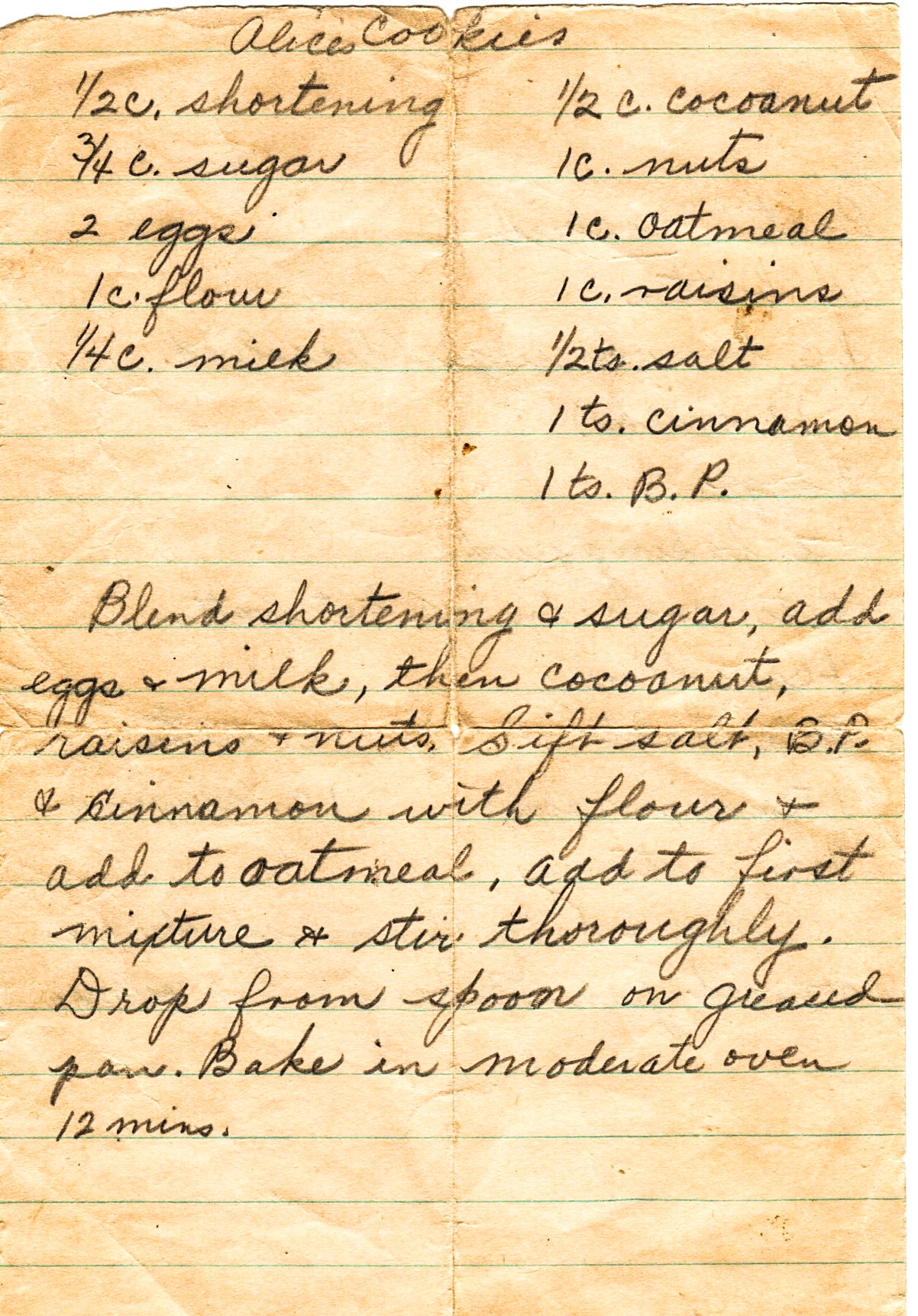
To Nourish and Strengthen Our Bodies ~ A Cookbook by Alice Peel Hafen


At the age of 92, Alice Peel Hafen (my sweet mother-in-law), wrote this cookbook as requested by family and friends who had enjoyed the many tasty dishes she had prepared over the years.  With the help of Marc Smith, a nephew she was able to put this collection together.  It not only contains her treasured recipes, but also a wealth of photos and memories she wished to share.  This blog has already shared some of these with you.   Here I will include the Introduction to her book, her personal history and a few of the pictures contained in the first few pages of  her book.  


More to come..........

LinkWithin

Related Posts Plugin for WordPress, Blogger...
Genealogy Quote

"In all of us there is a hunger, marrow-deep, to know our heritage - to know who we are and where we have come from."

~Alex Haley

L.D.S. Temple

L.D.S. Temple
Manti Temple

Pioneer Photos and Histories Wanted

Do you have Mt. Pleasant Pioneer Photos or Histories to share? We will share those photos and histories here and also at the Relic Home. You can e-mail them to pandk@cut.net or drop them by the Relic Home.