Showing posts with label Larson. Show all posts

Tuesday, February 18, 2025

GROUP CELEBRATION ~~~ From Our Archives


GROUP AT A CELEBRATION (titled on the back)
Names on the back, but not in order: John Nicholson, Knute Thurklesen, Peter Fredericksen, Peter Monson, Oscar Barton, Joseph Johansen, Geo Larsen, Joseph Wise, Dolph Bennett, Mason Larson, Elijah McClenahan, Thomas Ivie, John Stansfield, Ellertsen, Ellisher Brandon, PeterA. Larsen, Charles Averett, James D. Meyrick, Edward Zabriskie

It is my guess that this was a re-enactment with white men dressed as Indians. The names listed were some of the first settlers to Mt. Pleasant. Also of interest is the posters in the background advertising "Ten Nights in a Bar Room".

Friday, July 19, 2024

BEGINNING OF THE TURKEY INDUSTRY IN SANPETE COUNTY (part 3) ~~~Additional photos from last two posts.

 In 2013 Moroni Processing celebrated its 75th Anniversary and published a memory book with stories and pictures.  Nancy Garlick did much of the research and had it copyrighted.  We asked her for permission

to include some of the highlights of this book on our blog.  She said Yes! Over the next few days, we will post many photos and stories to give our readers fond remembrance and further knowledge of this Sanpete History.


Tuesday, August 1, 2023

Sarah Ellen Thompson Pritchett Wilson ~~~ Pioneer of the Month ~~~ August 2023


Levi Franklin Pritchett 


The Pritchett Family

 The family name of Pritchett originated in Wales and according to all known records, is a name of great antiquity, having an unbroken male descent from the princes of Wales, between Wye and Severn, a dynasty that lasted from the time of Caradoc Vraich, who reigned in 520 AD to the death of Bleddyn, the last prince in 1190 AD. 

During this time the family became very numerous and began to spread out into other parts of the British Isles. Many went into Ireland and the middle parts of England. From the period of the close of the reign of Bleddyn until about the middle of the 15th century, little is known about the family as few or no records were kept. It has to date been impossible to bridge the gap between 1190 and the first Pritchett who came to America. 

The records of Virginia Historical Society record that Miles Pritchett came to America on a sailing ship, the Star, in the year 1612. This was eight years before the pilgrims landed at Plymouth Rock. Apparently, he settled in Jamestown, Virginia, and from there the family spread out into the area known at that time as the Virginia land grant. This area comprised what is now known as Virginia, Kentucky, Delaware, Tennessee, and parts of Georgia. The Pritchetts were also in Delaware and Maryland as early as 1669. It is in this area that most of the Pritchett family are found today and from which the branch of our family originally came. It has been difficult to trace a direct line of Pritchetts beyond the middle of the 17th century. Most of this difficulty is the direct result of the Civil War. During the various campaigns that the northern troops made into the South, many of the churches where the records of our people were kept were burned and it is therefore impossible to verify many of the stories and much of the information that has come down from generation to generation and from family to family. James Mitchell Pritchett, the father of Leonidas Pritchett, was born in Smyth County, Virginia on June 1, 1817, and later married Mary Ann Fulcher. To them were born nine children: William, Leonidas, John, Nancy, Thomas, Levi, James, Rebecca, and Douglas. Douglas died at the age of three years but all the other children lived to marry and raise a family. William, the eldest, married Peggy Heneger. Leonidas married Elizabeth Ann Heninger. John married Mary V. Hambrick. Nancy married John Floyd Young. Thomas married Lovina Chadwick Heninger, and later, after her death he married Ida Huntsman. Levi married Ellen Thompson. James married Kate James. Rebecca married Lindsey Brady. 

The descendants of these eight children have spread into nearly all the western states. Many of them have at one time or another become interested in their genealogy and have made an attempt to find the records of their families. As a result, there has been a tremendous duplication of effort and in many cases, each one has interpreted the existing records in their own way, which has resulted in many conflicting claims and dates of births, marriages, and deaths. Written by La Von Fuller Shreeve; date unknown. Found in papers belonging to Hazel Smith Carver, a great-granddaughter.


Wilson's Blacksmith Shop was located on the south side corner of State Street and Main, where the Pharmacy is located now. You can see main street buildings in the background.
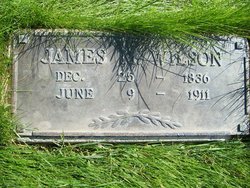
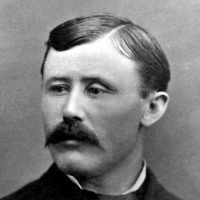
James Wilson
Blacksmith


James M. Wilson
BIRTH: 25 Dec 1836
Muskingum County, Ohio, USA
DEATH9 Jun 1911 (aged 74)
Mount Pleasant, Sanpete County, Utah, USA
PLOTA / 93 / 3 / 2MEMORIAL ID141394  


Five Generations: Front--Mina Pritchett, Myrna Pitts, Sarah Ellen T. Pritchett Wilson. Back--Elaine S. Pitts, Vivian P. Smith


Friday, July 1, 2022

Lars Pearson and Bengta Akesdotter Pearson ~~~ Pioneers of the Month ~~~ July 2022


Lars Pearson
Born: 17 August 1823
Billeberga, Malmohus, Sweden
Parents:

Pehr Hillersson
3 April 1778 – Deceased • LHQ4-XBX


Hannah Larson
6 February 1790 – 2 November 1842 • 27S6-PV3
Lars Death:

22 November 1902
Mount Pleasant, Sanpete, Utah, United States


~~~~~~~~~~

Bengta Akesdotter
Born: 9 November 1823
Norrvidinge, Malmöhus, Sweden


Marriage: 28 December 1849
Billeberga, Malmöhus, Sweden
Parents:
Ake Paulson Pedrillo
Anna Jonsdotter

Bengtas Death:
2 April 1903
Mount Pleasant, Sanpete, Utah, United States


Children:


 • 


Johanna Pearson
1850–1934 • K2HQ-9RZ


Anna Larsson
1851–Deceased • MM9F-HR3


August Pearson
1852–1931 • KW88-D6G


Peter Hiller Pearson
1855–1903 • KW87-R1M


Anna Larsdotter Pearson
1858–1936 • KWJF-2N7


Andrew Hiller Pearson
1860–1938 • KWJF-2NY
3 September 1867
Billeberga, Malmöhus, Sweden


Neils Pearson
1867–1946 • KWZC-HK4
They Immigrated to the United States in 1873


Monday, May 10, 2021

The McClenahan Mill


The following comes from
"THE MCCLENAHANS, Mt. Pleasant, Utah
James Kemp McClenahan
and 
Catherine Kidd McClenahan 
Souvenir for Centennial 1959
Ellice McClenahan Carter


In 1908  we displayed various artifacts gathered over the years from the various mills once located in Mt. Pleasant. This article was found on the internet. It tells of a very important part of Mt. Pleasant History.

THE McClenahan MILL

The McClenahan Mill was built according to certain specifications recommended by the territorial authorities. It was a two-story building with a granary and ample space for wheat and bins for graham, cornmeal, and ground feed, also a 20-foot reel for bolting flour. The mill, which was equipped with two elevators, operated with water power from Pleasant Creek, using a Leffell wheel, a wooden flume, and penstock. The flour was good and found a ready market with quantities being shipped to Salt Lake City, San Francisco, and Pioche, Nevada. It was not long until the mill operated on a twenty-four-hour basis and required three extra men on the force. One policy of the McClenahan Mill, while under grandfather's jurisdiction was that no family man was ever to be refused flour or feed, whether he had the money at the time of delivery or not. There was no record that any man extended this kindness ever defaulted in his obligation to grandfather. Furthermore, grandfather never reminded anyone of an obligation by sending them a statement of debt. An excerpt from a "tribute" to James Kemp McClenahan and Catherine Orthelia (Kidd) McClenahan on their wedding anniversary. This tribute was written by Ellice Adelaide (McClenahan) Carter. Source: Information copied by Dorothy H. Erickson from the files of Blanch McClenahan (Mrs. Frank) of Toulon, Stark Co., ILL. Mrs. McClenahan is now deceased. Records in possession of Mrs. John Montgomery, Rockford, ILL.

My grandmother, Catherine Kidd McClenahan was a true southern lady and to the "manor born." She bore no resemblance to the "Sure 'nough, honey chile," or the "you all" types so often dramatized. She and the well-to-do and aristocratic James Kemp McClenahan were true examples of the Old South. My grandparent's life together was a beautiful one and a "love affair to the end." In referring to the hardships of pioneer life, Grandma always said, ---" Kemp felt we should settle here, and I think Kemp was right."Sometime after 1856, the James Kemp McClenahan family left Provo, Utah, where they had been for a time and located in Mount Pleasant, Utah. Here in 1866 James Kemp McClenahan began the operation of the milling business. In the beginning when the mill was almost ready to operate they were unable to secure any bolting silk which was necessary to complete the process of turning wheat into flour, and what to do was the question. Grandma had the solution. She offered to sacrifice her beautiful (voluminous) white silk wedding dress as a substitute for the silk bolting cloth, which was not available elsewhere. There was no alternative, sentiment must be made to serve a practical need, the wheels of industry must turn that the people might be fed. (Note: The author remembers seeing in the museum at Marietta, Ohio, beautiful old wedding gowns older than the one above, made of bolting silk. First settlers in Marietta 1790)While Grandma gave her lovely white silk dress, her dress of romance, to be used as bolting silk in the mill, she always kept the foundation, a stark naked wireframe, which we called hoops. It remained a sentimental reminder of the man she loved and cherished, It was part of her "wedding dress," a wedding dress that helped in our city settlement. Among the first houses built in Mount Pleasant, Utah after it had been surveyed and platted was Grandma and Grandpa's house. It was a large house made of adobe facing North on Main Street. It was built close to the street with pine trees on either side. While the house is very plain with no verandas, it had an air of distinction. On the back of the lot were a barn, chicken coop, and smokehouse all built of white adobe. The hop arbor was of light lumber. Between these buildings and the house was a garden. My grandmother's home was always rather special with its grandfather clock, its round rosewood center table, and horsehair sofa, which was not too comfortable. One of Grandmother's prized possessions was a walnut cupboard with glass doors that held her best dishes. In the bedrooms were four posters and marble-topped bureaus and washstands. Grandma's room was rather special. It had a walnut four-poster tester bed with canopy and ruffled valances with walnut bureau and washstand. In the dining room, the chairs were arranged geometrically along the wall. Guests were always welcome at my grandparent's home, either for supper of afternoon tea. If a casual caller came in to see the house or wait for her husband to pick up his grist at the mill, she was served tea with a cinnamon toast by Grandma, gracious as always, in a starched white apron, which was the mode in those times. Very humbly and with great appreciation I record the following tribute to my grandparents, which was given at my grandmother's funeral in 1912. In tribute to her and my grandfather's contribution to the success and early settlement here, it was said: If all the flour and milk products that were given to these good people, and all the money given and loaned without security, together with contributions they made to the needy, had instead, been put in the bank at compound interest from the date of settlement of Mt. Pleasant until the present date (1912), the remaining members of the McClenahan family would be the possessors of great wealth. Such kindness and consideration for his fellowmen remind us of these words, "Charity suffereth long and is kind; charity envieth not; charity vaunteth, not itself, is not puffed up, Doth not behave itself unseemly, seeketh not her own, is not easily provoked, thinketh no evil." I Cor. 13:4 - 5.And thus passed the original family of McClenahan's who helped build Mount Pleasant, Utah. The name has been immortalized on a beautiful monument bearing proof that the McClenahan's were there. Source: Information copied by Dorothy H. Erickson from the files of Blanch McClenahan (Mrs. Frank) of Toulon, Stark Co., ILL. Mrs. McClenahan is now deceased. Records in possession of Mrs. John Montgomery, Rockford, ILL.

Wednesday, September 18, 2019

THE FLOOD, OR WHEN ALL HELL WAS TURNED LOOSE ~~~ Leo C. Larsen

  In response to an invitation from my grandchildren to tell them about my early life, I pondered for a moment, cleared my throat and began--- “Let me tell you about a devastating flash flood that hit Mt. Pleasant and did an untold amount of damage to property and took the life of one man. It was a day I will never forget. It was the summer of 1918.”

 “It was like all hell was turned loose. My brother Vernon and Daddy and I were out at the farm irrigating our alfalfa hay. Rain began to fall, and as we took shelter in our barn, Daddy looked toward the mountains. With a very worried tone of voice, he called our attention to the cloud burst on top of the mountains and told us that it might bring a flood, and a food could mean trouble. He then told us that at about 18 years of age he had witnessed a terrible flood and didn’t want to see another. He then urges us   to hurry and hitch old Tillie, our old bay mare, to the buggy while he set the water for the night and we would go home early.” “In a matter of minutes we were ready to go, and with the crack of the whip old Tillie was off on a fast trot toward home.

 About half way home Daddy stopped the buggy to listen. We heard the fire bell ringing. In those days when there was a fire or an emergency of any kind, the fire bell was rung to warn the people of the emergency. We could also hear a faint roar towards the mountains and Daddy said he was sure there was a flood and it could be a big one.” “As we reached the edge of town, we could see people hurrying in all directions, some in wagons, some on horses and others running on foot. A man on a horse came up to us and said to Daddy, ‘Say, Fred, I don’t know whether you can get home or not. They say nearly every bridge across Pleasant Creek is washed out. It surely is a mess there in the center of town.’” “I was sitting next to Daddy. I grabbed his arm and cried, ‘Gee, Daddy, what will we do if we can’t get across the creek and get home to Mamma?’” “we were soon at 3rd North.

We could now smell the mud. We stopped briefly and talked to the people gathered there. One said, ‘It’s terrible!’ another, ‘What a mess!’ Still another, ‘It’s just like all hell is turned loose, led by the Devil himself!’ Someone said that we might get across the channel on 2nd East by Tobe Candland’s home.” “As we drove up 3rd North, we learned that the bridge by Tobe’s was the only bridge left and that a few people had gone over it. The road for about one block from the bridge was covered with thick mud, ranging from six inches to a foot deep. I grabbed Daddy’s arm again and Vernon held on to me as Daddy urged old Tillie through the water and mud.”

 “As we approached nearer the bridge, a big boulder had been deposited in the middle of the road and Tillie needed extra urging to pass the big smelly thing. When we were directly over the channel, I remember how horrified I was as I looked down into that seething, smelly mass of mud, having the consistency of thick, brown, boiling gravy. Although by now the peak of the flood had passed, we could still hear the bump, bump, bump of the boulders being carried by the force of the heavy water.” “Even old Tillie was glad to get across the bridge, for she lost no time getting us home. I remember how glad I was to see Mama. She was out in the road waiting for us. She was wiping her eyes with the corner of her apron.

 I remember that night the feeling of security as we safely sat down to a supper of salt pork, potatoes and gravy, and fresh vegetables from our garden, with applesauce for dessert.” “After supper Vernon remarked that Daddy surely did set the water for the night awfully quick.

Daddy explained that he was worried. He said he was sure when he saw that cloud burst on top of the mountain that there would be another flood like the big flood he mentioned out to the farm that he had witnessed when he was eighteen years old in the summer of 1893. He said he and his mother and sisters and a brother were on their little homestead farm in the mouth of Pleasant Creek Canyon. They were caught in a cloud burst. Soon they could hear a flood coming down the canyon. His half brother, Andrew Peterson, then about twenty-four years old, jumped onto his horse and raced to town and warned the people that a flood was coming. Daddy then said the rest of the family climbed the hill where the Mt. Pleasant electric power plant now stands and watched the flood come out of the canyon. He said it was like a wall of water and mud twenty feet high rushing forward with a deafening roar. Everything in its path was taken with it. Large trees were simply uprooted and tossed end over end downstream. Huge boulders, some as big as a room, were moved and left down on the farm land below. So great and terrible  was this flood that whenever anything is mentioned or anything happens that reminds him of this experience, it strikes horror into his heart and a sickening sensation in his stomach.”

 “As we were talking, a neighbor came and excitedly asked, ‘Have you heard the terrible news? Lewis Oldham lost his life in the flood. They don’t know where his body is.’ Our neighbor then explained how she had heard it had happened. According to George Rosenberg (Petersen), he and his wife were visiting the Oldham family, whose home is about one mile out of the mouth of Pleasant Creek Canyon. When the first sounds of the flood reached their ears, they went to the main channel, which is a short distance from the house to see the flood. Soon they discovered that a small part of the flood, which had overflowed the main channel, was coming down a little hollow between them and their house, so they hurriedly found a pole to walk across the small newly formed stream. They were all safely across except Mr. Oldham, and as he was crossing, a flush of much more flood water came and covered the pole, and Mr. Oldham slipped and fell into the now suddenly increased stream.

The shock of this sudden emergency in his life either caused him to have a heart attack, or he was so confused he could not act. He merely sat motionless on the thick mud as it carried him down to the main channel of raging water, mud, and rocks. George Rosenberg ran along the bank trying to reach him, begging him to hold out his hand so he could get hold of it and help him out, or grab onto that bunch of willows, but Mr. Oldham just sat dazed and rode the thick mud to his death.” “One week later the fire bell rang again and the people gathered on Main Street and learned that the battered body of Lewis Oldham had been found lodged against a fence west of town near the D. & R.G. railroad tracks. All his clothes had been torn off his body except one shoe.” “The death of Lewis Oldham was of course a great shock to the whole community and added determination to public sentiment to do something better about the floods if they could. But what could they do? Back in 1894 a flood dam was built. Shortly after, a small flood came. The dam diverted the flood to the North and South Fields. A law suit resulted and the city had to pay the damages.

The dam did not solve the problem, it merely shifted the area of destruction. Over the years, several other projects were suggested, but it was not until 1950 that fifteen agencies in all initiated a comprehensive investigation which resulted in a program of flood prevention. This was a program of controlled grazing and terracing the steep slopes and reseeding the range. As a result of this flood investigation, it was learned that there had been twenty floods since the big flood of 1893, or an average of one every three years. Four of these were major floods causing damages into thousands and thousands of dollars. There four major floods occurred in 1893, 1918, 1936, and 1946. The flood in 1946 was a ‘hum-dinger.’

 I will never forget it either. It was the 24th of July. The whole town was ready for a big 24th of July parade. The banks of Pleasant Creek overflowed at the bridge over State Street; diverting the water, mud, rocks, and tree stumps down Main Street. And what a parade that turned out to be.” “I want to mention before I quit two more things about the flood that I remember vividly. The next day after the flood, we rode around town looking at the extent of the damage where the flood had gone. We saw a straw stack down in the middle of Main Street. The flood had taken the straw stack from the yard of Emil Hafen, and floated it down six or eight blocks unmolested, and even a setting hen ’scrook’ was still on top devoted to her task of trying to hatch out the nest of eggs she had secretly stolen away. The other was the ‘digging out’ or the ‘clean up’ which was such a tremendous task that Mt. Pleasant City requested help from the State Government. The State responded by sending a group of convicts, as they were called then, from the State Penitentiary. I remember weeks later as we passed over the bridge one day, a uniformed guard with gun drawn was guarding these convicts. I noticed one convict in particular   who was shoveling rocks into a wheel barrow. When he had a load, he picked up a big steel ball that was fastened to a four foot length of chain which was locked to his ankle. He put the ball into the wheel barrow with the rocks and walked over to dump his load.”

“So, young people, you can understand why I will never forget the devastating floods that hit Mt. Pleasant.” Source: History of Mt. Pleasant U.S. Soil Conservation Service Verlyn Oldham, Leora Oldham, and John A. Peterson Family records and author’s memory.  


Article TitleLouis Oldham Caught in Flood
Typearticle
Date1918-06-21
PaperMt. Pleasant Pyramid
  https://newspapers.lib.utah.edu/details?id=9054792:

Monday, June 24, 2019

Princess ~~ Elizabeth Jacobson Story ~~ Saga of the Sanpitch, 1998

PRINCESS
 Elizabeth J. Story Senior Third Place
 Historical Essay

I grew up in Mt. Pleasant, Utah, along with my four sisters. Our parents were Fame and Clarence Jacobson. My father was a farmer and a barn carpenter. He worked on the land in the summer and did carpentry work in the winter. My sisters and I helped with the farming work each summer when there was no school-work to do.

Along with cows and horses, my father owned other animals as well. I remember best his horse "Princess," the black mare he rode that was his pride and joy. He also used her as a work horse. She was a black beauty with a white star blaze on her forehead. She was spirited and gallant and somewhat treacherous. She would kick anything or anyone who came upon her suddenly. My sisters and I were never allowed to ride her. We had to ride the gentle horses.

 The original owner said she was too spirited for him, but my father loved this young mare from the moment he saw her. He loved to ride her because everyone who saw her admired them. He was so very good to her. As children, we were warned never to get near her when alone. It was the thrill of my young life one day when I was lifted onto Princess in the saddle next to my father, and I smiled when my mother took a photo of us. It was a priceless moment in time for me.

At one point in my father's life when he was young, he worked for his brother-in-law, N.S. Larson, in his livery stable. His job was taking care of the horses and also driving the wagons and buggies.

 My father understood and loved horses. He always treated them with kindness. As the story goes, my father's Hamiltonian breed horse started with a male colt that was given to a young stable worker in Manti. It was told that Brigham Young and his men came to visit Manti in the early days, and his buggy was pulled by a handsome pair of these Hamiltonian buggy horses. One of the mares had a half-grown colt which followed along. They said that the colt was lame when they reached Manti.

The horses were taken to the stable for the night to be cared for, and Brigham Young told the young man to care for the young colt. After resting for the night, the party came to get the team in the morning. The colt was still ailing, so Brigham Young said he must go on, but told the young man he could have the colt if he would care for him. That was of the Hamiltonian breed, a very fine male horse he would grow to be. The colt grew to be a fine black stallion, and he was used as a stud horse for his good bloodline. The offspring were all half work horses and half the Hamiltonian breed. The mare that my father loved was one of his later offspring, and she was sold to the friend of my father's in Mt. Pleasant who owned her before my father saw her and bought her. It was a love affair from the beginning for my father and this horse he named Princess.

 As I was growing up in the 1920's, my sisters and I helped our father on the farm. I remember when we went to the meadow to get our horses to start the day hauling and cutting hay, father would see his horses and whistle to get their attention. As soon as Princess saw my father, she would raise her head, stop grazing, and come to us across the meadow. She would always answer father's call and come to him any time. He would talk softly to her as he put his hand on her head and rubbed down her neck. It was such an enjoyable time for me to see this absolute devotion of a man and his horse when they were near each other. This was a joy for me to see and to feel. Everyone was aware of how very proud my father was of this spirited black beauty. She was admired by everyone.

She was a beautiful horse. He teamed her up with a gentle sorrel mare named Molly, and this was his work team for trips to the coal mine each summer. They pulled the wagons and machines on the farm land. Later he bought two large bay Percheron breed work horses he named Chub and Dora to use as his team, and he retired Princess to be the extra horse and to be his riding horse. Years passed and my sisters and I married and had families, and we came back home each summer for a visit.

 At one point, my father said he was selling the farm land and the animals, but he would keep the north pasture for Princess. He said he would never sell her, that they would never use his horse for horsehide coats or send her to the glue factory. Never, never. He took her to the north field pasture where each day he would drive his car out to see how she was. He would take water for her if the creek was dry.

 One day he went out to the pasture and looked to the willows where she stood most of the time and she was down. He rushed to her side and found she was dead. She had died during the night. He stood by her and said, "Sometimes I thought you would be the death of me and that I would go first." It was morning and he went back to the car for his shovel and began to dig a grave and to bury her.

He had to hurry before the men who scanned the fields each day would see her. They were paid to pick up dead animals. They would also sell them to the hide company, so he had to work fast to get it done. He started digging right alongside her backbone so when the grave was opened he could take her legs and turn her into the grave and then cover her up with plenty of dirt so the coyotes couldn't dig her up. He began to dig, dig, and dig more and rest a bit for a drink of water.

My mother told us that when he didn't come home for lunch, she did not worry, but when dinnertime and then sundown came and he didn't return, she began to worry. Could it be that Princess has died and he is giving her a good burial? She thought to herself that he must be digging her a grave and it will be a big job to dig a hole big enough to bury a horse and that the sun had baked the earth and she was sure it would be very difficult to dig.

She knew that it was his right to bury his horse on his land, but he would have to be sure it was deep enough to contain the odor which would bring the coyotes to gather and cause trouble.

 It was past sunset when my father returned home. He was hungry, tired, and sad. He told my mother he had buried the Princess and mother understood why. We all understood why. This spirited, beautiful Princess had been his pride and his joy and had gladdened many years of his life.