Showing posts with label Thalman. Show all posts

Friday, April 24, 2026

BIOGRAPHY OF HANS ULRICH WINKLER AND MARY THALMAN WINKLER


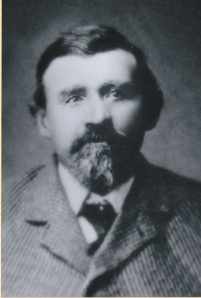
Hans Ulrich Winkler 


Biography of Hans Ulrich Winkler and Mary Thalmann Winkler
Written by Louisa Thalmann Hasler

In a beautiful little valley or Switzerland in the little town of Zell, Hans Ulrich Winkler was born December 21, 1838, His parents were Jacob Winkler and Susanna Burri. He was the youngest of four living children. Four others died in infancy. The three older children were girls, Elisabeth, Susanna, and Anna. Their home was an ideal one and also their family life. The parents conducted an open house or inn, also a bakery and they owned a little farm.

Elisabeth was married to Jacob Ott in 1856. Susanna married John Thalman in 1848. When Ulrich became of age he was sent to the city of Zurich to perfect the bakery trade, and also learned fine bakery. After he graduated he came home and helped his father run a good business. There were large factories In the neighborhood and the town people were supplied with fresh bread every day.

When Ulrich was twenty-two years old be courted and married Mary Thalmann of Hamburg, May 6, 1860. As mentioned before their home was a prosperous and happy one. Their father (Jacob Winkler) was a fine singer and his children had all inherited his talent and had fine voices. Ulrich and Anna also played the guitar. Their home was much frequented by the young people and all would join in singing and playing, especially on Sundays and in the evenings.

Such was the happy condition of their home in the early spring of 1863 when the youngest sister Anna and Mary, his wife, went on an errand to a home where the mother of the family had joined the Mormons. They found a missionary there from Utah. They talked of the Gospel of Jesus Christ of Latter-day Saints and both were so impressed by the doctrine that they promised to return and learn more of the new message. This they did and in a short time they both applied for baptism. They brought the message home to the rest of the family and nobody seemed much opposed to it. Ulrich investigated and was convinced of the truth and entered into the waters of baptism. All went well until the spirit of gathering came upon them. The missionaries worked hard to encourage them to go to Zion, well knowing that the spirit of opposition was so strong that delay might weaken their faith.

It was a great undertaking to leave their aged parents alone and to leave their beautiful home. The work was too hard for their parents to continue to do alone. The parents thought they could keep them from going by refusing them the money to emigrate. But Mary’s mother (Anna Thalmann) came to their rescue. She saw that a great change had come upon this young family for the better. Although she could not then understand the gospel she felt moved upon to help them, seeing their determination to live a better life and their strong desire to go. She borrowed the money to assist them to emigrate.

Sister Anna was to be married; her trousseau was all ready, but the young man broke the engagement at once when she became a Mormon.

Ulrich and his wife had two beautiful children and she was to become a mother again before their journey's end. Therefore they found it advisable to journey together. Sister Anna was very much attached to the children and would be a great help to them.

Preparations were made to start with the first emigrants who were to leave Switzerland on May 6, 1864. By this time the evil one used all his power to stop them from leaving. Relatives and friends combined with their entreaties to hinder their purpose.

On the last evening at home a few of his immediate family had gathered to say goodbye. They were to leave on an early train to the city of Zurich. Soon the house was filled with his young friends who seated themselves at the tables. (I was also present at this occasion.) It was whispered to us that these people, who now fancied in their belief that violence should be done to stop them, were there for that purpose. They were waiting for the two elders from Utah whom they believed had done all this mischief. However, Ulrich was informed of the trouble and warned the elders not to come to the house.

Their young friends sat there sullenly. It was hard telling what they had planned to do. Although they had loved their friend and companion so dearly their sorrow and regrets to lose him were intense and they were surely grave. All at once Ulrich stepped into the room where they were assembled. He addressed them something like this: “My dear friends: I feel the parting from you all just as keenly as you do, but I am convinced of the truth of this unpopular religion.”   He then bore a strong testimony of the truth to them. He wished them all happiness and told them that nothing they could say or do to the contrary could change his conviction. He then told them there was only a short time left before their departure and that he would like to spend the few moments left with his father and mother and dear ones. At this, all assembled rose to their feet and extended their hands. All were in tears, but wished him God-speed and happiness. The next minute the room was empty.

The parting from these parents was indeed a supreme test of their faith. But a spirit of peace and happiness prevailed. What other spirit could exist when such an heroic character is manifested. (Nearly sixty years have elapsed since then, but never can I remember or talk about that scene without shedding tears of joy because this service of his was the means of bringing all their own family into the fold.) And also his true and devoted wife Mary brought her dear ones into the fold and all gathered in Zion. Ulrich's father died a few years later but had received the gospel and was baptized. The aged mother came to Utah with her other daughters and their families, thirteen in number.

The journey of Ulrich Winkler and family was an arduous one. They arrived in London safely but by an unforeseen cause the sailing vessel was delayed and they had to stay in that city a month. When the ship arrived hurried preparations for over a thousand emigrants was made. Facilities for preparing food on the ship were not ample. It was only possible to cook things every two or three days and people suffered on that account. The wind was not favorable to them so it took nine weeks to reach New York harbor.

The young mother suffered a great deal for want of food and it brought on a premature confinement. The baby lived only eight days and was named after the captain of the vessel, Hudson. Mary was so reduced in strength that she had gone nearly blind from weakness. She was tenderly nursed on the overland journey to Wyoming and gained some strength.

In Wyoming they had to wait four weeks again until the emigration teams came from the valley. Having purchased there a wagon and team they started out three days before the main company was ready to start. Some of the Utah brethren had told them they would always be in the lead. However, they were ill advised. They had not gone but a few days journey when one evening they saw Indians prowling around and found these Indians had burned a bridge ahead of them. This company had to make a hasty retreat and wait for another company coming along.

For a time all went well; then the little boy became very sick with what seemed to be scarlet fever. Everything was done for him that faith could do but he grew worse. One evening they reached a farm house where they begged the people to let them come in, but the folks no doubt knew the nature of the disease and refused, but gave them a piece of candle. The dear little boy's spirit took its flight just a moment or two before the candle went out.

They still had the little girl to comfort them but soon she too took sick. Under nourishment brought her down very low and dropsy set in. Then the mother took rheumatic fever and lay on her bed in the wagon helpless as a baby the rest of the journey to Salt Lake City. Ulrich and his sister Anna nursed her as well as they could and then Anna took sick. Of course they were among their brothers and sisters in the faith and they did all they could to help the afflicted family.

But cholera broke out in the camp and many died of it. Every morning the company had to bury some of the dead. In all this sore affliction Ulrich never complained or wished himself back home again.

They reached Salt Lake City the last of October 1864. Ulrich had taken ill the last week of their journey but when they reached the Valley he was kindly nursed by the saints and by November when the first snow was falling they again took up their journey to Richfield where they were advised to go to help settle that place.

When they reached there the weather was favorable for them to dig a dugout as they called it then and make themselves comfortable for the winter. There was plenty of wood there to keep warm with. Before he left Salt Lake he found a brother who loaned him $20.00 for which they got them a hundred pounds of flour. I believe they must have lived a good deal on the plan of the united order. Those who had come and raised grain the year before must have divided with the emigrants for there were a number of them and all out of means.
In the spring Ulrich bought some land. The settlers who lived in Richfield were destitute of clothing and were willing to sell some of their land for clothing and bedding. Ulrich started farming and raised enough bread stuff for the coming year. In spare time he made adobes to build them a home. He finished two rooms the next year.

In July of 1865 Ulrich and his wife Mary, his sister Anna and Claus Peter Anderson went from Richfield to Salt Lake City with ox team to get their endowments. It was then not safe to travel alone, but they took the shortest out through Thistle Canyon, the road being only an Indian trail. When they reached the canyon they found the coals still hot where Indians had camped, and had killed a man and his wife and taken their provisions. They were in the act of unyoking their oxen when they saw how near their danger was and they drove on as fast as the animals could go, none of them daring to speak a word until they reached the mouth of the canyon.

On December 31, 1866, a son Herman came to gladden their hearts. He helped to fill the place of the two little boys they had lost on their journey. In the year 1866 the Indians began to be troublesome. The settlers guarded their few animals and fields, but in the spring of 1867 the people were advised to leave Richfield. A few brethren had been killed and it was unwise to stay. Ulrich and his little family moved to Manti. Many of their friends went still further north to Mt. Pleasant and they soon followed taking up their abode in a one-room school house. Ulrich again went to work making adobes and soon built himself a one-room house. His family now numbered five, a son Henry having been born in April 1868. However, he stayed with there only a short time dying in December of the same year.

The next few years were prosperous ones and they enjoyed health and strength. Since he had left his dear ones in the old home in Switzerland he had always been in communication with them and preached the gospel to them in his letters. This brought its reward for in 1869 they greeted the mother and sister of his wife Mary. They had built onto their home and all lived together for a year.

In 1870 many of the settlers moved back to Richfield but Ulrich sold his house and land there and remained in Mt. Pleasant. Another son, Albert William, was born to them Feb. 28, 1870. In June 1874 he was again rewarded with the joy of greeting his mother and sisters with their families here in Zion. He met them in Salt Lake and brought them home to Mt. Pleasant. Not one of his immediate family was left behind except his father who had died, and he had received the gospel and had been baptized. On April 28, 1875 another son Gilbert was born. About this time Ulrich's mother who was living at Mt. Pleasant with her daughter Susanna took sick and died.

In 1875 Ulrich was called to go to Arizona to help pioneer that country. A company of brethren went late in the fall of that year and traveled with ox teams. Much hardship was experienced as they had to trail their way through unknown mountains and snow. Their cattle had nothing to subsist upon but pine tree boughs. They let their wagons down over cliffs with ropes and chains but reached Mon Copy about February 1876. Ulrich stayed there about one year and gave his labor and time freely. He then returned to Mt. Pleasant for his family. But he found it hard to part with all his relations who were living there and so he did not return to Arizona. On November 18, 1877 another son Ernest was born.


In the fall of 1880 the health of his wife Mary began to fail. As she was in a delicate condition we all held out hope that it was owing to this that her health was poor and that all would be well when her time would come. Another boy Edwin was born on October 1, 1880 and for a little while it was thought that if she could gain her strength all would be well. But this hope could not be realized. She gradually grew worse and on Dec. 9, 1880 her spirit departed. Her baby lived only seventeen days. Her loss was a great trial to the family. She was one of those tried and true and patient mothers who held her husband and her children dear. She was a true Latter-day Saint in every condition in life and was always a peacemaker. She was beloved by all who knew her. Her daughter Lena was then about fifteen years old and able to take hold of some of the household duties. Ulrich's sister Elizabeth was a great help to them and divided her time with the duties of her own home to help with the sewing and things that could not be expected of a girl so young.

In September 1882 Ulrich married again, an emigrant woman, Rosalina Larsen, who had come from Wisconsin. She had been married before and brought four children from her former marriage to this family. In due time two children were born to them, a daughter Amanda and a son John. The mother died September 23, 1886, when John was nine days old and Ulrich was left again with his large family. His daughter Lena had married John Jorgensen in September 1882 and had moved away from Mt. Pleasant. Now again his good sister Elizabeth came to the rescue and helped them with their household duties, and his wife's sister Louisa Hasler took the baby John and kept him for two years.

Brother Winkler had remarkable courage. While he suffered greatly in all this adversity he never despaired and his cheerful disposition upheld him in all of his trials. In 1887 he married again, another widow with four children from Mt. Pleasant. (Leah Fowles.) Five children were born in this last marriage. Four of them and his wife survived him at his death. The five children are Wilford, born Sept. 25, 1888; Mary, born Jan. 15, 1891, Leah born Dec. 16, 1892; Katherine, born Oct. 7, 1894; Montel born Sept. 9, 1897.

Brother Winkler carried his load cheerfully and the Lord blessed him with good health so that he was able to provide for his large family. His faith in the gospel helped him with courage and fortitude that he never despaired. He always took his part in his Church duties and paid his tithes and offerings. He was for many years a member of the choir and the Brass Band. He also played the guitar. And I can never remember when he was not a ward teacher. In this capacity he had much success. He died March 4, 1904 at Mt. Pleasant, Utah.

His sister Anna who gave up her sweetheart and came to Utah for the gospel later married Claus Peter Anderson. He came to Utah as a captain in Johnson's Army. Many of the soldiers were ill because of the lack of salt in their diet. Brigham Young took salt to them but they were afraid to use it, thinking it might be poisoned. President Young asked for someone to come and taste it and then the rest could see that it was only salt and would not harm them. Captain Anderson felt he owed this to his men, many of whom were ill and so he tasted the salt. Its use brought back health to many and Captain Anderson thought that President Young did such a fine Christian act in bringing this salt to the soldiers who had been sent to do harm to the people of Utah that it aroused his interest and he investigated Mormonism and soon became a member.


Hans Ulrich Winkler with 2nd (not plural) wife, Magdelena Hafen

Ulrich Winkler and Magdalena Hafen Winkler
(3rd Wife) 

Sunday, December 29, 2024

AUTOBIOGRAPHY OF LOUISE THALMAN HASLER (From our Archives)


Autobiography of Louise Thalmann Hasler

In a mountainous part of Switzerland in the County of Thurgau, Parish Dussnang, I was born on

the 26th of August, 1843. My parents were Heinrich Thalmann and Anna Thalmann. They were

distant relatives to each other.

My first recollection of my existence in life came possible to me when I was four years old. I

have a faint remembrance, at that age of seeing my father in life. I had been in the garden on the

front of our house and plucked some of his choices flowers and given them to a girl who had

asked me for them. My father came home and chided me for taking his nice flowers. It must

have been shortly after this time that I saw, one day, a strange man coming to the house. He

went into the bedroom. I learned afterward that it was our family doctor. When he went away

my mother followed him to the door and when she came in again she seemed to be in great

distress.

After that I saw more people going into my father=s bedroom, and my mother was in tears. Then

they told me my father was dead. Then another man came and went into the bedroom, and I

slipped in with him, and this man took his measurements. I noticed then, my father lying on his

bed B so tall and still.

I did not realize what death meant until I was led into the room again to see him lying in a black

coffin. His eyes were partly open and I thought my papa would soon wake up again. But then

the funeral came and I was to begin to realize that the people that gathered were going to take my

papa away. A stretcher was placed before the house and our friends found me working hard to

get that stretcher out of the way. I was then gently taken into the house by sympathizing friends.

When the procession started, my sister and I were led by the hand of an aunt. Our dear one was

carried to his burying place in the churchyard. I heard my mother ahead of us sobbing in grief. I

rushed up to her, then fully realized where we were all going.

When we came near the church, the funeral bells were tolling and I well remember how my little

heart suffered. When we reached the open grave, the coffin was lowered, oh so deep! There had

not been a vault made to place the coffin in to prevent the earth and rocks from falling upon the

coffin. Oh horrors! That sound to my child heart was so terribly painful I could not stand it, and

years after I could not stand near an open grave. It is just as plain now at my age as it was then.

My father died on the 15th of September, 1847.

I well remember the first winter that followed. I believe our mother was timid to be alone. She

would keep us children up at night as long as we could stay awake. We both would cuddle up

close to her, and she would tell us stories and so many things about our father that we got as well

acquainted with him as if he were with us. Mother=s timid feelings were occasioned a great deal

because our house was broken into three times that winter, but it seems the burglars were

frightened away every time without getting anything. Mother was grieving so much over our

loss that she could not stand us children having our frolic and laughter, especially when she

prepared our evening meal. She would come into the dining room and bid us to be quiet.

A friend of ours noticed our condition and told her that she should not grieve so much. She

deprived her children of the happiness that was due to them. After that time, she tried hard to

control herself, and allowed us more freedom.

Mother=s task was a hard one because much hard labor was required of her and us children. We

were too small to help her. But she adapted herself bravely to hard labor that was required of

her. In our country, the law required of a widow that was left with children, that the house and

property left at her husband=s death be appraised at its full value and a guardian appointed, that it

should be protected in case the mother should marry again.

The law was right, but such a guardian could exercise too much power sometimes. The times

were hard, everything was high in price, money scarce, taxes high, the farm did not bring in

enough to cover expenses. The breadwinner was gone. We had splendid timberland on our

farm, but we were not allowed to sell anything to tide us over. My mother had to do man=s work

on the farm. We had no money to hire. In the first few years a brother of hers came and helped

her considerable in haying time, for which she was thankful. Also, a sister of mother=s came and

helped in harvest time to cut the grain with the sickle.

Pleasant memories are those for us children when Aunt Katherine came. She was never married

and always so happy. She was so quaintly dressed. She had always some nice candy in her deep

pockets of her homespun linen dress, and in her satchel, a huge gingerbread man for each of us

children and for mother, some coffee cake. She brought us children our first dolls. I remember

mine was dressed in pink silk, trimmed with lace and gold beads. She could do anything but

walk. As soon as we children were able to carry a burden, we had to help. Everything that

would grow on our farm had to be carried. There was scarcely a level place to build a house on;

however, our land and meadow were all close to our home; and we raised enough hay to keep

two cows. We always raised our own foodstuff, potatoes and fruit, etc.

Our schooldays were very happy ones. In the long winter months, we had lots of sport with our

sleighs. They would carry us down to the valley below to the schoolhouse about as fast as we

travel now in our autos. It was not quite as pleasant going home in the evenings through the

deep snow that had fallen during the day. We had such long hard winters there, but the boys

would go in single file and draw our sleighs to make a path for the girls, and keep the road open

for the next morning. It was a half-hour walk to our school, to church - one hour.

We spent lunch time and recess on the mill pond skating. I fell in once and got under the ice.

The boys quickly formed a chain, got hold of my head and pulled me out. I worried more about

my wet clothes than about my cold head.

After we got out of school, we could be more of a help to mother. We got ingenious and had a

little wagon made to haul our products home, which helped us very much.

I just mention, at this time, our good neighbors B two or three families that lived not very far

from our home, who were so very good to us. One was a carpenter, and when any farming tools

or many other things in our home were broken, we could go there and they never turned us away

and mended many things for us without pay. How thankful we were for their great kindness to

us. We tried our best to show our appreciation in doing errands for them. Neither of them had

children. Mother advised us that if ever we could do any errands for them to drop everything

and do it. But we always felt that we never could get even with them. I have never forgotten

them, and I had been so thankful that I could do the work for them in the temple and for their

families. I want to meet them again in the life to come.

Our mother was quite strict with us children. We did not have as much freedom as many other

children had. We were kept at work. She taught us to pray, and was very particular to have us

attend Sunday school and meetings. We were taught in the Protestant Church. I well remember

how she would get us children up in the middle of the night when there was a thunderstorm and

she would pray with us, asking the Lord to temper the elements and that we would be preserved

from fire. Our large house was a wooden structure. There was danger of lightening striking the

building. We were mostly without water to fight a fire in the summertime and we had full faith

that the Lord would answer our prayers.

Mother loved nature and instilled that love of the beautiful in us children. Often I have seen her

working in the fields in springtime when all nature was in its verdure. The birds were singing B

the cuckoo calling. She would lay down her tools and fold her hands, thanking and praising our

Father in Heaven that in his loving kindness he was doing so much for us. When my sister got

out of school, she learned to weave cloth in the long winter months. Mother would be at the

spinning wheel working up flax we had raised in the summer, myself knitting and sewing our

family=s linen. Can anyone picture a happier, more contented, and more peaceful life with us

girls singing our patriotic songs which the Swiss love and believe in so much?

But the poet, Schiller, says, AWe cannot limit the threads of happiness for any length of time!@

My sister commenced to have her love affairs and when she was 19 years old, she was engaged

to a young man who was in good circumstances, was a baker by trade, and an only son. Before

she was 20 years old, she married and left the parental home.

By this time, we girls had learned to do all work that was needed on the farm, even cutting the

grass with scythes, curing it and bringing it home like men did. Now her leaving was a hard

blow for us, but Mother and I kept it up. By this time we could afford to hire a little more help in

the busy season. We had brought the farm into better paying condition and also in our country,

when we left school at 14 years of age, we entered into our religion class work with the

Protestant minister twice a week until we were 17 years old. During this time, we went through

the old and new Testament catechism before our confirmation and we then were admitted as

members and allowed to partake of the sacrament. I was fortunate to have a devout teacher as

far as he understood it. I was a favorite of my class and was religiously inclined. My teacher

said I was truly converted. His training, however, was a great help to me when later I received

the true gospel of Jesus Christ.

After about three years after my sister got married, she and her husband=s sister went on an

errand to a place where they met Mormon Elders and were introduced to them. The lady they

visited was a member. The missionaries engaged them in a conversation and explained their

doctrine to them. They both became very much interested and the Elders invited them to a

meeting the next Sunday that would be held in the woods away from town. They could not get a

place to meet in. After they got home late in the evening, my sister told her husband what they

heard and persuaded him to go with them on Sunday to attend the meeting. Strange to say, their

church was but a stone=s throw from their own house. More out of curiosity, he consented to go

with them.

They all got interested in what they heard. They were anxious to hear more. They made

frequent visits to the lady first mentioned who was a good conversationalist and was eager to

explain and teach. They later invited the elders to their home, and in the matter of a few months,

applied for baptism. My brother-in-law was very popular and jovial. They kept an Inn, besides a

flourishing baker trade and a very comfortable home. The news that these people had joined the

Mormons spread like wildfire. The opposition they had to face from relatives, friends and the

whole population was hard against them.

The Elders felt much concerned about them and the situation that confronted them, more so as

they were going to be released to go back to Utah. They convinced the family to try and get

ready and emigrate with them. But there were the aged parents to be left behind. The situation

was indeed critical. Their father refused them money to emigrate, being much influenced by

others. My brother-in-law, with his jovial disposition, and after marriage often found past-time

in card playing, which is most always accompanied with the wine glass. My mother had noticed

this habit soon and had worried over it. They were raising a family and she thought it would be

such a bad example to their children.

At this time when we too were agitated about this new and unpopular religion he came to our

home often to tell us about their trend of mind. He took pains to explain to us out of the bible

that this so much misrepresented organization was in accordance with the teachings of Jesus

Christ. We could, of course, not comprehend at that time; but mother said there must be

something very remarkable or it would not make such a change in a man=s heart who never

pretended religion before. She then came to their rescue and borrowed the money to help them.

They were determined to go and she said no child of hers should suffer if she had it in her power

to help her.

They got ready with their two small children and his sister and left of the 6th of May, 1864, to go

to Utah. My sister took from us the promise before they left us that is some missionaries should

come our way, we should entertain them and we would be blessed. We did do that for their sake.

They endured many trials on their journey. They had a child born on board the ship which died

before they landed, and a boy two years old across the plains, but their faith was strong and they

never wavered. When they wrote to us after they arrived in Salt Lake sometime in October their

testimony was strong, full of faith and cheer.

In 1866, I got acquainted with my future husband which ripened later into friendship. I had

suitors before this time, which was not uncommon with a young woman of some means in sight

at her marriage, but I was always very cautious for fear it was the money my admirers were after

and not just the girl. I was more afraid that the gospel was true and I would do a great wrong if I

would bind myself to anyone there and would be deprived of accepting it if I would be

convinced that it was true. I was not humble enough to accept it. I was generally frank to such

young men, and told them that I might go to Utah. This answer was generally sufficient. They

would not press the suit any longer.

But this method did not work so well with Mr. Hasler. He wanted to know more about it.

Before my brother-in-law went to Utah, he had some business transactions with him and came to

Mr. Winkler=s home a day or two before they were leaving. He wanted to know what could

induce him to leave such a good home and prosperous business to go to America. Mr. Winkler

took him to his private room and explained the gospel and bore his testimony to him. I was

present and asked Mr. Hasler if he wanted to become a Mormon. He then took a promise from

Mr. Winkler that he should write to him if he would find he was not deceived.

This incident must have been forgotten by both parties. But two years later, Mr. Hasler was led

to my home to ascertain how my folks had found their new home and religion in Utah. He asked

for their address. He wrote to Mr. Winkler who answered his inquiring letter, and again bore

testimony to him. He investigated in the City of Zurich the nearest branch where President Karl

G. Maeser, in his eloquent, convincing way, made many converts. A few months after in

November, 1868, he was baptized by Benjamin Brapbacher and confirmed by Karl G. Maeser.

My sister and husband continued to encourage Mother and me to give obedience to the gospel

message which we finally accepted. I was baptized on the 1st of April, 1869. I was married to

John Hasler on the 14th of May, 1869. We were then able to sell our home and farm at a great

sacrifice, but we were thankful that the way was open for us to go to Zion.

Leaving our home had not been so hard on us. Relatives and friends turned against us. Some of

them forbade us to come and take farewell. We now made preparations to emigrate. My

mother=s health was very poor. Hard work had weakened her constitution. The dreaded disease

of dropsy had set in. The doctor told us we should never attempt to take her on a journey. She

would never reach Liverpool. But Mother was determined to try. She had great faith in the

ordinances of the gospel. She was administered to and when we reached New York, she was

well and stood the overland journey just fine. Our was the first company of saints that traveled

in comfortable cars over the desert to Ogden, Utah.

My brother-in-law, Ulrich Winkler, met us in Salt Lake City. We bough us a yoke of oxen, a

wagon plow, some farming tools, and a cook stove before we started for Mt. Pleasant. I forgot to

tell that when we started from the city of Zurich, we took with us a little boy, three years old, of a

poor sister who had no money to emigrate. Another family took a little six-year-old with them.

Their mother had a promise to come the next year. When we left Salt Lake City our wagon was

heavily loaded. Another family followed us to Mt. Pleasant.

When we came as far as Payson one of our oxen took sick, and we hired a man with another

yoke of oxen to help us along for a day. I was riding on the wagon that was loaded with trunks

holding the little boy on my lap. The man was not a careful driver. He crossed a deep ditch and

I lost my hold and was pitched from my high seat onto the wagon tongue, and the little boy into

the ditch. The heavily loaded wagon went right over his abdomen. After we were both

extricated, the little boy opened his blue eyes and just gave one gasp. Imagine my feelings when

I sat on the side of the road holding the little boy in my arms, apparently lifeless.

Mr. Winkler and my husband administered to him and before very long, he commenced to

breathe again. We worked very long with him and in the confusion I could not find any dry

clothes for him. We wrapped him in a blanket and my mother took him in the other wagon. I

stayed behind and washed his clothes. Evening had overtaken us.

After I had washed his clothes, I started to follow the wagon but my legs refused to go. I tried

hard to follow but my legs refused to go. I could not. It got dark and I could not overtake them.

They did not miss me until they stopped to unhitch. Thinking I was in the last wagon, my

husband came rushing back to find me and when he assured me that the little fellow was alive, I

began to get strength to walk to the camp with his help. What a wonderful testimony that was to

us all. The boy was all well the next morning when we continued our journey.

We arrived in Mt. Pleasant the last of September, 1869. Our joy and happiness was complete

when we were united again as a family. Mother often told me she would never be happy until

we could embrace one another again. We two sisters had always been so near to each other, such

close companions. My sister=s family had been driven from Richfield a year before on account

of Indian trouble, and had to make a new start again in Mt. Pleasant. They had a little house

partly built with two rooms. We lived together that year, but in the spring, both of our families

had welcomed an addition. My sister now had three children, and ours was our first son. We

called him Henry Hasler. We began to get crowded for room, and we now wanted to start a

home of our own. He was born June 14, 1870.

My husband had taken up a city lot and started to build a cellar. We did not have means enough

to start a new house, too. We had assisted several families to emigrate, but of course they were

not in a position to pay us back. My husband then put a roof on the cellar and divided it into two

rooms. We had lumber enough to make a floor in one room, made two small windows and

doors, and on Christmas Eve 1870, we moved into our new home. I had whitewashed the walls

and decorated them with pictures of relatives and friends. People may move into mansions, but I

doubt if anyone could feel more happy than we were. We held ourselves in each other=s arms,

shed tears of joy that we now had a home again of our own. But to the credit and gratitude I

must say that my sister and family had made us more than welcome and assisted us in every way

that they could.

I cannot remember that we ever had an unpleasant word between us, until we came to divide our

dear mother. My sister claimed that since she had left our home I had had her all the time and

that it was her turn to have her. We shed some tears together, both of us seemed to be selfish.

At last we concluded to let our mother decide where she wanted to stay. She said, ASince there

were only two city lots to divide us, she thought she could mother both of us.@ As I was the

youngest, she decided I needed her most, with a promise that she would always be where she

was most needed. This was satisfactory with all of us.

We started in with a will to make us a home, cleared the land off and fenced the two city lots

with cedar posts and willows, weaving them in basket fashion. We started some gardens, but the

grasshoppers ate up everything the first year. We got two pounds of lucern seed from Salt Lake

City and planted the first lucern in Mt. Pleasant. We had many rocks, large and small, on our

lots, which showed bigger when the sagebrush had been removed. Water had to be brought on

the land a mile away that could not be plowed. I had done hard farming at home, but this was a

new task. My husband was a hard-working man, but neither of us was skilled at pioneering. We

did not work to an advantage as an American goes to work.

I must admit that one day I say on one of these huge rocks and cried bitterly in front of the place.

He came and sat by me and tried to comfort me. He said this very rock could be made a very

romantic spot. The rocks could be made very quaint and scenic. He would plant shrubs and

vines around them, flowers would make it beautiful. The picture helped to comfort me. The

rocks are still there yet, but there is lucern grown around them and they do not look nearly as

large as they did then.

On February 11, 1871, another son was born to us. We named him John Hasler. He did not

come to stay very longBonly three months. He was sick only one day with convulsions and we

had to give him up. He was so sweet and bright. His papa often called him his little angel, and

an angel he was soon going to be.

In September, 1872, my husband came down with typhoid fever. I will not repeat this long and

severe trial. It is described in my husband=s diary, but I must mention how faithful and true the

brethren holding the Holy Priesthood had been to us. They came to visit us for months almost

every day to comfort, help and bless him. It was hard for us all to exercise faith. He was so very

low so long. To human appearance, it would seem impossible to think he could live. The

nearest doctor was living in Nephi. I telegraphed for Dr. McEwan, but on account of sickness in

his household, he could not come. We were often told it was not right for us to fast and pray for

him to live. It would be better if he could be released from his suffering, but as long as there is

life, there is hope.

Those were trying days. My little boy, Henry, then two years old, had also taken the fever. Both

were lingering between life and death for a long time. My mother was a great support to me in

tending and nursing the little boy. Never will I forget the help and support of my sister, her

husband and the faithful elders who exercised faith, prayers and fasting in our behalf. Surely our

Father in Heaven will reward them. They have all of them since gone to their rest. Blessed be

their memory.

His condition was very low all winter. His body was reduced to a skeleton. He had to be lifted

around. He could not help himself in the least. On March 25, 1873, under this condition, I was

delivered of a little baby girl. She came indeed to bring hope and cheer and gladness under this

condition. I had for weeks and months carried my husband in my arms from one room to the

other. My strength was much spent and overtaxed by night and day. At this time, my sister was

with me and when I was made comfortable she wanted to go home and bring the glad news to

her family, intending to be right back. As she turned to me as she was leaving, she noticed that I

had at once become unconscious. She rushed to my bedside and tried hard to bring me to notice

her, but to no avail. I can remember I heard her pleading, but I could not speak. At last she

rushed off to find some elders, but she had to run a long way as we then had no near neighbors.

During this time, my husband had managed to get to me without assistance from his bed, and in

the anguish of his heart and soul, prayed over me and asked the Lord to let me come back. More

than an hour must have elapsed when my sister returned and an elder with her. He administered

tome and after he took his hand from my hear, I came to again. My sister tenderly nursed me

and in about two weeks, I was able to do my work again and take care of my dear ones.

My husband was lifted up from the cellar the first time on the first day of May to enjoy the

sunshine, and soon after was able to walk on crutches.

About July, papa was still not able to walk without his crutches, and we had to have hay for our

cattle. We owned some hayland in what is now called Chester. Everyone was so busy getting

their own hay home, but some kind brethren told us they could cut and load our hay if we could

get our team down there. We managed to yoke up our oxen. I got a little ladder for my husband

to get on the wagon and we drove to the hayfield. There were always kind people to load our

wagon, and then put us both on the load again. Our home journey was mostly in the night. Ox

teams are slow. I was told to always put my arms around the binding of the pole so if we got in a

chuck hole I wouldn=t fall off, but one night I went to sleep and fell down from the load

unnoticed. Papa drove on. He did not know what had happened. After I gathered myself up I

started limping after the wagon. He had quite a start. It was not far from town when I caught up

beside the wagon and called to him to let me ride with him. Papa was not a little frightened,

thinking it was my ghost calling. Happily, I was not hurt much. We were thankful to get our

hay home.

In 1875, we joined the United Order which delayed, somewhat, the building of our house. We

had the adobes made. I handled those adobes two and three times until they were in the wall. I

helped to bring them from the yard, unloaded them, and then handed them up again. I can

remember how sore my hands were. My husband gave up his land, oxen, wagon, cows and he

had to teach music in school, brassband and the choir. Mason and carpenters were assigned to

do the building, but before the house was up to the top the mason drew out of the order and the

carpenters likewise. It was a six-room house, intended. However we had two rooms ready ready

to put the roof on. It was getting late in the all. I was determined there should not be another

baby born in the cellar. I put the shingles on myself so that we could move into the house. Papa

did the carpenter work in the house, so we were able to move into the house about December. In

January (the 31st), 1875, another son was born to us. We named him Walter Hasler.

In 1875, I was called as Secretary to our President, M. F. C. Morrison, in the Relief Society,

which position I held for 32 years until our President died and another organization was effected.

At the time of my calling I was ill-fitted for the position. I was greatly handicapped, not having

mastered much of the English language, but I went to work with a will, with my papers and

dictionary. I translated the minutes into English from my mother tongue.

This work was a great joy and blessing to me. I was associated with the best and truest of sisters.

I was the youngest of them. The experience of associating with them was a great joy and benefit

to me. I am ever-thankful to my Heavenly Father that this great privilege came to me. When

later my sons were called on missions, I could correspond with them and encourage them in their

work.

In 1877, on the 16th of July, another little daughter came to bless our home. We named her

Louisa Hasler. She was such a sweet treasure to gladden our home, but only for a short time.

She died of scarlet fever when she was only eight months old. Parting with those little treasures

was a very hard trial for us.

On the 22nd of December (1878 or 1879) another son was born to us. We gave him the name of

Emil Hasler. He was very welcome because the other children had grown out of their babyhood.

About that time another sorrow awaited us. My dear mother took very ill. She took to her bed

after Christmas time and lingered all winter. We hoped that springtime would have an

invigorating influence over her, but the Lord had destined it otherwise. She had lived 76 years.

Mother was always so thankful and happy that she was able to reside in America and receive the

gospel of Jesus Christ of Latter-Day Saints. She was the only one of her family that was able to

come to this land, and be united with her children and live with the prophets and apostles.

She was greatly handicapped at her age. She was not able to learn the English language, but she

had received the spirit of the gospel. As soon as she was baptized, she gave of her means to help

different families. She was generous to a fault, as some of the people did not appreciate her

kindness, and did not prove worthy of it.

In the fall of 1880 my only sister=s health seemed to be failing her. It caused us some alarm, but

we attributed it to her delicate condition and we hoped when her time would come she would

soon be restored to her former health and strength again. Her hopeful and cheerful disposition

gave us reason to hope for the best.

In October, she was delivered of a baby boy. In our joy in her new delivery, we did not notice

that a change for the worse had come over her. The dreaded disease of dropsy had rapidly

developed, to which she succumbed on the 9th of December, 1880. Her little baby had preceded

her a few weeks before in death. This was a hard blow to her husband and family of five

children, the youngest not two years old. And indeed it was a very hard trial for me, we having

so recently parted with my dear mother. But then we felt our loss together. Now I mourned

alone. We had been more than sisters to each other. There was a companionship that few enjoy.

I, too, was in a delicate condition, and the shock came so unexpectedly to me, I took sick and in a

few weeks gave birth to a premature child, we named him Edward Hasler, but he died the day

after he wa born. Thus we added another grave to those we had already laid away.

In the spring at April Conference, my husband was called to go on a mission to his native

country. He had only two weeks to get ready. We were quite destitute for clothes to wear at this

time. We had used our means to finish the house, but we had plenty of breadstuff. The good

people of Mt. Pleasant donated enough money to take him to his field of labor. He was given a

farewell party together with another missionary. Many were invited. I had nothing to wear to

accompany him to the party. I had a silk wedding dress, but I had taken it to pieces, thinking I

could make it a cloak for my little seven-year-old girl. I intended to make it warm with some

woolen home-made lining, but when I was invited to the party, I say up all night and put the

dress together again. And to the surprise of my friends I came out in the silk dress and wore a

pair of home-made shoes which sounded quite loud to the rustle of my dress. Fortunately, it was

quite long and I was careful to cover my dress over my shoes.

I worked very hard while my husband was a way. I worked in the harvest field. We did not

have self-binders them, and I was not the only woman that worked in the field. But it came hard

on me because I was not used to that kind of work. I left my four children alone. Oh, how I

missed my mother! It was always late at night when I came home. I told the children to sit on

the floor when they were beginning to be sleepy as they would not be apt to fall from their

chairs. I would most generally find them all four in a row on the floor asleep.

From that time on my little girl mothered my children. I could always depend on her to be with

them. In the winter, I got work crocheting hoods for the school children. I earned enough

money to make us comfortable, thus we got along just fine until papa returned in the fall of 1882.

When he returned, he brought some emigrants home with him in fulfillment of his patriarchal

blessing that he would return bringing his sheep with him. Four followed him to Mt. Pleasant.

He also had charge of an emigration of 72 saints from Switzerland. Among them, he brought

home to Mt. Pleasant, and old lady who just recently had lost the only daughter she had, who

was also to emigrate with her mother when death overtook her. This sister before her death had

taken a promise from Brother Hasler who had visited her at her deathbed that he would take her

mother home with him to Utah and take care of her as long as she lived.

When she came we all were very glad to have another grandmother, which she indeed proved to

be to us and out children in every sense of the word. If she had been our very own grandma, we

could not have loved her any better and she loved us. She lived with us for fifteen years and died

in August, 1897. Her name was Elizabeth Muller, born in Langenhart at Zurich, Switzerland.

On August 13, 1883, Mina Otilia Hasler was born. We called her our missionary girl. She

brought much joy and happiness into our home. After my husband returned from his mission, he

started to teach music at our home. He had mostly students from out of town. They boarded at

our house. We had two instruments in different parts of the house. The first session would start

at 6 o=clock in the morning. There were generally three students. Four-hour lessons were given

a day and that many hours practice in a day. A term was three weeks. Many of the students that

had some talent would advance quite fast in the art of music. Many of them would return home

and would be able to play in Sunday Schools and meetings to play our church hymns, which was

quite a help in those days. Many of our organizations had thus been benefitted throughout the

counties of Sevier and Sanpete.

In June, 1886, our last baby was born, which nearly cost my life. It was one of the greatest

tesimonies we received of the power of the priesthood when my life was spared. Conditions

were such that it was impossible for me by human appearance to get through this ordeal and live.

No skilled medical help was obtainable. Nightly prayers were offered up to our father in heaven

by the priesthood and my dear ones, and in a wonderful way my life was spared. My beautiful

baby boy=s life had to be sacrificed.

It is hard, often in human life, when you have to meet with trials that will try your heart and soul,

trials you cannot share with any soul, however near and true. Your heart strings may be almost

ready to snap, but you will carry the burden alone. Hearts don=t break. It will be wounded, it

will bleed, and the wound will be hard to heal. Some try to find relief in the whirlpool of

pleasure. I doubt it! Fortunate is he or she who can go to their sacred alter, humble themselves

and bring before their Father in Heaven your load you have to bear when it seems to you that the

waters of sorrow will overflow it. Unload your burden to Him that lurks in the recess of your

heart; you will not ask in vain, his great mercy, his loving kindness will manifest to you the

healing balm of his holy spirit and there alone you will find peace and comfort. What wonderful

testimonies will be revealed to you.

In the year 1893, our oldest son, Henry, was called on a mission to Switzerland and Germany.

He worked one year in our native land, one in Germany, and one in the office in Bern as

Secretary. He returned in 1896. In 1898, our second son, Walter Hasler, was called on a mission

to our native country. After he graduated from the B.Y.U. in Provo he labored 2 2 years in

Germany. He returned in 1901.

We have been able to give our children, and not without sacrifice, some educational advantages

that would be a help to them through life. Our home was not a pretentious one, but hospitality

was given freely to all that entered it. We welcomed and entertained in our home such men as

Dr. Karl G. Maeser, Dr. Talmage, Brimhall, Keeler, B. Cluff of the B.Y.U. We entertained

sisters of the General Board of the Relief Society, Mrs. Annie T. Hyde, Elizabeth Grant, Lisa

Farnsworth, and many others. We harbored about 24 emigrants at different times, some of them

for weeks, some for months, until they could find houses of their own. All were made welcome

and at home.

Our home was a place where the young folks congregated, where freedom, music and song were

enjoyed and all made welcome. We also harbored a number of people that were hunted down

because they were accused of breaking the law of the land. We were loyal to our trust and not

any of our children betrayed the trust. I remember a little incident that happened some time ago.

It was a cold and dreary November night, rain had come down in torrents all day. At a late hour

we heard a loud knock at our door. As my husband opened the door, a man stepped in, all wet

and cold. He asked if he could not get a night=s lodging for two families. They came from Manti

where they had been in the temple. They aimed to reach Fairview where they had friends, but

their horses gave out and they could not get any farther. As they entered our town, they asked at

many places, but no one could make room for them. They had little children with them, both

women and children were cold, hungry and wet. My husband told them to come in.

We made a warm fire. I warmed a kettle full of hot milk with fresh bread, then I put the little

children in our warm beds. I kept a good fire all night to dry their wet clothes and bedding.

They told us that a man had directed them to our place where a light was still burning. AThere

lives Brother Hasler. He is a good man. He takes everybody in. He will make you

comfortbale.@

In later years I met one of the ladies in Provo. She told me that never in her whole life had hot

milk tasted so good to them as it did that night.

In 1897, our daughter, Lydia, was married in the temple at Manti to Arthur C. Candland of Mt.

Pleasant. Her husband left her a few days afterward on a mission to the southern states. Lydia

did not leave our home until he returned two years after. The same year my son, Henry was

married to Sophia Kelch in the Manti Temple.


Friday, November 29, 2024

JOSEPH AND ALICE THALMAN FARNWORTH


                                            Joseph  and Alice Thalmann Farnworth


On November 17th I posted the photo of Joseph and Ann Dutton Coates. I had no history to share and so I wrote Pam Gardner and she sent me the following histories and a new photo. It also includes the History of George Farnworth and Susannah Coates Farnworth. Also, Alice Thalman Farnworth and James Albert Farnworth. We will call these our Thanksgiving Special. Thank You Pam !!!

James Coates Jr.
Born October 12, 1812 in Chesterfield, England
Died June 6, 1865 in Mt. Pleasant, UT

Anne Dutton Coates
Born February 24, 1817 in Chesterfield, England
Died March 16, 1876 in Mt. Pleasant, UT

Joseph Coates Jr. was born in England to Joseph Coates Sr and Hannah Cantrell Coates.

His father Joseph was born May 11, 1777 in Chesterfield England. He passed away April 7, 1852 in Chesterfield England.

His mother Hannah was born January 9, 1780 in Chesterfield England. She passed away January 2, 1848 in Chesterfield, England. Joseph and Hannah were married December 25, 1801 also in Chesterfield, England.

Anne was born in England to George Dutton Jr and Elizabeth Coates Dutton.

Her father George was born April 8, 1817 in Chesterfield, England.

Her mother, Elizabeth was born March 13, 1794 in Chesterfield, England. They were married January 24, 1814 in Chesterfield, England.

Joseph and Anne were living in Chesterfield, England when in 1839 the family was taught the Gospel by Parley P Pratt and Brigham Young, who became their first converts in Chesterfield along with Joseph’s brothers James and John and their families. Every member of the family came into the church willing and gladly. A few years after accepting the Gospel, Joseph’s brother James died and his family remained in Chesterfield, but Joseph and Ann had partaken of that irresistible spirit of gathering in Zion. His brother John also stayed in Chesterfield as he was unable to afford the move. So in early 1847, Joseph, Anne and their three children, Susannah, George and Elizabeth set sail for Zion. (6 children had previously died and were buried in Chesterfield. 4 were yet to be born)

Fifteen years after leaving England, Joseph and Anne found the means to assist his brother John and family to come to American where they came directly to Mt. Pleasant.

After nine weeks at sea, they landed in New York and took a steam ship to Dry Hill, MO where they lived for three years. Their twin sons, Thomas and William were born during this time. In 1852, the family came to Utah with the James J Jepson 2nd Company. After living in Salt Lake City for a time, they moved to Battle Creek UT, now called Pleasant Grove. Here they lived for nine years and were quite comfortable. But Brigham Young called for settlers to go south to Mt. Pleasant or Hambleton as it was called then. The Coates answered the call.

They were received with a hearty welcome and given their allotments of one city lot and 20 acres of land as was stated in the Mt. Pleasant History Book.

Joseph was a large man of stature, weighing nearly 200 lbs. He was a mason and builder by trade. He built many of the towns best homes and structures. Some of those may still be standing. During the early stages of Mt. Pleasant, the homes were all built in the fort.

Life was very rough in Mt. Pleasant during the early years. They had a lot of trouble with the Indians. Many of the settlers were killed, and many fought in the Black Hawk War. The peace treaty to end the war was signed in Mt. Pleasant during this time.

Joseph was appointed to preside over the High Priests on March 25, 1860. He held that position until he passed away on June 6, 1865 in Mt. Pleasant.

Anne passed away on March 16, 1876 in Mt. Pleasant. They are buried side by side in the Mt. Pleasant Cemetery.

On March 4, 1917, an act to pension the survivors of the Black Hawk War was approved. Joseph Coates was named to that even though he had passed away years earlier.

Children of Joseph and Anne Coates were……

Charrlotte,
James
Susanna,
George
Mary Ann,
Elizabeth
Everett,
Joseph
Thomas,
William (twins)
Hyrum Levi,
Eliza Jane
Emaline Ann,
John


George Farnworth

Born January 24, 1818 in Landreton, Lenord, France
Died July 11, 1903 in Mt Pleasant, UT

Susannah Coates Farnworth
Born December 12, 1836 in Chesterfield, England
Died November 2, 1998 in Mt Pleasant, UT

George was born in France, even though he was English. He father was in the English Army and stationed in France at the time of his birth. George had one younger brother, William Richard who was born in Ireland on July 3, 1820. His parents were Joseph and Margaret McBride Farnworth.

Susannah was born in England, the daughter of Joseph and Anne Dutton Coates. She was one of fourteen children. Her brothers and sisters are; Charrlotte, James, George, Mary Ann, Elizabeth, Everett, Joseph, John, Thomas and William (twins), Hyrum, Eliza Jane and Emaline Ann.

George was a blacksmith by trade. He married Elizabeth Bustard on June 24, 1840. Elizabeth was born in Sheffield England.

George and Elizabeth heard the Mormon missionaries and joined the church. They had one son, Earl in 1847. That same year, they set sail for America. They lived in St Louis, MO where Elizabeth and their son, Earl passed away in 1849.

George then married another Elizabeth, Elizabeth Hitchins in 1850. Elizabeth was born in Glowschester, England. They did not have any children and on March 7, 1853, Elizabeth passed away in St. Louis.

George came to Utah alone, arriving on July 18, 1853. He was baptized or re-baptized as was the custom back then, on October 30, 1853 in Salt Lake City. Here he met Susannah Coates. They were married on December 12, 1853 in the Endowment House in Salt Lake City, UT. In 1855, they moved to Battle Creek, UT or Pleasant Grove as it is now called. In 1856, they were called by Brigham Young to help settle a new town called Hambleton or Mt. Pleasant as it was commonly called. They were received with a hearty welcome and given their allotments of one city lot and 20 acres of land. George continued to work his trade of blacksmith. He was know to be “an excellent shoer” by many in the town. He helped keep the oxen and horses shod. George and Susannah had 13 children….

Susanna Ellen
George
Joseph
Samuel
Hyrum
James
Moroni
Rosella Anne
Eliza Jane
Un-named twins who died at birth
Herbert
William R.

In 1860 he was chosen to be on the committee for the 24th of July celebration. During the celebration George gave the two following quotes.

“May the people of Mt. Pleasant, like the parts of a well-made machine, work together”

“May Mt Pleasant be noted throughout the world for ingenuity and industry”

George was very active in both civic and church. Many records are found in the Mt. Pleasant History book. He was a major in the Black Hawk War, sent out to track down Indians. He was one of the first Sunday School teachers in 1865. He was elected first City Recorder in 1868. He was ward choir director, Tithing Clerk and Bishop. Many times he was called to help pioneers coming to Utah. He had to deal so much with the disease Cholera. One trip so many parents died of Cholera, there were 53 children left for him to find homes for.

George wrote a letter that was published in the Deseret News on March 3, 1871. He said that on an account of a very mild winter, fears of the scarcity of water during the coming summer for irrigation purposes have been very general throughout the Sanpete Valley. But all such fears have been dispelled by the abundance of snow which has fallen during the two or three weeks prior to the date of this letter.
On February 22, 1861, George took a plural wife, Mary Jane Allen. They were married in Mt. Pleasant. George and Mary had eight children, John William, Charles Henry, Nephi, Brigham, George Heber, Mary Violet, Alfred Lorenzo and Susanna. The children from George and Susanna treated these children as their full brother and sisters. They called his plural wife, Aunt Mary.

On August 2, 1884 George was set apart as Bishop of the Mt. Pleasant Ward. In 1890 he served on a committee for an old folk’s party.

When the Manti Temple was completed George began doing for his kindred dead. One day on his was to the temple to do the last names he had, a wonderful thing happened. This is in his own words. This morning about 10:00 while traveling between Pigeon Hollow and Ephraim but the grave yard, I felt a very strange sensation, as I have never before experienced. Under this influence, I went along and as I looked ahead, it seemed that right in front of me there was a vast multitude of men. To the right and a little in front stood a large man, who would weight about 242 pounds. He waved his hand and said, “They are your kindred and we have been waiting for your temple to be finished. We want you to do for us what we cannot do for ourselves. You have had the privilege of hearing the Gospel of the Son of God. We have not that great blessing.” Just then I looked at them and saw that they were all men and through it strange that there were no women. I tried to recognize some of them, but knew none. I was thinking, “how can I find out their names?” when it appeared that a voice by me said, “When that will be required, it will be made know.” Just then the tears were rolling down my cheeks and in the humility of my soul I shouted, “God help me. God being my helper, I will do all I can.” It seemed as if the whole host shouted as if one voice, “Amen”. I cried and cried aloud, while wiping my eyes and face. After I could control myself, I looked ahead and all had gone. When I got to Ephraim I felt so over come, I had to tie up my team and rest before I could go to Manti.

When George arrived at the temple, the recorder handed him some sheets of names and said, “Brother Farnworth, these are for you.” The recorder was Moses Franklin Farnsworth. He had just received them from England. Some of the names went back to ancient times. He was their representative, to help them attain perfection. George and his family were faithful in performing the ordinances for them. There were 300-400 names on the list.

George lived a full and productive life. He passed away July 11, 1903 and was buried in Mt. Pleasant.


Alice Thalmann Farnworth
Born March 22, 1866 in Thurgau, Canton, Switzerland
Died September 3, 1953 in Bountiful, UT

Alice was born the 4th of six children to Johanes and Susanna Winkler Thalmann in Switzerland. Her brothers and sisters were;

Robert
Albert
Lucetta
Anna Selina
John Jacob

Her parents were converts to the Church of Jesus Christ of Latter Day Saints. When Alice was seven years old, she immigrated with her family to America. Her family settled in Mt. Pleasant, UT where a lot of other Swiss immigrants had settled. It was a hard life going up here, but they still loved the town. At the time she was growing up, they still had a lot of trouble with Indians, but it was home to them and they were surrounded by members of their beloved church.

On January 23, 1889, Alice married James Albert Farnworth, Sr in the Manti Temple. This was a wonderful union. Alice had a sister named Lucetta who five years earlier had married James’ brother Joseph. So now, they were not only sisters, but sisters in law as well. Alice and James had three loving children;

Florence Susanna – January 25, 1890 – September 26, 1978,
James Albert Jr March 1, 1893 – February 7, 1975
Estella Lucetta March 8, 1897 – February 5, 1927

Sometime before 1897, Alice, James and their family along with Lucetta, Joseph and their family bought a farm together in West View, a town just outside of Gunnison, UT. Here they raised sheep and farmed.

In 1904, the two families decided it was time to move again. They moved to a large, nice farm in Joseph, Wallow Co, OR. Here they raised hogs and sheep. The farm was beautiful. They really loved it here except for the fact there were no other Mormons around. They would have missionaries every once in a while. Alice would read to the children every Sunday from the bible. Alice and James really felt the family needed to attend church so they decided to sell this wonderful farm and moved to Idaho. The lived in Marysville and Ashton ID for may years. Here they regularly attended church services and were involved in many church activities.

Years later, Alice and James decided to sell their farm in Ashton and move to Woods Cross, UT. Here they continued to farm, raise cattle and sell milk to the local dairy.
A few years later, they sold the farm and retired and moved to Salt Lake City.

James and Alice celebrated their 50th wedding anniversary on January 23, 1939 with a dinner and reception in the home at 567 East 5th South in Salt Lake City which was attended by two of their children, Florence and James, Jr. Estella had passed away in 1927.

James and Alice always went everywhere together. Many people have said that he seemed to rely on her help and suggestions. They were very congenial together. So when James passed away four short months after their 50th anniversary, it must have been very hard on her.

Alice passed away on September 3, 1953 at the age of 88. She was buried in the Salt Lake City Cemetery, next to her beloved James.


James Albert Farnworth Sr.
Born January 14, 1864 in Mt Pleasant, UT
Died May 21, 1939 in Salt Lake City, UT

James was the fourth of thirteen children born to George and Susannah Coates Farnworth. His brothers and sisters were;
Joseph
Samuel
Hyrum
Moroni
Rosella Ann
Eliza Jane
Unnamed twins who died at birth
Herbert
William
George
Susanna

James grew up in Mt. Pleasant, UT. His parents were very poor and did not have the money for a lot of things. They also had a very large family to raise. Many times James and his siblings did not even have shoes. They would wrap sacks around their feet to keep them warm. James helped his parents work their farm a young boy. He would also have to help out his mother with the children. In his teens, he also worked at a saw mill.

He married Alice Thalmann on January 23, 1889 in the Manti Temple. James and Alice had three children, Florence Susanna, James Albert, Jr. and Estella Lucetta. The family continued to live in Mt. Pleasant where James continued to farm and work in the saw mill. After a while, the family, along with James’ brother Joseph and his family decided to move to a small town outside of Gunnison, UT. James continued to farm and began working at another saw mill. He along with his brother Joseph also had a herd of sheep.

In 1904, James, his brother Joseph and their families moved to Joseph, Wallow Co. OR where they bought a large farm together and raised hogs and sheep. James and Joseph had married sisters, Alice and Lucetta, which was one reason they were so close and would move around together. In Joseph, OR, there were no other Mormons so they only ones they ever saw other then the family were occasional missionaries. This was very hard on James. He felt his family needed to attend church. So in 1907, James decided to move to Marysville, ID where he bought a farm. After a couple of years in Marysville, James and his family moved to Aston, ID where he bought another farm. Here, their farm prospered greatly.

James took part in many church affairs. He was very active in the church as was his family. He was very happy he moved his family so they had the influence of other members of his church. The family continued to live in ID, where they prospered for many years. Years later, James and Alice decided to move to Woods Cross, UT where they farmed, raised cattle and sold milk to local dairies.

James retired from farming and bought a home at 567 East 5th South in Salt Lake City, UT. James was a very generous man. James would always help others and give them whatever they needed. James and Alice had a very loving relationship with each other. They were very dedicated to one another.

James passed away at the age of 75 of a heart ailment on May 20, 1939. He was buried in the Salt Lake City Cemetery.