THE WITCHERY OF WORDS
Dorothy Jacobs Buchanan
Richfield,
Utah
Professional Division
Second Place Historical Essay
During my lifetime, I have always been attracted by words—the wonder of words, the excitement, the
impact and possessiveness of words, the pure witchery of words, which Mr. Webster defines as "irresistible
fascination."
My favorite quotation on words is from Lafcadio Hearn, a Japanese-American journalist, and author, as
follows: "For me, words have color, form, character; they have tints, tone, personalities* I am affected by the
whisperings of words, the eccentricities, the weeping and raging, and rioting of words, the rustling of the
procession of letters, the tenderness or hardness, the dryness or juiciness of words—the interchange of values
in the gold, the silver, the brass and copper of words."
I am ever grateful for my "Sanpete Words," the words of home, the impressionable words of my youth.
Of necessity, I have space to discuss only a few of these words of mine. There are many that could be
mentioned. The words I shall speak of here bring clearly defined pictures and impressions to my mind, some
amusing, others soothing and gratifying, a few disturbing but tender. I am partial to the catch-in-the-throat
words like Hilltop, Horseshoe, Horse Heaven, Fiddlers' Green, and Ras Andersons.
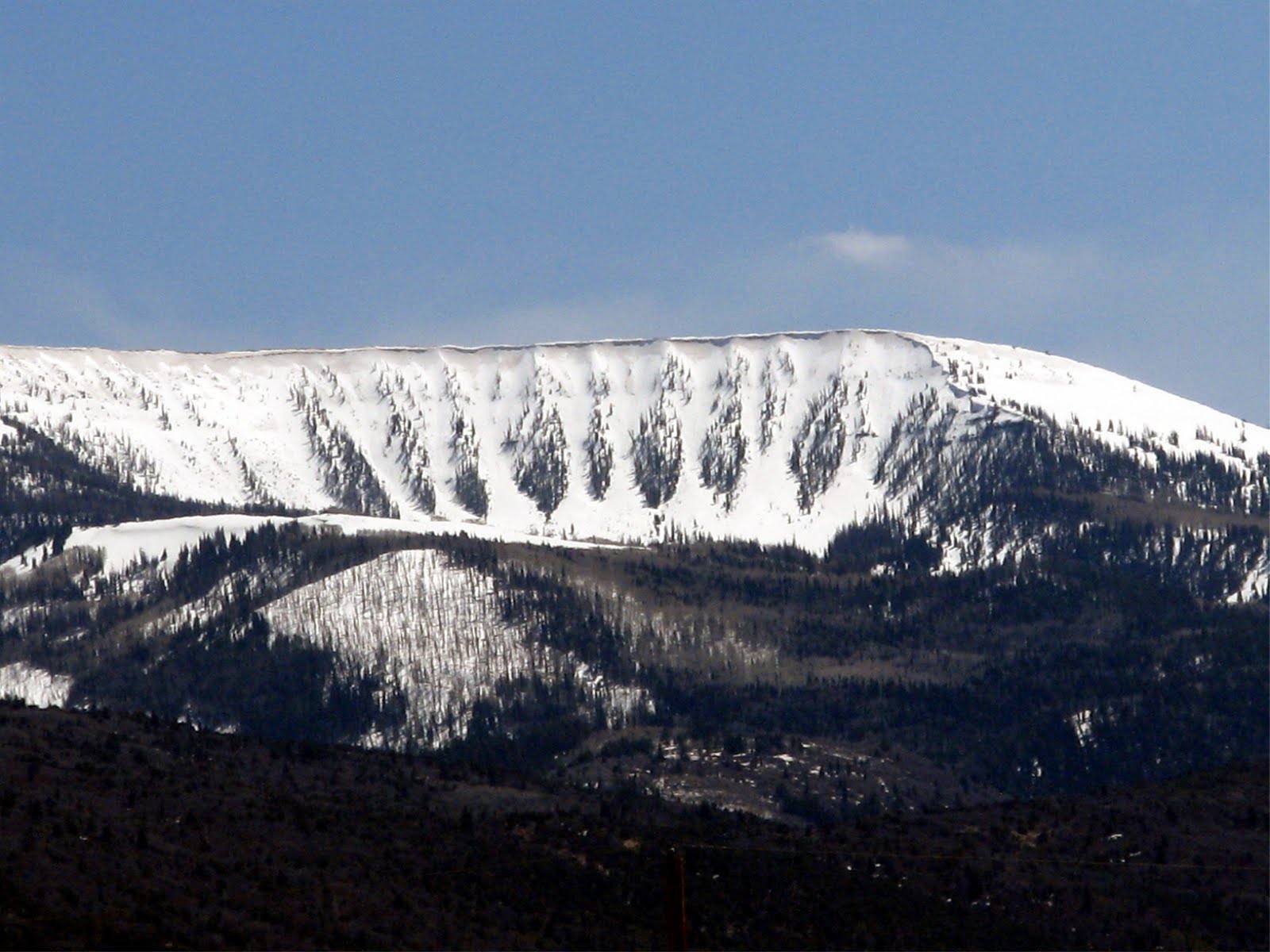
Hilltop is a place where the panoramic view appears before us with an impact, especially when
traveling southward from Spanish Fork Canyon. Suddenly, the white and blue crest appears above the hill,
then in another second, it emerges in its entirety, a resplendent and comforting guardian to most of our North
Sanpete valley. When passing at that point, I usually leave my car and take time to view that always stirring
and familiar scene.
This quotation comes to me:
14
"I am the master of all I survey.
My right there is none to dispute." The words Horse Heaven seem to whisper to me of some magic sanctuary, a haven of peace and
quietude. I have never knowingly seen it, but my mother often spoke fondly of it, which captured my fancy. A
scenic spot situated in the east mountains not far from Mt. Pleasant, it was a favorite spot for young people
and families to visit and enjoy in past years. Sometimes the trip was made on horseback, but when a picnic
was planned, or berries were to be picked, the group usually went in a horse-pulled wagon. Here is an entry
made in my mother's diary, dated September 8, 1898:
"Today the boys invited us to go berry picking, so eight of us went up to Horse Heaven where we had a
nice time. We sang songs, ate melons, grapes, and berries. Then we decorated our wagon with the golden
leaves of autumn and started home."
Fiddlers' Green conjures up a rustling of words—a large lumber dance hall in Moroni. It was easy to
reach by horse and buggy, or the new cars that were becoming numerous in the early '20s. The picnic goodies
were spread on large wooden tables in a splendid array. Everyone circulated and visited. There was a lot of
wholesome laughter. Dance at night ended the festivities.
I must mention another summer retreat, that of Ras Anderson's. It was a small pond of water
surrounded by tall trees. The whole thing is done in bright emerald green in my memory, probably because of
the shimmering water that reflected the trees and foliage in sunlight and shadow. A worn sign near the gate
announced the name as being "Rainbow Fishery," but to us, it was always Ras Anderson's* I think many of the
Mt. Pleasant youth learned to swim in that pond. Two worn, mossy boats were tied up near the shoreline for
the purpose of fishing for Rainbow trout. I remember our class going there for a glorious outing on the last day
of school. We journeyed down Shady Lane, west of town, amidst a combination of odors—wild roses,
intermingled with fresh meadow grass, shiny new green willows that flourished along the stream, plus the
usual dust of the road which we did not seem to mind. We sat on the back of a lumbering hay rack and
dangled our legs, completely oblivious to the woes of the world.
Leaving place names, I'd like to mention just three people's names that stir me and are written
indelibly in my memory book. Some names are strikingly euphonious, which thought brings to my mind the
names of two men—Caratat and Conderset. I have often wondered where their parents found those unusual
names. Caratat Rowe, a member of the Mormon Battalion, settled in Mt. Pleasant in or before 1861. He
later moved to Mountainville. Conderset was his son. These men were true pioneers who blazed trails,
grubbed brush, fought Indians, lived ingeniously, and literally chopped and dug their way to a stable form of
living.
They were often in the company of Peter Gottfredson, a young man who was not afraid to involve
himself in the struggle for survival that was necessary for those days of beginnings. He took everything in his
stride and many of his experiences seemed stranger than fiction.
I think most of us are familiar with Peter Gottfredson's book that he edited and compiled, entitled
Indian Depredations in Utah. It is a priceless gift to us; it relates incidents and information that existed in the
early years of settlement, largely from first-hand experience or primary sources. Many people had the
experiences, but so few of them wrote them down or kept any kind of records.
In his introduction to Depredations. Peter Gottfredson said: "I had a companion by the name of
Conderset Rowe who could talk the Indian language nearly as well as the Indians themselves. It seemed that
he enjoyed the companionship of the Indians as much as he did the whites, which drew me into their company
more than I otherwise would have done."
Because he was a Black Hawk Indian War veteran, Peter Gottfredson was able to spend time in the
Soldiers' Home in Sawtelle, California. While there, he decided to write his autobiography for his family. This
included a valuable account of his pioneer experiences while living in Sanpete and Sevier Counties. Amazingly,
15
he typed his manuscript laboriously on half sheets of type paper and bound it into a good size book
representing hundreds of hours of work. I have been fortunate to read that book, owing to the kindness
of Mrs, Adele Jensen, his daughter, who resided in Richfield, I should like to add one word from this
Gottfredson book to my list of fascinating words.
It is a coined word, completely original, and yet imbued with
character to fit the situation. It challenges one's imagination. This is the quotation: "In a few days, I was sent
over to the Sanpitch River to herd sheep with Cataret Rowe. When it was time to put in the grain, I quit
herding and went grubbing and burning brush for Oscar Winters. We camped in a field about three miles from
Mt. Pleasant. Our food was mostly, as we called it 'Guttamagrowly. It consisted of hard bread cooked in bacon
grease and water. I had an appetite like a wolf and could eat anything I could get and all I could get of it."
The words and connotations I have chosen continue to be of rewarding interest to me. They are
meaningful, nostalgic, and glow with life. They strengthen my appreciation for their "irresistible fascination,
"—the Witchery of Sanpete Words.
1
Lafcadio Hearn by Elizabeth Stevenson.
2William Cowper.
DR. CHARLES H. BIRD, EARLY D