Showing posts with label Shipp. Show all posts

Tuesday, July 30, 2024

WILLIAM FLETCHER REYNOLDS' WIVES (from our archives)


In August of 2009 we shared with you the history of William Fletcher Reynolds written by his daughter Ellis Reynolds Shipp.  http://www.blogger.com/blogger.g?blogID=823365018368490611#editor/target=post;postID=1116391075980015813


Joann Truscott Peterson has now furnished the following histories of two of his wives.

Anna Hawley Reynolds was his first wife and was also the mother of Ellis Reynolds Shipp.


since this posting, Joanne Peterson has found additional information on Clara Reynolds who is standing in the above picture on the back row.


Monday, March 4, 2019

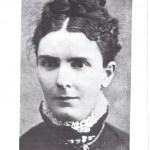
Ellis Reynolds Shipp


Why do we honor Ellis Reynolds Shipp here in Mt. Pleasant?  Because she lived here with her father, William Fletcher Reynolds.  She came across the plains with her father and Mother Anna Hawley They first lived in Pleasant Grove, where her Mother passed away in 1861; and then they moved here to Mt. Pleasant.  The townspeople recognized that she had a brilliant mind.  Brigham Young while visiting Mt. Pleasant asked to meet her.  Brigham Young offered to have her go with him back to Salt Lake where she could live with his family and get the schooling that would most benefit her.  This she did.  


Female leaders of The Church of Jesus Christ of Latter-day Saints

Heroes and Heroines:

Ellis Reynolds Shipp—Mother and Doctor


Ellis Reynolds Shipp knew firsthand about the sickness and death the Saints had to deal with. At the age of five she traveled in a covered wagon with her family to Pleasant Grove, Utah. While Ellis was still a young girl, her mother died. Later, five of her own children died in childhood. Ellis knew how important it was for every mother to learn the laws of good health.
Encouraged by friends, Ellis resolved to educate herself. She adopted a rigorous schedule of rising daily at 4 A.M. to study until 7 A.M. Then she tended to her two small boys, milked the cow, and taught at the ward school. She studied many subjects, but it was medicine that interested her most. Later she studied medicine in Salt Lake City with a Dr. Gunn.
In October 1873 President Brigham Young declared that “the time has come for women to come forth as doctors in these valleys of the mountains.” The first woman to answer President Young’s challenge was Romania B. Pratt in 1874. Then on November 10, 1875, Ellis made a curious entry in her diary: “What a strange fatality! This morning I start for Philadelphia to attend Medical College.”
With her husband’s encouragement—yet reluctant to leave her young sons—Ellis left for the East. She arrived in Philadelphia, Pennsylvania, at three-thirty in the morning and slept on a bench in the railroad station until daybreak. Although the next few months of the valiant woman’s life were filled with constant study, she grieved for her children, and she anxiously awaited letters from home.
In the spring Ellis’s husband, Bard, came to visit her. Finding his wife weak and tired, he encouraged her to come home for the summer. After being home awhile, Ellis found that financial problems, the anguish of leaving her children again and the discovery that she was pregnant made it difficult for her to even think about returning to school. Yet her strong convictions that she should serve others, and her desire to help her family, overcame her reluctance, and she returned to her medical studies.
Back at school Ellis had to conserve what little money she had. In exchange for food, she began instructing a baker’s daughters in dressmaking. She was deeply touched when her young son sent her a letter with a pressed flower and a dollar he had earned.
Worried that her pregnancy might end her schooling, Ellis prayed all one night to the Lord that she might have the strength to finish her classes before the baby was born. Ellis did not miss a single class! On May 25, 1877, the day after she passed her exams, she gave birth to a baby girl. Ellis was delighted to have a daughter, and she wrote in her diary: “It is to me the crowning joy of a woman’s life to be a mother.”
The August heat became unbearable, so Ellis took her daughter Olea to the New Jersey countryside. Walking from farmhouse to farmhouse, Ellis finally found a home where a mother welcomed her to stay and teach her daughters dressmaking skills in exchange for board and room.
In the fall Ellis returned to her last year of school. On March 14, 1878, at the age of thirty-one, Ellis recorded in her diary: “Graduated from Woman’s Medical College of Pennsylvania.”
Upon returning home, Ellis moved her family into a house near her office. “Thus began the happiest hours of my life,” Ellis wrote. She was now with her sons and daughter. Her boys helped clean the house, tend the baby, and deliver messages. On one occasion, Ellis was on calls for a period of twenty-four hours, during which time she delivered five babies. When she returned home, her two boys were waiting for her; they immediately rushed her off to bed and made sure she was not disturbed while she rested.
Sometimes when Ellis returned home from visiting the sick, her arms were loaded with eggs, chickens, or butter. Usually she received a twenty-five dollar fee for such calls, but she knew how little money some of her patients had and she was glad to help them in any way she could. “My needs were never so urgent,” she wrote, “that I felt the necessity of placing bills in the hands of collectors.”
Ellis soon realized that she and the few other women doctors in the area were not enough. In the fall of 1878 she opened her School of Obstetrics and Nursing. It was not unusual for Ellis to be pregnant or for her to be holding the baby of one of her students while she lectured.
After returning from medical school, Ellis gave birth to four children—two boys, who died in infancy, and two girls.
Not only did Ellis teach classes in Utah, she also traveled with her children to teach in Canada, Mexico, Colorado, and Nevada.
Successfully combining motherhood and a medical practice, Dr. Shipp helped thousands of people during her lifetime. She died in 1939 at the age of ninety-two.


Objects courtesy Daughters of Utah Pioneers Museum. (Photos by Eldon Linschoten.)

Saturday, October 6, 2018

William Fletcher Reynolds ( One of our first "Pioneer of the Month" ) selections


William Fletcher Reynolds

We now have an excellent picture of him - - -Thank you Joanne!


Dictated and prepared by his oldest daughter, Ellis Reynolds Shipp


My father, William Fletcher Reynolds was born on the 8th of August 1826 in Fayette County, Indiana. His father, James Burt Reynolds was in Maryland about 1796. His mother, Eliza Ann Lawrence Reynolds came to America on a "Man of War" vessel in the days of our pilgrim fathers. As yet we have no trace of my father's ancestry, as to their honor and integrity we can never doubt, but for their carelessness in keeping records, we can never cease to regret.


My father, was one of a number of brothers and two sisters, Mary Emeline and Eliza Ann of whom I have often heard him speak most tenderly.


At an early age, he was made an orphan and mostly thrown upon his own responsiblity. However, his innate honesty and industry enabled him to make his way honorably and obtain through his intelligence and genius, a very remarkable power of usefulness which with his generosity, kindness and sympathy were a remarkable combination, proving a blessing throughout all phases of his life. His genial nature and executive ablility made him an ever welcome addition to any group or community.


At an early age, he made the acquaintance of the Hawley Family, where he was ever a welcome guest. My grandparents soon learned to love him as their own son and the early age of 19, he became the husband of their daughter Anna. She was the sainted one to become my mother when but seventeen years old. While regretting so early a motherhood for her, for myself I shall ever feel grateful for the ideal union of those "two souls with but a single thought and two loyal hearts that ever beat as one." Never in my years have I ever known such perfect congeniality between mortal man and woman. Truly the most perfect connubial happiness I have ever known.


It was in those early days that my people first heard and received the Gospel of Jesus Christ of Latter Day Saints. That same gospel taught by Jesus Christ of former day saints.


In the year of 1852 my happy father left his native land and all his kindred but his youngest brother Levi W. Reynolds whom he sponsored to the far west, greatly to the dissatisfaction of his elder brothers because of their unbelief in what was called by them the Mormon Doctrine. My father was sincere in his belief and enduring faith and joyfully took up his ox whip and steered the way of his covered wagon with his dearest treasures and all his human possessions. He had been a wise and helpful co-worker with my mother's father in the years of preparation for their long journey into the wilderness of the west. He was a true son to his wife's parents and they loved and honored him as did all who knew him for his genial, upright, helpful ways as a husband and father. He was as perfect as a mortal could ever be. As a saint of the living God, his faith and integrity was true to the end.


On that long eventful pioneer journey, his inventive genius, skill and efficiency seemed in constant demand, being ever ready to repair damage for all in need. Never was he too busy to lend a helping hand. He quickly detected defective mechanism in any machinery for which he knew the remedy. In my recollection, I can see him now trudging patiently the old rough trails managing his two yoke of oxen more with his kind words and gentle voice than with the whip in hand. He was ever on the alert to pick up the pretty pebbles or shells for me, and especially any lost or cast off article found along the trail.


One day, it chanced to be two wagon tires which he thought might sometime be utilized for good. He tied them securely to the side of our wagon and there for many weeks they rattled and dangled with every jolt, which yet I seem to hear. But to my childish mind the most assuring music of the journey coming above all the clatter of the moving caravan, was the voice of my father shouting encouraging words and warnings and pointing out landmarks and beautiful scenery. He was eve a peace maker, not only with humanity but with animals. He could see ways and means superior to easing the load. He seemed to know how to ward off stampedes with wild cattle and buffalo which sometimes threatened. He was merciful to the Indians and dangers could be avoided by kindness, "to feed and not fight them."


The now historic touching story of the death and burial and last resting place of our friend and sister in the gospel, Rebecca Winters, could never have been forcefully told had it not been for the wagon tire surmounting her grave upon which my father chiseled the name, "Rebecca Winters 52" making it now an important landmark of the Old Oregon Trail. And it should be a monument of honor to men who sat up through the long night to laboriously chisel the hard iron by the dim candle light of an old lantern. While others slept, he worked and thus exemplified the unflinching innate desire of his honest soul to live a life of service. So in every righteous cause, 'twas thus he gave his precious life to the fulfillment of this purpose. He became immune to smallpox through a severe attack of the confluent variety and thus he in his whole lifetime worked through many such epidemics going where the nearest and dearest ones dared not to go, a constant bedside nurse helping to restore to health, giving hopeful relief in faith and good cheer. And in fatalities, he alone ministered in those last sad rites of burial and removing all possibilities of further contagion, burning and burying every vestige of danger.


On arriving in Utah, our home was first made in Utah County called "the bottoms" near the present site of Pleasant Grove on what was a sort of camping ground for the first winter, but in the spring my father assisted in locating the site for what is now called Pleasant Grove. Its first name was called Battle Creek because of a former battle with Indians on that spot. The first few years were years of struggle and unbounded endeavor. In two cities, Pleasant Grove andMt. Pleasant, he planted the first fruit trees.


Within a very short time after completing his little log cabin for his home, he constructed a planing mill in his granary adjoining. This mill was set in motion with his feet while his dexterious hands succeeded in turning rounds for broken down chairs or any other needed reconstruction of household furniture. Here he would replace the broken fragments with the new he had turned on his lathe. He would reseat the old chairs with green willow, rawhide or rope, polish up with a coat or two of paint, making them look like new. His labor were done in the morning and evenings between strenuous farm duties. As a child I enjoyed seeing the shavings fly in that shop which seemed almost like fairyland as I watched a piece of rough wood fashioned into butter bowls and paddles and rolling pins and potato mashers. The best were fashioned from pieces of mahogany he discovered in nearby canyons. The whole neighborhood was supplied with these useful kitchen utensils. Even as children we had them in our playhouses. Throughout the whole country, my father was known for his genius and handiwork. He had great executive ability which proved a great factor in building a new home in the desert land. His service proved a great blessing to the inexperienced. It was said, he could do anything from building a house to painting the flags for a 4th of July Celebration, or even making a crochet hook for the little girls just learning to make laces for their panties which they so proudly wore with their little white edges showing below their dresses.


We had not long been in Utah when in 1859 my father's quick eye discovered in the dashing waters of the American Fork Canyon, the very favorable possibilities of a grist mill or flour mill where the scanty harvest of wheat and corn could be ground into flour and meal to make our bread and his firtile brain had soon conceived the wonderful ideas, or should we say it was a divine inspiration, for the sustenance and the physical salvation of a righteous, God fearing people. Thus did a true, pure minded man put his hand and head and heart to the work of the construction of this mill which was in good running order in 1859.


In 1862, Grandfather Reynolds built in Pleasant Grove a mill with great wooded rollers for extracting the juice from the native sugar cane. He also constructed metal vats where the syrup was boiled down to the molasses which was such a luxury to the saints. Pioneers brought their sugar cane from many miles to his mill.


One of our first buildings was of logs brought from the hills. This one room structure served for a school house and church activities. For evening service a sagebrush fire in the large fireplace was our only light until the advent of tallow candles molded by our ingenious mothers.


In the building of every domicile thereabouts, my dear father was more or less active for he was naturally skilled in carpentry and all manner of mechanics. In his little shop he constructed a turning lathe which he propelled by treading with his feet. Here he turned the housekeepers rolling pins and potato mashers and made many toys for the younger generations, wooden eggs for Easter and for their elders, repaired broken down furniture and made them new when called for. All this work was done in the evenings and between the hours of laborious farm industries. He made and repaired everything for the people, from a crochet hook to the house that sheltered them. He put new seats in their chairs with rawhide and willow. And best of all he loved and honored by his chosen people whom he not only blessed with his efficient manual service but with his unbounded faith so pure and childlike and yet so powerful to bless a sufferer. So often his humble ministrations brought blessings upon me as a child.


My father, with ready genius strength and brawn and implicit faith, discovered in the dashing waters of American Fork Canyon the motor power for a grist mill where the whole wheat and the golden kernals of corn could be converted into flour and meal and thus he set about to construct a mill for this purpose whidh he did successfully. A little later, down in the valley, he constructed a large water wheel which supplied the power in the Battle Creek waters for running wooden rollers to crush the long sugar cane stocks pressing out the wonderful supply of juice to be boiled in the vats the same skillful hands had constructed and thus was supplied the needed sweets, the molasses for our tables and the sweeteneing for all our desserts and so nice to eat with our corn bread. Now at this late date, I bow my head in reverence and gratitude for the faith and skill and executive ability of my father.


As husband and father I have never seen his devotion equaled. For him, no effort or sacrifice was too great to make for his beloved Anna. And his sacred devotion was mutual. What an example to their posterity, for which I as their daughter, can never express my gratitude for the blessing it has proven, for which I as their daughter, can never express my gratitude for the blessing it has proven to me in my own home life. When my mother was ill, my father would climb in the heat of the summer sun to the highest peakes of the Rockies for snow to quench her thirst and cool her fevered brow. No effort was ever too great that could bring blessings to those he loved.


No home life could ever be more blessed than that of my childhood and its sacred influence will live in my soul forever. In heaven it had its origin and there it will live forever. In mortality, it could not long exist. Too much of joy to remain of eearth apart. We found this so sadly true with the passing of my angel mother, January 28, 1861 but with such a father, his devoted love, his divine faith and the gracious love which our Father in Heaven bestows on those whom he chasteneth, we found comfort and strength and blessed resignation. Every day we missed her guiding ministering presence and yet we knew that she, with our Eternal Father's love was guiding us through mortal paths. In gospel truth, my father's faith never wavered and in good works he never faltered.


With a number of others, my father was advised to remove to Sanpete County to build up another center stake of Zion, where a number of new colonies were established. In the meantime he had brought home to us a new mother, and I am assured no nobler stepmother ever lived. I had no fears after a short time of residing in the care of two beloved sisters and two equally loved brothers to her watchful care, for I knew she was a noble woman with a most kind, loving sympathetic nature.


My father soon became one of the presiding bishopric of his ward and once began another mission of reconstruction. Another mill for grinding the grain which soon became very plentiful. This mill was another monument to my father's constructive ability.


In the year 1864, he filled a mission to his native state of Indiana and old home in Iowa where he carried the message of the Gospel of Jesus Christ, to his kindred and all who would listen to the great plan of salvation, making every effort to secure genealogy of his kindred now gone. On his return I was blessed with the opportunity of assisting in this work in the old Endowment House when he visited me in my own home after my marriage. This was a sacred work of great satisfaction to both of us. This glorious work for our kindred dead who never had the privelege of doing for themselves. Later my father and his new family removed to Colorado. My mother's children were all married and settled in their own homes and taking noble part in the same work of their pioneer parents.


Through all these many years of changing, never ending vicissitudes, my father's industries and novle works continued. His faith in the Gospel was unwavering. In 1899 I made a visit, and at the same time utilized my time in teaching classes for women on the art of nursing, while I had these pleasant visits between times. When the parting time came, I had a premonition that our next reunion would be in that "better land" where parting never comes again.


How bitterly I wept as he clasped me in his arms as in the olden days, when he would lull my cries and repeat, "Don't cry, darling." This time how I well understood his comforting words and well I knew his words would come true, "We would meet again." but not in this life. Although in those later years we were so far distant from each other, our devotion for each other never wavered. I knew no child ever had a more tender, kind and helpful father, one more faithful and mindful of a daughter's welfare, more exemplary and wise in his teachings and more lovingly true.


I was far away when his call came. When the sad news reached me, I was an orphan indeed! I had already said my last good byes, now I was too far away to reach him. I wasz in a situation rendering a long journey impossible.l I was far from home and all my kindred. No comforting note could reach me, save the echoing of memory, "Don't weep, my child, we shall meet again." At the age of 78 he passed on to his reward. All who knew his integrity and good works knew full well his reward was sure in the highest glories of eternal life. Oh, I feel assured through his spiritual uplifting and daily righteousness of life that he has earned life everlasting and how well we know, "Truth is reason, Truth eternal and that in heaven we have a father and mother there." And those precious ones, our earthly guardians will be there to meet us once again, in perfect blessedness.
Front Row: Wm. Fletcher Reynolds with wife Anna K. Laussen and Emma Reynolds
Back Row: Levi Reynolds, Carl Reynolds, Asa F. Reynolds, and Clara Reynolds Kofford


(sent in by JoAnn Truscott Peterson)


Wednesday, July 1, 2015

Rebecca Winters ~ Pioneer of the Month ~ July 2015 ~~~~~ And Who Marked Her Grave?


Rebecca Winters (pioneer)

From Wikipedia, the free encyclopedia


Rebecca Winters

Grave of Rebecca Winters
Born Rebecca Burdick
January 16, 1799
Canajoharie, New York, U.S.
Died August 15, 1852 (aged 53)
near Scottsbluff, Nebraska, U.S.
Religion Latter-day Saint
Spouse(s) Hiram Winters
Children Oscar Winters
Alonzo Winters
Hiram Adelbert Winters
Rebecca Winters
Helen Melissa Winters
Parent(s) Gideon Burdick
Catharina Schmidt


Rebecca Burdick Winters (January 16, 1799 – August 15, 1852) was a Mormon pioneer who with her family left the eastern United States to emigrate to the Salt Lake Valley with other Latter-day Saints. In August 1852, en route to present-day Utah, she died of cholera near present day Scottsbluff, Nebraska. Her grave, located in the Rebecca Winters Memorial Park, has become a popular landmark along theMormon Trail and is a Nebraska State Landmark.[1]


Biography[edit]
Origins[edit]

Rebecca Burdick was born to Gideon Burdick and Catharina Schmidt in Canajoharie, New York. In 1806, Catharina died; Rebecca was only seven years old at this time. Rebecca's father, Gideon, then married Jane Ripley Brown, and when Rebecca was 18 the family relocated to Athens County, Ohio. Here she met Hiram Winters and they were married in 1824. Eventually the two were introduced to Mormonism and joined the Latter Day Saint church. They moved their family to Kirtland, Ohio, to gather with other church members.[2] Burdick's brother, Thomas Burdick, was also converted to the church.

When living in Kirtland, Rebecca and Hiram were caretakers of theKirtland Temple.[3]
The Trek West[edit]

After leaving Kirtland, the Winters family briefly stayed in Nauvoo, Illinois, before leaving on the Mormon Trail with the James C. Snow Wagon Company in June 1852.[4] On August 13 of that year, while near Chimney Rock, Rebecca became sick with cholera, and the illness continued to get worse until she died on August 15. Following her death, William Reynolds, a family friend, carved her name and age into an iron wagon tire and buried it to mark the grave's location.[5]
Grave site and relocation[edit]

After the completion of the Union Pacific Railroad, Mormon pioneers stopped traveling by foot and Winters's grave was all but forgotten. Farmers in the Scottsbluff area knew about the grave, but it was not until the end of the 20th century that the grave became a tourist attraction. It was during this time that the Burlington & Missouri Railroad was running a railroad line through the Platte Valley, and after discovering the marked grave, they rerouted the tracks from their original plan to avoid disturbing it. For almost 100 years, thousands visited the grave site, so in 1995 the Burlington Northern Railroad decided to relocate the grave for the safety of visitors (due to its proximity to the railroad tracks). In September 1995, her body was exhumed and relocated a little further east and north of the original location. In June 1996, hundreds of Winters's descendants gathered for the dedication of the Rebecca Winters Memorial Park. The grave remains one of the few marked graves along the Mormon Trail.
References[edit]

Jump up^ Scotts Bluff County Tourism. "Rebecca Winters Grave". Nebraska's Landmark Country. Retrieved 18 October 2010.
Jump up^ Olsen, Beth R. Among the Remnant who Lingered Micro Dynamics Electronic Publishing, Inc., Orem, Utah, 1997.
Jump up^ Olsen, Beth R. Among the Remnant who Lingered Pg. 33, Micro Dynamics Electronic Publishing, Inc., Orem, Utah, 1997.
Jump up^ "Mormon Pioneer Overland Travel, 1847–1868", History.LDS.org(Church History Library, LDS Church), retrieved 2013-08-19|chapter= ignored (help)
Jump up^ Olsen, Beth R. Among the Remnant who Lingered Pg. 77-78, Micro Dynamics Electronic Publishing, Inc., Orem, Utah, 1997.
External links[edit]
The Rebecca Winters Genealogical Society
Mormon Historical Sites Registry - Rebecca Winters Grave
Helen Hughes Vick, "Woman of the Dead", The Friend, April 1993.
Contents [hide]
1 Biography
1.1 Origins
1.2 The Trek West
1.3 Grave site and relocation
2 References
3 External links


 William Fletcher Reynolds marked her Grave :  The following was written by Ellis Reynolds Shipp
In the year of 1852 my happy father left his native land and all his kindred but his youngest brother Levi W. Reynolds whom he sponsored to the far west, greatly to the dissatisfaction of his elder brothers because of their unbelief in what was called by them the Mormon Doctrine. My father was sincere in his belief and enduring faith and joyfully took up his ox whip and steered the way of his covered wagon with his dearest treasures and all his human possessions. He had been a wise and helpful co-worker with my mother's father in the years of preparation for their long journey into the wilderness of the west. He was a true son to his wife's parents and they loved and honored him as did all who knew him for his genial, upright, helpful ways as a husband and father. He was as perfect as a mortal could ever be. As a saint of the living God, his faith and integrity was true to the end.

On that long eventful pioneer journey, his inventive genius, skill and efficiency seemed in constant demand, being ever ready to repair damage for all in need. Never was he too busy to lend a helping hand. He quickly detected defective mechanism in any machinery for which he knew the remedy. In my recollection, I can see him now trudging patiently the old rough trails managing his two yoke of oxen more with his kind words and gentle voice than with the whip in hand. He was ever on the alert to pick up the pretty pebbles or shells for me, and especially any lost or cast off article found along the trail.

One day, it chanced to be two wagon tires which he thought might sometime be utilized for good. He tied them securely to the side of our wagon and there for many weeks they rattled and dangled with every jolt, which yet I seem to hear. But to my childish mind the most assuring music of the journey coming above all the clatter of the moving caravan, was the voice of my father shouting encouraging words and warnings and pointing out landmarks and beautiful scenery. He was eve a peace maker, not only with humanity but with animals. He could see ways and means superior to easing the load. He seemed to know how to ward off stampedes with wild cattle and buffalo which sometimes threatened. He was merciful to the Indians and dangers could be avoided by kindness, "to feed and not fight them."


The now historic touching story of the death and burial and last resting place of our friend and sister in the gospel, Rebecca Winters, could never have been forcefully told had it not been for the wagon tire surmounting her grave upon which my father chiseled the name, "Rebecca Winters 52" making it now an important landmark of the Old Oregon Trail. And it should be a monument of honor to men who sat up through the long night to laboriously chisel the hard iron by the dim candle light of an old lantern. While others slept, he worked and thus exemplified the unflinching innate desire of his honest soul to live a life of service. So in every righteous cause, 'twas thus he gave his precious life to the fulfillment of this purpose. He became immune to smallpox through a severe attack of the confluent variety and thus he in his whole lifetime worked through many such epidemics going where the nearest and dearest ones dared not to go, a constant bedside nurse helping to restore to health, giving hopeful relief in faith and good cheer. And in fatalities, he alone ministered in those last sad rites of burial and removing all possibilities of further contagion, burning and burying every vestige of danger.   see more:http://mtpleasantpioneerofthemonth.blogspot.com/2009/08/william-fletcher-reynolds-pioneer-of.html

  Also see: http://www.rootsweb.ancestry.com/~nerwgs/winters.html

Sunday, September 1, 2013

William Fletcher Reynolds Wives

In August of 2009 we shared with you the history of William Fletcher Reynolds written by his daughter Ellis Reynolds Shipp.  http://www.blogger.com/blogger.g?blogID=823365018368490611#editor/target=post;postID=1116391075980015813


Joann Truscott Peterson has now furnished the following histories of two of his wives.

Anna Hawley Reynolds was his first wife and was also the mother of Ellis Reynolds Shipp.


since this posting, Joanne Peterson has found additional information on Clara Reynolds who is standing in the above picture on the back row.


Friday, July 5, 2013

Duty ~ A Poem by Ellis Reynolds Shipp


To those of you who may not know the story of Ellis Reynolds Shipp, she came across the plains as a child with her father and mother. Their first home was in Pleasant Grove, where her mother passed away, her father remarried. They later moved to Mt. Pleasant. Everyone who knew her knew she had a great gift. She learned fast, remembered everything. She was obviously very intelligent. When Brigham Young came to Mt. Pleasant for a conference, he asked to meet with this young girl. After visiting with her a short while, he invited her to live in the Lion House with his family where she could get the best education possible here in the Utah Territory. She prayed about it and worried some about leaving her father. Her father encouraged her to go to Salt Lake and take advantage of Brigham Young's offer. She was tutored with the children of Brigham Young. One of her tutors was Karl Maeser. She later married Milford Shipp and ultimately gave birth to ten children. Four of those children died in infancy. Milford had entered into polygamy and married four more wives. Brigham Young announced that women would be sent east for training as doctors so that they could return to Utah and serve as physicians. Ellis left her children with her sister wives and went to Philadelphia to study medicine. After three years, she returned home and set up her medical practice in Salt Lake. During her career she delivered more than 5,000 babies. She also served on the Relief Society General Board. Amongst everything else she accomplished in her life, she wrote a book of poetry entitled "Life Lines".  


DUTY


Oft we ask ourselves the question

What list for us to do?

What in life the best vocation----

Best for woman to pursue?


Shall we be the dolls of Fashion?

Loved and flattered for a while,

Simply live for passing passion,

Sycophantic smile;


Shall we live for vain ambition?

Live to gain life's wealth and power?

Feast on words of adulation,

on the friendship of an hour?


Shall we live for public duty?

To reform low and vile?

Shall we stake our all on beauty,

Or to add to Mammon's pile?


Shall we live for home's fair altar?

Ne'er to pass beyond it's shrine?

Shall we put our hearts in halter

of mere Fashion all the time?


To these queries, what's the answer?

Duty at the time is all!

Let our thoughts and feelings center

On our Duty !  That's the Call !


Know it, love it, act it bravely,

Wheresoever o'er the path it may lead,

For 'twill bring so perfect pleasure,

And at last the richest meed.

Saturday, May 4, 2013

Days The Dearest


A short synopsis of her life:


To those of you who may not know the story of Ellis Reynolds Shipp, she came across the plains as a child with her father and mother.  Their first home was in Pleasant Grove. Her mother passed away, her father remarried.  They later moved to Mt. Pleasant. Everyone who knew her knew she had a great gift.  She learned fast, remembered everything.  She was obviously very intelligent.  When Brigham Young came to Mt. Pleasant for a conference, he asked to meet with this young girl.  After visiting with her a short while, he invited her to live in the Lion House with his family where she could get the best education possible here in the Utah Territory.  She prayed about it and worried some about leaving her father.  Her father encouraged her to go to Salt Lake and take advantage of Brigham Young's offer.  She was tutored with the children of Brigham Young.  One of her tutors was Karl Maeser.  She later married   Milford Shipp and ultimately gave birth to ten children.  Four of those children died in infancy.  Milford had entered into polygamy and married four more wives. Brigham Young announced that women would be sent east for training as doctors so that they could return to Utah and serve as physicians. Ellis left her children with her sister wives and went to Philadelphia to study medicine.  After three years, she returned home and set up her medical practice in Salt Lake.   During her career she delivered more than 5,000 babies.  She also served on the Relief Society General Board.  Amongst everything else she accomplished in her life, she wrote a book of poetry entitled "Life Lines".  As you read the poem below, she mentions the fort, the mill, school days, and dances with candle light.  Many of these memories I am sure were of our own dear Mt. Pleasant! The Daughters of Utah Pioneers honored her this month of October with a story.  We are proud to call her one of our own.   


Wednesday, October 28, 2009

THE GOOD OLD DAYS - Ellis Reynolds Shipp


To those of you who may not know the story of Ellis Reynolds Shipp, she came across the plains as a child with her father and mother.  Their first home was in Pleasant Grove. Her mother passed away, her father remarried.  They later moved to Mt. Pleasant. Everyone who knew her knew she had a great gift.  She learned fast, remembered everything.  She was obviously very intelligent.  When Brigham Young came to Mt. Pleasant for a conference, he asked to meet with this young girl.  After visiting with her a short while, he invited her to live in the Lion House with his family where she could get the best education possible here in the Utah Territory.  She prayed about it and worried some about leaving her father.  Her father encouraged her to go to Salt Lake and take advantage of Brigham Young's offer.  She was tutored with the children of Brigham Young.  One of her tutors was Karl Maeser.  She later married   Milford Shipp and ultimately gave birth to ten children.  Four of those children died in infancy.  Milford had entered into polygamy and married four more wives. Brigham Young announced that women would be sent east for training as doctors so that they could return to Utah and serve as physicians. Ellis left her children with her sister wives and went to Philadelphia to study medicine.  After three years, she returned home and set up her medical practice in Salt Lake.   During her career she delivered more than 5,000 babies.  She also served on the Relief Society General Board.  Amongst everything else she accomplished in her life, she wrote a book of poetry entitled "Life Lines".  As you read the poem below, she mentions the fort, the mill, school days, and dances with candle light.  Many of these memories I am sure were of our own dear Mt. Pleasant! The Daughters of Utah Pioneers honored her this month of October with a story.  We are proud to call her one of our own.  You can read more of her life here!

What blessed days! log cabin days!
Near sixty years ago,---
When by the firelight's ruddy haze,
Our cheeks were all aglow!
And youthful hearts were bounding high
With hope and guileless cheer,
For down fell snowflakes from the sky,
And holidays were near!

Fond memories so brightly come,
Like beams of radiant light---
Oh, there was some one coming
To greet me Christmas night;
Some one, who months and months ago,
had sailed across the sea,
Returning with his mission done,
Now coming home to me!

What pretty dreams of pleasant sport,
Of coasting down the hill,
Of sleigh-rides to the old town fort,
And skating by the mill;
Of spelling schools to show our might
In education's lore,
The dance at early candle light,
And payments at the door.

A tallow dip it was, perchance,
Or produce from the farm
Secured the ticket for the dance
Thus adding to its charm.
For very oft our lot had been
To dance by sage-brush blaze.
While feet kept time to violin,
In dear, old frontier days!

Thou good, old days! dear, youthful days!
of coarse and homely fare,
Pure, simple life-more simple ways
In joy finds no compare!
When Father tilled and mother sewed
And bravely met each fate,
Together bore lif's heavy load,
Through early hours and late!

For those they loved, 'twas joy to toil,
No struggle seemed too great,
They gained their substance from the soil,
and learned in faith to wait.
'Twas God sustained them day by day---
His light had led them there---
He was their strength, and staff, and stay,
Through every changing year!

Sweet, dear, old days! romantic days!
Of beauty, love and truth,
Now long since fitted from my gaze,
O dear, old days of youth!
When under fond and sheltering wing,
We knew but love's caress,
What sacred bliss those mem'ries bring---
Parental tenderness!

Parental wisdom, too, was brought
To guide each youthful mind,
Then truth and honesty were taught,
Life's choicest pearls to find;
O Guileless days!dear, good, old days!
They'll ne'er forgotten be!
They ever will attract the gaze
Of our fond memory!

Ellis Reynolds Shipp