Showing posts with label Wallis. Show all posts

Sunday, May 31, 2026

MINUTES OF FEMALE RELIEF SOCIETY (From our archves)


Thanks to Beverly Anderson Olsen, we now can share with you the Minutes of the Female Relief Society of 1874 and beyond.  Beverly told us that these were in her mother's things.  Her mother was Leota Anderson.  The picture of the original South Ward 1923  Sunday School Class also came from Leota and her husband, Lewis. 

The Relief Society President was Mary Margaret Forquhar Cruickshank Morrison.  Her Counselor was Christiana Folkman Peel.  There were several Secretaries during this time period beginning with  an E. Wallis.  Later, Hilda Dehlin becomes the Secretary. 

The meetings back then, were held at Social Hall.


Mount Pleasant
Female Relief Society
Minute Book


Meeting held in  Social Hall February 9th 1874.  Opened with singing and prayer by Sister Hemmet.
Sister Morrison exhorted the sisters to be diligent and especially themthat has young girls to try and teach them to be virtuous and wise; said a little amusement is good, too much is dangerous, instill into their minds true principles, let them dress becomingly.  The Visiting Committee that went around gave satisfactory reports.

Several of the Danish Sisters bore their testimony in thier own tongue, good spirit prevailed.  Sister Morrison made some lengthey (sp) remarks on different subjects to cooperation and polygamy.  She hoped the sisters will teach these principles as they visit the houses, but don't cram it as it is were; treat everybody kind.  Have the spirit of God with you and that will teach you what to do and say.

Wants that the old and feeble hould be taken care of.  It was moved and carried that Sister Poulson's children should have some schooling.  Pay Flower.  Sister Merrick should have a petticoat and Mother Walker have what we can get for her. 

Sisters Peel and Johnson, (Albine) were received as teacher of the Visiting Committee, also Sophia Stanfill as a member of the same.

Sister Tregore wants to have her child, 12 years of age to this place through the assistance of the F.R. Society.

Sister Peel explained to the Danish Sisters what had been said by Sister Morrison.  Sister Simpson bore her testimony.  She feels thankful for the privelege we have and said we ought to treasure up all the good things we hear from time to time and let us be wise mothers in Israel. 

Closed by singing and prayer by Sister C. Jensen.
M.F. Morrison, President
E. Wallis,  Secretary


Tuesday, April 29, 2025

MT. PLEASANT RELIEF SOCIETY MEETING HELD MARCH 9, 1874 AT SOCIAL HALL


Old Social Hall was built before any churches in Mt. Pleasant.  It stood just south of where the red church stands today; at about 85 South State street.


Meeting held in Social Hall March 9th, 1874. 
Opened by singing and prayer by Sister Peel.  Minutes of a former meeting were read to accept.

Sister Morrison wished to hear the sisters speak freely and appreciated the opportunity.  Said the Lord will help them that help themselves.  Sister Jensen gave her report in Danish.  Sister C. Jensen and Sister E. Seely bore their testimony  - - - felt glad they were connected with this work.  Several of the Danish sisters spoke in their own tongue  - - -                                                        all felt well.

Sister Christena Christensen thanked the Society in behalf of her father for the garments. He received his on his 77th year of age and is sick. 

Sister Morrison made a few remarks concerning the wants of the people.  She wants the teachers to have the spirit of their calling, so that they may really know and understand the needs assistance; for as a people we are getting numerous.  We must keep up with the times.  Sister Peel made a few edifying remarks.  Sister S. Peterson bore her testimony - - - felt glad she had a standing in the church.  She said God is merciful unto her and her children....said that He helps them that help themselves.

Sister Peel felt well....said it is good for us to meet together in the name of our Father.  Said no one has any need to suffer . . . wants that the visiting teachers should see into the wants of the people, poor and aged.  Sister Fetcher bore her testimony....felt glad to meet with the sisters.  She has been deprived from the meetings through her daughters's sickness.

It was moved and carried that Sisters Ann and Sena Johansen were admitted as members of the Relief Society. 

The meeting was closed by singing and prayer by Sister Simpson.
MF Morrison, President
Elizabeth Wallis, Secretary


Friday, March 14, 2025

PARLEY OLOF and PEARL WALLIS ROSENLOF


Parley Olaf Rosenlof:  Birth: 19 September 1880 Mount Pleasant, Sanpete, Utah Territory, United States  
                                        Death: 5 October 1961 ~ Mt. Pleasant, Utah                                                                                                              


The backside of Parley's Barn East of Mt. Pleasant


50th Wedding Anniversary of Parley Olof and Pearl 


Monday, February 8, 2016

Early Dramatics In Mt. Pleasant

EARLY DRAMATICS   (Taken from the History of Mt. Pleasant pp 301-306)


By Dora Day Johnson
as told Valentine L. Anderson, 1924


I came to Mt. Pleasant March 1860. I was at that time eight years old. That winter the old log meeting house, in the center of the fort, was the play house. Some of the players who took part at that time were Wood Brandon, John Ivie and his wife.


Katherine Ivie, Dolph Bnennett, George Porter, Joseph S. Day and others whom I do not now remember. They played, "Good for Nothing Nan," and the "Merchant of Venice." The scenery was wagon covers and other materials mixed together, but didn't we children enjoy it! and so did everyone else. The next play house was the Social Hall, with real scenery. Wood Brandon and Kather­ine Ivie were the only two members who stayed with the company. In 1869 a new dramatic company was formed. Niels Madsen was always our treasurer, and took care of our cash, which consisted mostly of wheat, cedar posts, vegetables, etc. Those belonging to the company from time to time were, Stena Burrison, Lucy Whee­lock, Alice and Laura Day, Jane Tidwell, Kate Candland, Stena Tuft, Katherine Ivie, Rose Reynolds, and myself. The men were Dick Westwood, Henry Larter, Alfonzo Wheelock, Jerry Page, John Carter, Joseph Gribble, and my husband, Gustaf Johnson. Once in a while, Melvin McArthur and his brother, Duncan, Con­derset Rowe, Henry McKinney, Peter and Hans Gottfredson, Wood Brandon, Tom Coates, and a number of others whom I do not recall, would join the company.


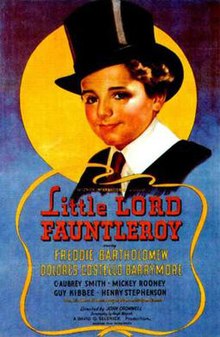
During the winters of 1869 and 1870 the company would play three successive nights a week in Mt. Pleasant, and would also play in the neighboring towns, traveling, of course, in bob sleighs or wagons. They played such dramas as "The Rose of Elrick Hill," "Night and Morning," "The Skeleton Witness," and the "Carpenter of Roan." These were always followed with a farce, such as "Matrimony," "Swiss Swane," "The Forest Rose," etc. Each player received three complimentary tickets, and a settlement was made each spring. I remember once each player got two and a half bushels of wheat for their winter's work. Tickets were about twenty-five cents each. The company after a while owned their own scenery. The played in the Social Hall and in Jessons’ Hall. There was no entrance to the stage in the Social Hall, and the crowds were so large they could not pass through the aisles, so the cast had to crawl through the windows to get to the stage. Mary Katherine Ivie had legs that were too small to look good, and she would fill her stockings with bran; but upon moving about, the bran soon fell to her shoe tops, which were either laced or buttoned high tops. This looked rather funny, of course. The company played "Little Fontleroy," with Annie Woodhouse Cand­land, dressed in a black velvet suit and with white collars and cuffs; as Lord Fontleroy, she looked swell. It was unusual to see a girl dressed in boy's clothing in that day. The Bishop and family, the bishop's counselors and families always had free tickets.


Richard Westwood was one of the main players; Henry Larter was also a lead character. He cast all the parts. John Wallis was the one who did most of the prompting, and was assisted by Tom Coates and Alfonzo Wheelock. The players used no make up, excepting flour on the hair to make it gray. Thunder and lightning was made by using gun powder and sheet iron. When the company's settlement was made one. spring, Stena Tuft found that due her for her share was to pay for a lamp chimney she had broken. Later, the upstairs of the Co-op Store was used for plays. The audience always bought peanuts and enjoyed them between the acts, and oftentimes during the acts. It was very common for almost all the men in the audience to go outside between the acts, and rush in when the bell rang. At the close of the next to last act, the manager would make the following speech, "In behalf of the company, I wish to thank you for your patron­age, and after the third and last act, we bid you all good night."
Several traveling theatrical companies now made their regular visits, and they always played to packed houses. The Johnson Brothers, of Springville, and with them, Pearl and Alfonso Either. While the Stutz Dramatic Company were playing in Moroni, while cleaning with gasoline, Mrs. Stutz's clothing caught on fire and she was burned so badly that she died soon after. There were many real Negro Minstrel shows, too, with brass band and all the trimmings. The Fairview Dramatic Company and the Moroni Dramatic Company, in which Kenneth Kerr played important parts, also put on plays here, but Mt. Pleasant did not patronize the neighboring town companies very well.


Little-Lord-Fauntleroy-Poster.jpg
DRAMATICS IN MT. PLEASANT


By George Christensen, 1934


Personally, my memory does not go back beyond the old Jessen Hall, but I shall never forget some of the soul-stirring scenes we witnessed there.

In the fall of 1869 and on through 1870, a regularly organized Home Dramatic Company furnished the scenery by donation of the members, and Brother C. C. A. Christensen, of Ephraim, painted the pieces.


The next move in the early 70's was up to the new Jessen Hall and the reputation of the Mt. Pleasant players was such that it attracted experienced actors such as Dick (Richard ) Westwood, of Springville, and later of Fairview, and Judge Larter of Moroni. These skilled thespians played the heroic parts and aided in drilling the younger members. Westwood particularly excelled in training the voices to speak loud and clearly, and Judge Larter's specialty lay in the casting of the characters. A little later a fine old actor, Philip Hurst, came from Fairview to help out in several plays.


John Wallis became a pillar of strength to the organization by his accurate prompting, and many escaped chagrin and embarrass­ment by hearing the hoarse whisper of Brother John Wallis. Alfonzo Wheelock ably assisted Wallis when the latter's voice gave out.


There arose another tower of strength in the person of Joseph Wise, who, for many years, Was the stage manager. How often were we thrilled and terrified by the thunder and lightning he conjured up by the aid of gunpowder and a sheet of metal.


In the 80's there seemed to be a lull in the activities of the local home talent. That was when John S. Linsey and Company used to present fine plays to us at stated intervals. We now had a good show house upstairs in the Co-op building, which became known as the Madsen Hall.


However, occasionally local talent came together and put on some very creditable shows. Some of you will remember "Odds with the Enemy," which was put on under the direction of E. A. Day and Abram Johnson. In these performances, Ferdinand Ericksen, Magnus Rolph, Augusta Dehlin Ericksen, Abram Johnson, Amasa Aldrich and Dr. S. H. Allen, E. A. Day and others portrayed their stage ability.


Shortly after this, the Johnson brothers, Mose and Aaron, came to Mr. Pleasant and formed an elocution class, wherein they gave twelve lessons for $75.00 for the lot of us, and they agreed to drill us and take their payout of the proceeds of the play. Thus we put on the "Pearl of Savoy," wherein Miss Edie Dehlin starred in the title role.


About that time, December 2, 1886, a permanent organization, Mr. Pleasant Dramatic Association, was effected, with M. C. Rolph as Manager; Ferdinand Ericksen, Assistant Manager; George Christensen, Secretary; and Joseph Madsen, Treasurer.


Later the Johnson Brothers cooperated with the local associa­tion and put on some very creditable plays, which finally culminated in the famous presentation of "East Lynn," wherein Charlotte Stormfelt played Lady Isabel and Madam Vine; Rose Reynolds played Barbara Hare; Aaron Johnson played Sir Francis Levison; George Christensen, Archibald Carlyle; and Miss Annie Pritchett was little Willie, who soared to heaven before the eyes of the audience; Ella Wheelock Freston played the unforgettable Miss Corny.


A few years later came Alphonso Ethier and his sister, Pearl, and joined the local dramatic association in presenting "Brother Against Brother," and other plays.


I moved away and when I returned new hands had taken up the work. I hope someone else will take up the work where I left it, that a complete story of the development of the drama in old Mt. Pleasant may be prepared and recorded.


PLAY
By Malvina Crane, 1926


The first general gathering place I remember was the Social Hall-still standing on the southwest corner of the square. Later, Yeppa Jessen built a larger house two blocks east, which at once became the most popular place in the little community. This hall had a platform in the east end, which .our theatrical troop could use as a stage, as soon as suitable scenery could be bought from C. C. A. Christensen, a local celebrity. After the scenic equipment had been put in, our troop held forth at regular intervals, crowds of eager people always packing the house to its utmost capacity. You should have been there to witness some of those classical plays! We had no very great artists, of course, but those who took part did the job to the satisfaction of all who came to witness the shows. What more could you ask of a bunch of amateur players?


I am unable to recall a complete list of the men and women who took part in our theatricals during the early years of our dramatic efforts to render public service. The real leader and organizing genius was the Englishman, John Wallis, who had con­siderable ability and did much towards securing the formation of an efficient troop. Assisting him were the following gentle­men, according to my recollection: J. A. F. Beaumann, Alma Bennett, R. N. Bennett, W. W. Brandon, John Carter, Thomas Fuller, Henry Larter, Christopher Johnson, Gus Johnson, H. P. Jensen, Albert Candland, Thomas Gledhill, John Dallin, Cyrus Dallin, Orson Lee, William McArthur, William Morrison, James Reynolds, Bent Rolphson, Alof Rosenlof, Allen Rowe, William Rowe, Conderset Rowe, Joseph Gribble, John H. Seeley, Hans Han­sen, James Wishaw, Richard Westwood, and Cap Clem.


Among the ladies were: Christina Bertlesen, Tina Bertlesen, Alice and Dora Day, Annie and Kate Candland, Mary Katherine Ivie, Hannah Reynolds, Candace Rowe, Nicholena Rolfson, Jane Tidwell, Stena Tuft, Annie Wallis, Lucy Wheelock, and Mrs. C. M. Wheelock.


The musicians were: John Gledhill, Bent Hansen, Hans Han­sen, James Hansen, Peter Almertz, Martin A. H. Myneer, Lars Nielsen, Lorenzo Nielsen, Peter F. Nielsen, and John Waldermar.


The popular dances were: Plain quadrille, Tucker quadrille, French Four, Upper Reel, and some Danish dances. Then there was the Flying Dutchman, the Mazurka, the "Tyrola," Polka or Danish Glide, and many kinds of fancy waltzes too numerous to mention, but which were a great improvement upon the present "jazzy" movements in the sober judgment of old people
It will not do to omit the Judge, Hyrum Seely, from our list of fun-makers, because he always was on the job, full of vim and hopping, skipping, and shouting to the top of his voice, reminding you of the little song which our ever jolly Lars Nielsen used to sing, thus:
When I was a little boy,
My mother used to say
That she used to spank me up and down
A dozen times a day.
For I'd either be up in a tree,
Or rolling down the hill;
It's a fact that whether I sit or stand
I really can't keep still.
No, I really can't keep still,
I really can't keep still;
It's a fact that whether I sit or stand,
I really can't keep still.

Nor could the Judge-not for the fraction of a moment-and while the years have done something to tame and tone his ever-­bubbling and youthful spirits, yet even now he would be willing to go back and live those joyous days over again. Who would not?


Wednesday, May 5, 2010

Female Relief Society December 7, 1874

 Meeting held in Social Hall Dec 7th 1874.  Opened with prayer by Sister Peel.  Minutes of a former meeting were read and accepted.  Sister Morrison espressed herself with satisfaction. She spoke about having the meeting house cleaned and said it devolved upon us sisters to do it.  Sister Peel made some remarks in her own language. Sister Peterson reminded us of the New Year and hoped that we should all meet again with as many more. 
Sister Morrison made new remarks concerning the "UO" United Order and said that President Young is the Mouthpiece of God to us in these last days and it is as essential to us as baptism for the remission of sins and to not condemn any one that can't see into it.  She also wished the sisters to visit Andrew Christensen's wife, sit up nights with her.  Trina Synegore (Syndergaard) was appointed teacher in the third ward to accompany Sister Strem.  Closed with prayer by Mother Madsen.
MF Morrison, Presidentess
E. Wallis, Seretary

Monday, April 19, 2010

Female Relief Society November, 1874

Meeting held in Social Hall November 8th, 1874.  Opened with Singing and prayer by Sister Peel.  Minutes of former meeting were read and approved of.  Sister Morrison expressed herself with pleasure at having the opportunity afforded us of assembling together to bear our testimonies and to talk of the principles of the gospel, revealed in the last days.  Also, she talked a little on the "United Order" and said that the Lord will have a tried people.  If we would remember our prayers in private and public, He would give us his spirit to enlighten our minds and give us wisdom, knowledge, and understanding, if we were faithful to the whisperings of the Good Spirit.
Sister Peel also spoke in her own language.  Many of the sisters bore a faithful testimony. Sister Peterson read a singular dream she had which certainly was very instructive.
It was porposed, seconded that Sister Synegore (Syndergaard), Johnson, Mina Madsen, Charlotte Jensen were admitted as teachers of the Visiting Committee.  Meeting closed with prayer by Sister Peterson.
M.F. Morrison, Presidentess
E. Wallis, Secretary

Wednesday, April 7, 2010

Female Relief Society October, 1874


Meeting held in Social Hall October 5th, 1874.  Opened by singing "Let us Renew". Prayer by Sister Simpson.  Minutes of a former meeting were read and accepted.
Sister Morrison remarked that the Society was at a standstill this month.  She wishes the sisters who visit the people at their homes to exhort and teach them the necessity of attending meetings. Mother Walker needs a supply of clothing for winter and also reminded us of the good teachings the brethren gave us the last week and hoped that we may put them in practice.  All the sisters spoke and felt good.
Sister Simpson felt well and hoped the poor will be supplied.  Sister Tregore needs some things; said if we trust in the Lord and do right - not forgetting that our children in the way they should.
Sister Morrison exhorted all to have their trust in God,  for He will not forsake his own. 
Closed by singing and a prayer by Sister Morrison.
F.C. Morrison, Presidentess
E. Wallis, Secretary

Wednesday, March 24, 2010

Female Relief Society September 1874

Meeting held at Social Hall September 7th 1874.  Opened by singing and prayer by Sister Peel.  Minutes of a former meeting were read and accepted; Sister Morrison made edifying remarks concerning the "New Order"; said if we keep cheerful and happy, keep the good spirit, look at the bright side of the question, do the best we can, it will be all right; let us treat everybody kindly.  Sister Peel made some remarks in Danish, and also explained what had been said by Sister Morrison.  Two days meetings will be held next month, Saturday and Sunday.  Sister Morrison thought it would be nifce to have this meeting house clean and some sweet flowers nicely arranged.  It would be cheerful and encouraging.  Sister Simpson bore her testimony and felt glad she was where she was.  Good Instructions were given in the Danish language by Sisters Franson, Jensen, Bourg, Carlson and Johnson.  Sister C. Jensen bore her testimony and said she endorsed all that had been said and exhorted us to put into practice what our Presidentess had taught us.  Sister Bramstead felt glad that she was permitted to visit the Sisters; all felt well and said, "May God Bless Brother Olser in his endeavours to teach the young to sing.  Sister Peterson related a dream which was interesting.  It was moved and carried that Matilda Wilcox and Christina M. Madsen were admitted as members in the Female Relief Society.  Sister Osler spoke in behalf of the Young Sisters, that they should learn to do nice articles of their own manufacture.  The meeting closed by singing and prayer by Sister Peterson.
M.F. Morrison, Pres
E. Wallis, Secretary

Monday, March 1, 2010

Niels Christian Johansen (Pioneer of the Month - March 2010)

Even though Niels Christian was not an original pioneer, we wanted to post this history because of the wealth of information concerning "blacksmithing".  And because we like to spotlight couples, we will also post his wife's history tomorrow.


Niels Christian Johansen
Chris (Blacksmith)
Married:  Gertrude Jensen
Born:  March 17, 1872   ---   Mt. Pleasant, Utah
Died::  November 11, 1947  ---   Mt. Pleasant, Utah

History written by Etta Marie Johansen Larsen (daughter)

In 1872 Mt. Pleasant, Utah, Sanpete County, was a bustling little town boasting a population of 3,000 people.  The people were divided in four groups: those in the southeast part of town were called the "Rocky Heaven" crowd, no doubt named because of the rocks brought down by the creeks in past ages.  In the southwest part of town lived the "Copenhagens" or "Copenslogans" group.  The Danish people congregated in this area.  "Dog Type" was the name tagged on the residents of the northwest part of town.  Northeast residents were answered to the "Buttermilks"; maybe they milked cows or churned butter.

Dad was born March 17, 1872 to Niels and Kirstine (or Christena) Marie Anderson Johansen (Johannes) in the southwest part of Mt. Pleasant in a small adobe house which is still standing and hasn't changed a lot.  H was the eldest of eight children, six boys and two girls.  He also had half brothers and sisters, as Grandfather had been married before.  He was blessed in 1872 and given the name Niels Christian after his father.  His relatives called him "Chris the Blacksmith", but to mother it was "Christian".  He was baptized April 1, 1882, by J.J. Wallis and confirmed April 2, 1882, by Peter Monsen (neighbor) and H. J. Brown.  Dad was made an elder on December 8, 1885 in the Mt. Pleasant South Ward which was shortly before he married mother.  He was made second counselor in the Y.M.M.I.A. of the Mt. Pleasant South Ward, October 2, 1901.

Dad was always an active church worker and served at various times with the Sunday School, the M.I.A., and the Priesthood in Mt. Pleasant North Ward.  He was a Seventy at the time of his death.

I suppose Dad grew up learning to work as there were chores to do, such as hauling wood in for winter, herding cows on the street, helping with the vegetable garden as everyone had a garden those days, helping Grandfather thresh his wheat in the fall, and also helping to haul the hay as Grandfather owned a small piece of ground in the southwest part of town.  He probably helped clean and pick the burrs out of the wool so Grandmther could card the wool for quilts.  Grandfather was a weaver and had his own loom.  I can see Father as a child having many friends, playing with the Copenhagen kids in that part of town.  Some of the games were steal sticks, run-my-sheep-run, stink base, Danish ball, rounders, leap-frog, nip cat, kick the can, mumble peg and marbles in the spring.

He was 24 years old when he courted and fell in love with a shy, timid Danish girl from the north part of town.  He and Gertrude Jensen married January 1, 1896, in the Manti Temple.  They went to Manti with two other couples in a bob sleigh, staying overnight with friends, and came home the next day.  They lived two blocks east of his parents in a small adobe house.  They lived there only a short time and then moved over on Main Street to Grandmother Jensen's home to take care of her until she died October 21, 1899.

Blacksmith shop was located at approximately 350 West Main
To them were born eight children:  Christella, Pearl,  Heber Christian, Francis Simon, Mable Christine, Aldevea Gertrude, Lester Delbert and Etta Marie.  After his marriage he herded sheep for a short time.  Later he went into the blacksmith business with George N. Clemensen.  After working with him for a few years and learning the trade, he went into the blacksmith business for himself.  He build his shop on Main Street on the southwest corner of Grandmother's lot.  Blacksmithing was a good, steady job.  Dad worked hard, being very skilled in blacksmithing, he was a perfectionist in his work.  Early of a morning he would usually sharpen hay knives so as not to waken the neighbors.  H often shod the horses in the afternoon after the sun had gone behind the shop, or he would work under the apricot trees.  When by accident Dand and horseshoing would get on the lawn and near Mother's flower beds, she would get very upset.  Toward fall he would be working mostly on plow lays and wagon wheels as the farmers would be getting ready to haul coal from Fairview Canyon.  The rims, which were always metal, would have to be smaller than the rim base, so it was up th the blacksmith to heat and stretch the metal rim, so it would fit snugly over the wooden edge.  The plow lays would have to be sharpened and often iron would have to be fastened onto the toe of the plow lay.  The farmers would do their fall plowing just as they do today.  Dad saved all the scrap iron he could find and it came in handy, especially during the war years when iron was scarce.  The fire in the forge had to be red hot when he was working so anyone standing around would get a turn pumping the bellows by hand.  One could almost tell what type of iron or steel was being pounded out by the ring of the anvil, as each had its own tone or beat.  It was music to ones ear, as a neighbor said.  I think Dad made the most money on shoeing horses.  Of course, I'm sure it was the hardest and most difficult to do.  Some of the men a few years ago told me he got fifty cents a shoe and he furnished the shoes and nails.  Many happy hours were spent with Dad in the shop, pumping the bellows, dodging the sparks as he pounded out a horseshoe or plow lay on the anvil, using up his chalk to draw pictures on the walls, a handfull of nails  to hammer in the big log that served as the doorstep for the shop.  The kids coming to and from school would stick their heads in the front door.  Dad would give them a few nails to hammer in the log.  Some of the ladies from the South Ward would tell how their kids took the long way home so they could visit with the blacksmith.  The grandkids also liked to be at the shop; sometimes they would run away from home.  Dad would soon send them back home; he didn't want the little ones around unless their mothers were wit to watch them.Blacksmithing was slow in the winter time and that was good as Dad needed a rest, for he worked so very hard.  The folks always had a good supply of food on hand; flour, grain mash, and in the cellar with long rows of smoked hams, shoulders, and sides of pork hung from the log ceilings.  In the big cupboards were shelves lined with bottles of fresh peaches, pears, apricots, plums, big crock jars of jam, pickles, relishes and of course a couple of five gallon cans of honey.  Then there was the milk cupboard with a tight screen on the front for the milk, cream.  Potatoes, carrots and parsnips were kept out in the dirt cellar which was in the corral.  Dad and Mother had two gardens, one a small one which we kids were responsible for planting, watering, and weeding.  Then we could take vegetables from it whenever we wanted as long as we didn't waste any.  We would have play dinners of fried potatoes, carrots, cooking on almost any stove in the neighborhood.  Dad always had a milk cow, chickens and pigs.  He owned five acres of ground west of town.  He would raise grain on one half and hay on the other half.  Every few years he would change the hay and grain ground.  There was a row of fruit trees down the center.  He would exchange work with the farmers to use their horses and implements to do his harvesting, so you can see there wasn't much in the food line that Mother and Dad had to buy at the store.  A little sugar, coffee, a can of salmon or maybe a piece of cheese, but Mother would always have to ask Dad for the money.  I sure had my share of going to the shop and asking Dad for money for groceries.  I didn't mind because he would usually find a couple of pennies in the bottom of the old leather purse fo me to spend for candy.  H was surely free-hearted when he was spending the money himself.  He liked to surprise  us by bringing home treats.  One day he had gone to town to get horse shoe; soon he came back in a truck with a big phonograph and several records, os for days after that he would bring a record home.  At Christmas time Mother would say that he was a big show off because he gave us so many presents.  Each summer he would see that Mother and I would have a train trip to Axtel to visit Mother's brother, Andrew.  Dad would cry when we left and he'd cry when we came home.  He was a very emotional person.  He would shop for all of  Mother's clothes and sometimes he would bring home several pairs of shoes for Mother to try and she would keep the pair that she liked best.  He would take the others back to the store.  He would buy the best grade of calico for her dresses and aprons.

Mother would go with Dad to Sacrament Meeting and the old folks parties.  She liked the picture shows and he took her often.  After I got a little older, he would say, "Take your Mother to the picture show, I'm too tired to go tonight."  Often if he three of us were home alone, Dad would say, "Sis, run up and get us an ice cream cone."  There was Gunderson's Candy Store a block and a half east of our home and it sure got a lot of Dad's money.

Dad was the boss and all we kids knew it.  If there was any arguing or quarreling going on up at the house, Dad was soon up there straightening us all up. Dad handled the money and if we ever wanted money for a show ticket or whatever, we had to ask Dad and he wasn't one to hand it over very freely.  I'm sure this was the way Mother wanted it.

Dad loved to entertain and play with his children and grandchildren, telling ghost stories, romping on the floor with them.  He would get on his knees under the big dining room table and walk it all around the room.  Mother would hold her ears when the kids would start to scream and yell.  The year 1918 when the whole family had the flu and we were all quarantined, he put up a big swing in the shop and built a whirly-gig out in the garden spot.  When almost everyone had the flu, Dad would go with Dr. Syndergaard to the homes of the sick in Mt. Pleasant and the neighboring towns.  Sometimes the horse and buggy would get stuck in the mud and Dad and the doctor would have to get out and lift the buggy up out of the mud.  Sometimes they would be gone all night.  A few weeks ago, an old neighbor, Ray Seely, told me about Dad coming down to their home in the middle of the night to borrow their old gray mare so he could go to Schofield to ber with Heber who had the flu.  The doctor had called and said Heber had taken a turn for the worse.  Dad rode all night long, but with Dad's faith and doctoring, Heber got well and was able to come home.  Dad was a good nurse and when we were sick, he usually was the one that nursed us.  I remember that he had a bottle of consecrated oil in the bedroom window.  He honored his Priesthood and used it whenever he felt it necessary. 

Dad was with the volunteer fire department most of his married life.  There were  many major fires, like the one in 1898 that destroyed most of the buildings on the north side of Main Street.  Also in 1930, Pat Cammer's barn burned with tow little ones, four and two years old in it.  Dad was the one that found them.  This really upset him for a long time.

Mt. Pleasant weathered three major flood in 1893, 1918,1946.  All went roaring down through the main section of town, distributing mud, rocks and debris on each side of Pleasant Creek, through homes, stores and streets.  The one in 1918 Louis Oldham lost his life.

The year Dad was born, 1872 the first post office was built in a small log building.  The same year the Indians and the white men signed a Peace Treaty ending the Black Hawk War.  The D & R,G Railroad started its run from Salt Lake to Mt.  Pleasant in 1890, as well as the telephone system from Fairview to Mt. Pleasant.  The first telephone and telegraph operator in Mt. Pleasant was Annie Johansen, (Little Annie) who was Dad's half sister.

In 1929 came the depression and the banks had to close their doors.  Some families went hungry, but not the N.C. Johansen family because of the storage that Dand and  Mother had on hand.  They had to help the married kids out with their little families.  Dad did have to drop all we kids life insurance and he borrowed money on his life insurance policy to pay his taxes on the land and home.  There just wasn't any money to be gotten.  He lost around $200.00 in the bank.  He did work for the farmers and they would pay him in produce which was anything from hay or grain to raspberries or honey.

Wednesday, October 22, 1941, was Dad's first trip to Salt Lake City.  He went with Gottfred and me into Granite Furniture Store to buy our furniture.  A few years later, he visited in there with LaRue and Bud.  Bud took him to all the interesting places.  He never stopped talking about what a good vacation he had.

Dad loved celebrations, like the 4th of July when he would put his anvil out in the middle of the road and at the break of dawn, he would blast off dynamite, waking up the whole town.  He was often duptized to help the town marshal at celebrations.  He was often called to serve on the jury, which he said he didn't like.  He was water master for many years, served on the stove committee for the old folks part, was president of the committee in getting the old folks pension into effect before we had social security.

Dad was large in stature, over six feet, weighing from 225 to 250 pounds, a giant of a man.  As long as I can remember, he wore a mustache and he loved to make the ends curl.  He wore a cul on the top of his head, as his hair was quite wavy.  His family broke his heart many times, but he still stood by them supporting them in all things.  He loved them very much.

In later years, Dad didn't have mujch to live on.  I asked him once why he didn't collect some of the money that the farmers owed him.  H had two record books in the shop.  When he did work for someone, he would write their name and what he had done  in one of the books.  Then when they paid him, he would cross their name off.  There were many names that weren't crossed off.  He said, "I guess they have paid me and I've forgotten to cross their names off, if not, it doesn't really matter, they are all honest men."  I remember him burning the one. but I believe he kept the other one.  Maybe he did believe that some of them owed him.

I don't remember of Dad being sick much of the time, only the spring he would get really sick with the hives.  They found out later that it was the fruit which seeds that was causing them. By not eating those fruits he was okay.  In his later years he had arthritis really bad and all I remember he did for it was a copper bracelet on each wrist.

Dad was a frank, plain-spoken person, kind, homest and full of fun.  He was respected and loved by his family and friends.  He retired in 1944 and passed away November 11, 1947.


Tuesday, December 29, 2009

Female Relief Society - July 1874


Meeting held in Social Hall July 6th, 1874.  Opened by singing and prayer by Sister Madsen.
Minutes of a former meeting were read and accepted.  Sister Madsen exhorted the sisters to speak their feelings freely as our Presidentess is not able to attend owing to Business.  Sister Jensen made some remarks in Danish touching on the disobedience of the people.  Said it will be like the persecution in Nauvoo the way they indulge in tea and coffee and God will scourge us if we don't repent and do better.  Sister Peterson felt glad she is one with the rest; hope to continue faithful .  God will help them that will do right.  When we have a little trouble it will draw us nearer to God.  Sister Borg and Tidwell visited the folks in the 1st ward, nearly all felt well.  Most all of the Danish sisters spoke in their own language.  Sister E. Seely bore her testimony to the truth of the work.  She was engaged in hope to go on to the end, always feels glad to visit the saints.  Said she believes this U. O. (United Order) is just as right as baptism for the remission of sins.  Sister Peel said if this Order is the thing that will seperate the bark from the wood, its alright. Lets be kind to one another, keep good company, do right as far as in power.  Sister Simpson made some scattering and edifying remarks and hop to be faithful to the end. 
Closed by singing, and prayer by Sister Peel.
L. Madsen, Presided
E. Wallis, Secretary

Friday, November 13, 2009

Female Relief Society - - - April 6, 1874

Meeting held in Social Hall, April 6th, 1874. Opened by singing and prayer by Sister Simpson. Minutes of a former meeting were read and approved of.

Sister Morrison expressed her gratitude to all present for assembling together with such a good influence. Then she called for the Visiting Teachers to give in their reports and let us hear how the people feels (sp)

The Teachers accordingly gave favorable reports; few wants among the poor. Sister Tregore is in need of assistance. Brother C. Anderson wished to pay the Dr. 3-50, but not able to do so. The Society agreed to pay it in flower (sp).

Several of the Sisters made a few remarks and expresssd themselves freely. Sister Morrison spoke to the Mothers to teach their little ones to pray, let them grow up in the fear of the Lord - pure and holy before Him. For God will in a measure hold us responsible for them. And in regard to the "U.O." (United Order) let us be faithful and true to our calling, for God requireth nothing more than we can perform. Also spoke about our meeting house being in such a dirty and filthy condition and grieved to think that a place of worship should be kept in such a way. A vote was called for; that we should clean it. It was responded to.

Closed by singing. Prayer by Sister Peterson.

M.F. Morrison, Presidentess
E. Wallis, Secretary

Tuesday, October 27, 2009

FEMALE RELIEF SOCIETY - - - April 6, 1874


Meeting Held in Social Hall
April 6th, 1874

Opened by singing and prayer by Sister Simpson.  Minutes of a former meeting were read and approved of.

Sister  Morrison expressed her gratitude to all present for assembling together with such a good influence.  Then she called for the Visiting Teachers to give in their reports, and let us hear how the people feel.

The teachers accordingly gave favourable reports; few wants among the poor.  Sister Tregore is in need of assistance.  Brother C. Anderson to pay the  Dr. 3.50 but not able to do so.  The Society agreed to pay it in Flower (flour).

Several of the sisters made a few remarks and espressed themselves freely.  Sister Morrison spoke to the mothers to teach their little ones to pray.  Let them grow up in the fear of the Lord and pure and holy before Him; for God will in a measure hold us responsible for them.  And in regard to the U. O (United Order), let us be faithful and true to our calling.  For God requireth nothing more than we can perform.  Also, spoke about our Meeting House being in such a dirty and filthy condition and grieved to think that a place of worship should be kept in such a way.  A vote was called for; that we should clean it.  It was responded to. 

Closed by singing , prayer by Sister Peterson.

M F. Morrison, President
E. Wallis, Secretary

Monday, October 5, 2009

Female Relief Society Meeting - - - March 9, 1874


Old Social Hall was built before any churches in Mt. Pleasant.  It stood just south of where the red church stands today; at about 85 South State street.


Meeting held in Social Hall March 9th, 1874. 
Opened by singing and prayer by Sister Peel.  Minutes of a former meeting were read to accept.

Sister Morrison wished to hear the sisters speak freely and appreciated the opportunity.  Said the Lord will help them that help themselves.  Sister Jensen gave her report in Danish.  Sister C. Jensen and Sister E. Seely bore their testimony  - - - felt glad they were connected with this work.  Several of the Danish sisters spoke in their own tongue  - - -                                                        all felt well.

Sister Christena Christensen thanked the Society in behalf of her father for the garments. He received his on his 77th year of age and is sick. 

Sister Morrison made a few remarks concerning the wants of the people.  She wants the teachers to have the spirit of their calling, so that they may really know and understand the needs assistance; for as a people we are getting numerous.  We must keep up with the times.  Sister Peel made a few edifying remarks.  Sister S. Peterson bore her testimony - - - felt glad she had a standing in the church.  She said God is merciful unto her and her children....said that He helps them that help themselves.

Sister Peel felt well....said it is good for us to meet together in the name of our Father.  Said no one has any need to suffer . . . wants that the visiting teachers should see into the wants of the people, poor and aged.  Sister Fetcher bore her testimony....felt glad to meet with the sisters.  She has been deprived from the meetings through her daughters's sickness.

It was moved and carried that Sisters Ann and Sena Johansen were admitted as members of the Relief Society. 

The meeting was closed by singing and prayer by Sister Simpson.
MF Morrison, President
Elizabeth Wallis, Secretary