Showing posts with label Gottfredson. Show all posts

Monday, March 23, 2026

FLOUR MILL, TAR KILN, DRAMATIC COMPANY AND A SQUAW BURIED ALIVE


1924


and through Spanish Fork Canyon.  The road would shorten the distance to Salt Lake City, and the freighters and others would not necessarily have to go by way of Nephi.  


Friday, September 1, 2023

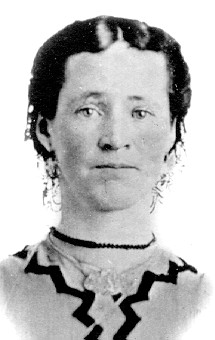
James and Emma Bulkley Gottfredson ~~~ Pioneers Of The Month ~~~ September 2023

James and Emma Bulkley Gottfredson


Mt. Pleasant Pyramid
June 21, 1929


 Reunion of Gottfredsons Well Attended 
Richfield Reaper September 3, 1931

 “More than 200 members of the Gottfredson family attended the reunion held here recently at the call of Peter Gottfredson, the well known pioneer and Indian war veteran, who is now completing a history of the family, dating back 120 years. The crowd consisted of three families from California, two from Nevada, one from Wyoming, three from Idaho, and a number from Utah. The young old man who financed the entire affair, at a cost of around $250, said with enthusiasm, ‘I surely have had my money’s worth,’ and expressed satisfaction in bringing the large family together.” “The reunion started Saturday evening when all members of the family located at the camp on the county fair grounds, met for a general social. Sunday morning the various wards were visited, and in the afternoon the family organization was effected as follows: J.E. Gottfredson, president; Merrill Gottfredson, general secretary; Adell G. Jensen and Estella P. Poulson, assistant secretaries, representing two branches of the family; Mrs. Anna Waltamer, vice president of the first branch, and Chester Allen, vice president of the second branch. Bylaws, rules, and regulations were adopted. Dr. D.B. Gottfredson acted as master of ceremonies for the meeting, following which Mrs. Adell Jensen conducted a program. Mrs. Edith Rasmussen led community singing. An original song, ‘Howdy-do,’ by Merrill Gottfredson was sung by the entire crowd. Members of the family who took part in musical numbers during the two-day’s reunion were Bishop E.L. Swalberg of Gunnison, Uhlan Swalberg, Merrill Gottfredson and Mrs. James Bradfield, Mrs. Merrill Gottfredson, Miss Carol Swalberg, Mrs. Josephine Brower, who was assisted in an Indian costume song by Reed Rasmussen, Doyle Shaw, Kenneth Gottfredson, Melba Brower and others; Reed Rasmussen, Leda Dalby [Reva Dalton’s aunt] of Leadore, Idaho, Maxine and Beth Orrock and Laurel Jensen. Delora Payne of Aurora, Ruth Hansen of Salt Lake, Carrie Allen of Circleville and Joan Brower entertained with readings. Speakers were Peter Gottfredson, Reva Dalton of Salt Lake, President J.E. Gottfredson and the oldest member of each family: Anna Waltamore of Salt Lake, Mrs. Ruth G. Urie of Cedar City, Conrad Payne of Aurora and Mrs. Addie G. Barney of Salt Lake. Prayers were by Lewis Jensen and Jacob Dastrup. Mrs. Estella Poulson gave sentiments of appreciation of the efforts of Peter Gottfredson in arranging the reunion, which was followed by nine rahs for Peter, led by Bishop Ernest Swalberg. Mr. Gottfredson delighted the crowd with a reading, ‘The Bumble Bee,’ and a song, ‘Courting in the Kitchen.’” “After a program Monday, the crowd went to the home of Mr. and Mrs. Andrew Rasmussen and were treated to Danish Beer ‘like Grandma Gottfredson used to make,’ and cake. In the evening a free dance was held at the Rendezvous. Tuesday the camp was broken up, many going to Fish Lake and others to visit in the homes of relatives the rest of the week.

Sunday, November 27, 2016

How About Giving The Gift of History This Year.

$25.00 At the Relic Home.


FOREWORD

The chief motive in compiling this history is to perpetuate the story of a people who rendered a great service, and the one great desire is that the account be as accurate as possible, although, no doubt, much remains untold, the information as given is authentic, yet, it would be strange indeed if some errors have not crept in. Realizing some would read the story with adverse criticism, only material has been used which had been recorded, or has been related directly by those who knew. A great deal of time has been taken in carefully checking with histories written by Levi Edgar Young, TulIidge, Orson F. Whitney, Andrew Jenson, Peter Gottfredson, and W. H. Levar, as well as church and city records.

Had it not been for material collected by Andrew Madsen, a member of the first group of settlers in Mount Pleasant, it is doubtful this account would have been compiled, as much of the information could not after the lapse of years have been obtained. Mr. Madsen was assisted by his son, Neil M. Madsen, both of whom passed into the Great Beyond before completing the work. Later, other pioneers have been consulted and reliable information obtained wherever possible. Joseph Monsen, a member of the first pioneer committee, gathered much data used in the volume.

To all who have offered suggestions I extend my appreciation and most sincere thanks. First, to the committee of the Mt. Pleasant Pioneer Historical Association, especially President James Larsen, James Monsen, Daniel Ras­mussen and Ella Tuft Candland, for their interest, and encouragement to continue the work begun by my father and brother.

To my friends, Andrew Rolph, Malvina Crane Seely, and William Olson, now numbered among the oldest citizens of the community, who have with their reminiscences supplied me with much interesting material.

To those who have taken the task of typing the many sheets of manuscript and otherwise assisted me, Louise Madsen Watts, Ina Larsen Jones, Evelyn S. Jensen, Alice Madsen Pannier, Olive Anderson Griffiths, Anne Madsen, Wayne Petersen, and to Mr. Dean Petersen and Mr. Thomas B. Doxey of the N. S. H. S. for aid received from their department.
   
  The Latter Day Saints Church and the city officials for access to their records.
     To Rev. G. Grey Dashen and W. K. Throndson for their histories of "The First Presbyterian Church and Wasatch Academy."
    
Also to Miriam T. Nielsen for her constructive criticism, advice, and patient assistance.
    
I am especially indebted to Charles J. Jacobsen, for sketches, layout and design.

Without the aid of these friends, this volume could not have been com­pleted. May the reading of it bring pleasure to each of you, and awaken some kindly thought of some one who long since may have passed into a New World, but who still lives in the pages of this book.


Hilda Madsen Longsdorf,

1939

Saturday, July 10, 2010

DESCRIPTION OF THE MT. PLEASANT FORT


July 1859


The following statement is made in Andrew Madsen's Journal:


"During the month of June, we were kept very busy in attending to our crops and the building of the large fort wall." July 10th, Apostle George A. Smith and Amasa Lyman visited the settlement, after giving much good instruction and advice to the people, proceeded to organize the Saints on Pleasant Creek into an ecclesiastical ward. William Stuart Seeley was chosen and ordained Bishop with Harvey Tidwell as first counselor and Peter Yorgen Jensen as second counselor. The office of president was thereby vacated, and Brother James R. Ivie felt very much pleased when released from the responsibility that had been placed upon him, in the establishment of the colony for which he had worked so hard. As it was a very pleasant place in which to live, the name Mount Pleasant Branch was adopted for the colony, giving credit to its pleasant location, beautiful mountains, fields and surroundings.


Work continued on the fort wall until July 18th, when it was completed, and had the distinction of being the finest fort in Sanpete County. Following is the summary of descriptions of the fort, given by Andrew Madsen, Peter Monsen, R. N. Bennett, and Peter Gottfredson. "It enclosed the block later known as the Tithing Yard. 26 rods by 26 rods, enclosing about five and one-half acres of ground, between Main Street and First North, and State Street and First East." "It was made according to instructions and was built of native rock, taken from the surface or dug out of the ground." "It was laid with mud mortar." "The wall was 12 feet high, four feet wide at the bottom, tapering to about two feet at the top.


This wall, in order that the maneuvers of the Indians could be watched from the inside, was built with port holes every 16 feet. about seven feet from the ground. The holes were about two feet wide on the inside, and about four inches on the outside, and about 18 inches high." "Later the inside of the wall was utilized for one wall in the erection of houses, 16 feet square, with one port hole in the middle of the one wall of each house." "There was a flat roofed house in the northwest corner of the fort upon which guards could stand and view the country."


"There were two large gates, one in the center of the north wall, and one in the center of the south wall, with a small gate adjoining it, giving a thoroughfare in passing. These openings had heavy wooden gates. Small entrances were in the east and in the west walls, which made it convenient, as they were not always obliged to use the same entrance." "The water supply was obtained from Pleasant Creek, which passed almost parallel east and west through the center of the fort. A large bridge was erected over the stream." "All corrals for the cattle were built to the north, just outside the fort, leaving a road-way between." At this time Mount Pleasant was a thriving community of about eight hundred inhabitants, with about 1200 acres of ground under cultivation.