Showing posts with label Blacksmith. Show all posts

Monday, September 1, 2025

James Wilson and Sarah Ellen Thompson ~~~PIONEERS OF THE MONTH ~~~ SEPTEMBER 2025


Occasionally, the twenty-fourth was celebrated in the mountains. This was a day long to be remembered. After the flag-raising and gun powder was set off in Wilson’s Blacksmith Shop, the wagons started to roll toward the mountains to Derfee’s Meadows. There, on this beautiful smooth meadow, the wagons formed a circle similar to the pioneers’ as they crossed the plains.

James Wilson had a blacksmith shop on the corner where the drugstore now stands. James Borg and Ole Clemmensen had a harness shop and Abner Crane had a blacksmith shop on first west. Anderson's Blacksmith Shop was located on the east side of State Street, about Third South.
Several Blacksmiths and Farriers were needed to keep up with the demands of planting, cutting, and harvesting.


Wilson's Blacksmith Shop was located on the south side corner of State Street and Main, where the Pharmacy is located now. You can see main street buildings in the background.


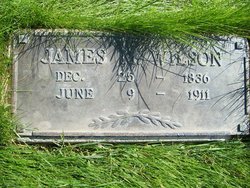
James M. Wilson
BIRTH: 25 Dec 1836
Muskingum County, Ohio, USA
DEATH: 9 Jun 1911 (aged 74)
Mount Pleasant, Sanpete County, Utah, USA
PLOTA / 93 / 3 / 2MEMORIAL ID141394  


Five Generations: Front--Mina Pritchett, Myrna Pitts, Sarah Ellen T. Pritchett Wilson. Back--Elaine S. Pitts, Vivian P. Smith


Levi Franklin Pritchett 


Saturday, November 4, 2023

GETTING TOGETHER WITH YESTERDAY ~~~ Wilma Morley Despain~~~Third Place Anecdote ~~Saga of the Sanpitch 1985

 Papa's blacksmith shop was not under a spreading chestnut tree, but it was under a huge, very old poplar that shaded most of our backyard on hot afternoons. The limbs were perfect for climbing and for treehouses and for men to gather under while Papa shoed their horses. 

It was a popular place because Papa knew all about horses, repairing machinery, harnesses or even knowing what to do for sick horses and other animals. Most children now think horseshoes are to hang over doors, to bring good luck, and that horseshoe nails are for making rings for their fingers. 

There was no electricity then. It was always hot in Papa's shop, with a fire blazing, white hot, on the sturdy rock and cement hearth. 

A large hood was supposed to take all smoke and heat outside, but it still hung heavy as I stood pumping the big bellows that blew the fire and kept it from burning low or lazy. Papa heated the shoes in the fire and lifted them out when ready with a big pair of tongs. They would spit and protest when he dunked them into a bucket of cold water after shaping them to fit, just so, on each horse. He used a big sledgehammer to do this. Sometimes he had to trim the hooves of each horse for a perfect fit. He did this with a huge, flat knife with a curved handle. I was afraid to watch him pound the long horseshoe nails into the horses' feet, and a few times (but very few) a tiny bit of the nail would hit the quick of a foot, Then the horses would whinny and squeal and try to get their foot away from Papa, but he knew how to hold them between his knees and on his leather apron so they could not get away.

 Papa has been gone many years and so has his shop, but, oh, Papa, I remember the lessons taught there by you and of feeling so secure because you were so strong.

Monday, September 30, 2019

Gerald Pomeroy Cooper ~~~ Taught Blacksmithing at Snow College Traditional Trades


 Gerald Pomeroy Cooper, age 58, of Roosevelt, Utah, passed away on March 18, 2019, at The Huntsman Hospital in Salt Lake City, surrounded by his family, after a valiant battle with Leukemia
.
    He was born December 14, 1960 to Harlin Arvene and Maurice Neilsen Cooper in Vernal, Utah. He was married to Marilyn Mecham in the Provo Temple on October 15, 1982. The search for his career was a defining time in his life, as it followed the oil field bust in the 1980’s, jobs were scarce and sometimes only temporary. He was a carpenter, forest ranger, chimney sweep and cement layer, the experience he gained in these occupations prepared him for the work he would do at the UBATC/UBTECH. He found a place there that was vital to his livelihood, his work was active, creative and always appreciated by his friends and co-workers there. He always jumped at the chance to learn something new. He loved making beautiful things with wood and metal. He was a dedicated member of The Church of Jesus Christ of Latter-day Saints. His favorite callings were teaching in the primary and teaching the scouts survival skills.


    Gerald is survived by his wife, Marilyn Mecham Cooper, his children and their spouses Amy Lyn (Brent) Taylor, their children Brooklyn, BreAnn, Max and baby; Katie (Oliver) Burt, their children Mary, Toby, Aryona, Nasha, Cory, Lincoln and Eve; Milton Louis (Kayla) Cooper and their children Byona and Ayriona; Jeri Ann (Dillon) Hillegeist their children Olivia, Calister, Elizah and Walter; Bradly Gerald (Chelesa) Cooper and their children Sofie and Hazel; brothers and sisters-in-laws, Evelyn (Larry) Cooper (Bob) Sheedy, Neldon (Irene) Cooper, Kenneth (MarthAnn) Cooper, Alan (Kathy) Cooper; sisters and brother-in-laws, Daphney “Sami” (Gene) Jensen, Elaine (Eldon) Walton, Irene (Karl) Wayland, Doris (Dwayne) Humphries, Nadine (Randall) Boudrero; mother-in-law, Helen Mecham (Joe) Noble; sister-in-laws, Barbara Spell, Jolyn (Bobby) Richardson, Nancy (Von) Johnson and many nieces, nephews and friends.
    

He was preceded in death by his parents, Harlin Arvene and Maurice Cooper; father-in-law, Milton James Mecham; his brothers Larry Cooper,  Brent Cooper; his sisters Cynthia Cooper, Marie Harmon; brother-in-laws, George Harmon and Karl Wayland; and granddaughter, Hana Kate Burt.
   

 He will be sorely missed by his family and friends. His family would like to thank the many kind and generous friends who have given spiritual and monetary support throughout this difficult time. Thank You.
    Funeral services were   held on Friday, March 22, 2019 
    Burial in the Leota Cemetery.

Friday, July 12, 2019

The Town Blacksmith and the Town Farrier


Almost all of the farming implements were home-made and hand-made. Peter Madsen Peel, who was the first blacksmith in the colony, is credited with having made most of them; however, some people made their own.
George Farnsworth, who in his native land learned the farrier trade, was said to be an excellent "Shoer," assisted, and also kept the oxen shod. Iron was very scarce and hard to get, being obtained usually from the wreckage of immigrant wagons. Straight oak sticks were brought from the mountains for making bows for ox yokes. These sticks were cast into a fire long enough to roast them thoroughly, then they were bent into the required shape, and when complete were thought to be just as good as those brought "from the States."

In 1859, on the 11th of August, they began harvesting their first hay crops, consisting of native grasses growing in abundance in the lowlands, called the Hay Field, which was south and west of where Chester is now located. The only means of cutting the grass was with home-made scythes and snaths, raking it with rakes and pitch forks which were made from native wood and such iron as could be obtained. Much time was consumed in haying on account of this simple method, and the use of ox teams, sometimes one ox and a cow, in hauling it so great a distance. As soon as hay crops were put up, harvesting of the grain began. This was handled in about the same manner as the haying.

The grain was cradled, raked up into bundles and bound by hand, then hauled into the yards and threshed by being trampled on by oxen or flailed with willows or flails by men. The separating of the grain from the chaff was accomplished by waiting for a light wind or breeze, at which time, the farmers would toss it into the air, against a canvas, erected upright like a wall, the grain falling into another canvas, while the chaff was blown away. This was repeated several times, or until the wheat was thoroughly separated or clean. Sometimes, when the people did not have a cradle, the wheat was pulled up by the roots with the bands. When this was done, the stacks would be as black as the earth. The crops were good and much grain was harvested; however, much of it matured late and some was frozen, due to the fact that some of the settlers had arrived late in the spring and did not get their seeds planted early enough to mature. The women always took an active part in the harvesting, helping with the raking, binding, and the gleaning, etc.

The railroad was built for the purpose of getting the coal from Wales, where coal had been discovered in 1855, and was the first discovered in Utah. Later it was recognized of good quality for blacksmithing and other purposes.

James Wilson had a blacksmith shop on the corner where the drugstore now stands. James Borg and Ole Clemensen had a harness shop and Abner Crane had a blacksmith shop on first west. Anderson's Blacksmith Shop was located on the east side of State Street, about Third South.
Several Blacksmiths and Farriers were needed to keep up with the demands of planting, cutting and harvesting.

Wilson Blacksmith Shop


One story told by Peter Gottfriedsen: It was the inherent nature of an Indian to steal, and this brings to my mind an incident told of an Indian who brought a half worn out axe to a blacksmith to be fixed. The blacksmith said, 'I can't fix it, it hasn't any steel in it.' 'Oh, yes,' said the Indian, 'It all steal, me steal it last night.' "
(excerpts taken from Hilda Madsen Longsdorf, "Book of Mt. Pleasant")

Wednesday, April 22, 2015

The most important member of the Community: THE BLACKSMITH


In the days gone by the doctor and blacksmith were the most important members of the community. Folks generally needed medical help.....such as it was...at least occasionally, but they needed a blacksmith frequently.

A blacksmith is a master iron worker who creates and repairs everything from agricultural implements to cooking essentials, to weapons, to furniture, to grills, railings and sculpture.  Contrary to popular belief, a blacksmith does not shoe horses, though he or she may make horse shoes.  A person who shoes horses is a  farrier .

Blacksmiths primarily work with wrought iron and steel  The "black" in blacksmith refers to the black layer of oxide that forms on the surface of the metal as it's heating. "Smith" comes from "smite" which means to hit.  A blacksmith therefore is a person who hits black metal.  

Conversely, a white smith works with light-colored metals like tin or pewter.  And unlike blacksmiths who work mostly with hot metal, white smiths do most of their work on cold metal.

Peter Hafen, blacksmith at the Mt. Pleasant Relic Home likes to tell the story behind the special apron that he-----like all blacksmiths since King Arthur --- wears.

It seems that King Arthur gathered his craftsmen for a dinner celebration, to thank them for their contributions to his household. As they entered the great hall, they were instructed to seat themselves according to the level of their importance, with those who made the most significant contribution nearest the King.

Arthur then asked the men nearest to him what his contribution was.  The man replied "why sir, I am your tailor.  I make the fine robes that you're wearing and those beautiful tapestries hanging upon your wall". 

Arthur thanked the tailor and asked the same question of the next man.  "I am a goldsmith", he replied. "I made the beautiful platter that you eat from and the fine goblet that you drink from.  I even made the gold thread in the tailor's tapestries."

Next was the cook, the stone mason and the carpenter, all of whom sang their loud praises.  Finally Arthur reached the blacksmith.

"What have you contributed to my palace" Arthur asked.  "Not much", replied the blacksmith, who was seated farthest from the King. "I made the hinges for your doors, your majesty, but not much else".  

Arthur who was known as a wise and insightful man, returned to his seat.  After a few minutes, he leaned over to the tailor and said, "Tell me sir, where do you scissors and needles come from?"

"Why from the blacksmith, Sir."

Arthur questioned the next man, "Goldsmith, your hammer and stakes, where do you get them from?" The Goldsmith replied, "Sir, I get them from the blacksmith."

And so it went, back around the table, until Arthur once again reached the blacksmith.  "Sir, I make my own tools, and those of others.

Arthur exclaimed, "Blacksmith  your hammer and hand, all crafts do stand, You should be seated closest to the King".

The humble blacksmith who had just come from his forge and was still wearing his apron, was embarrassed in unseating the tailor.  And the tailor, it is said was livid.  Determined to extract revenge, he crawled beneath the table with his scissors and cut a slash in the front of the blacksmith's apron.

After the banquet ended, the blacksmith noticed the cut in the apron and immediately understood who  had made it.  But he continued to wear the apron and when asked why there was a slash to it, he would reply, "The tailor gave me that in recognition of my services". And that is why, Peter says, blacksmith aprons are slashed in the front.


Tuesday, March 20, 2012

Wilson's Blacksmith Shop


We believe this building was on the south corner of State and Main  where Skyline Pharmacy is today.