Showing posts with label McMillan. Show all posts

Wednesday, December 31, 2025

EARLY SCHOOLS OF MT. PLEASANT ~~~ AS I REMEMBER THEM ~~~ AMASA ALDRICH


Simpson School
EARLY SCHOOLS OF MT. PLEASANT

AS I REMEMBER THEM
Amasa Aldrich-1923


The following is taken from History of Mt. Pleasant
By Hilda Madsen Longsdorf pp 273-274
Photos added by Kathy Hafen


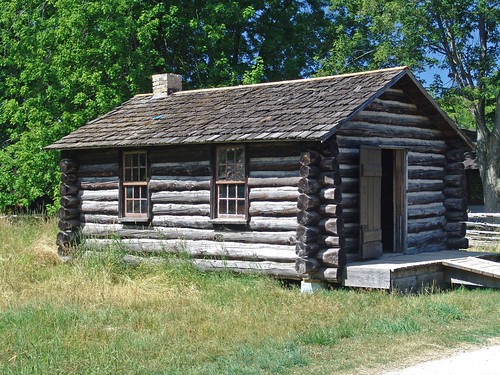
Replica of what a One Room School House
May have looked like.
Let us go back to the schools of yesterday, of our home town, and see what we can remember about fifty years ago. In memory, let us travel back to the sagebrush streets, and the little one room log hut, about 12xlS feet. There "Auntie" Hyde was my first teacher, calling "To Books, to books, to books," at the hour when school was to begin. Books were scarce and often we had to borrow from each other. After graduating from her school, we found another teacher in the old one-room log schoolhouse, built on the lot just across the street, south from the home of Tailor Johnson, Second North and Third West Streets. This school¬house was an improvement over the one where "Auntie" Hyde taught, in that we had slab benches with wooden legs for seats, and a slab nailed to the wall for a desk. We sat facing the wall, with our backs to the teacher. Joseph S. Day presided over the school. Graduating from Mr. Day's school at this place, we find ourselves in another schoolhouse, known as Simpson's School, built of white adobies, on the Rosenlund lot, west of the Simpson home, where Joseph Page and John Carter taught.
Hamilton School
Our next march forward was back to the city hall lot, where another larger building had been erected, of logs, and where David Candland and Nathan Staker held forth as teachers. Another stride forward, and we find ourselves in the best building that Mt. Pleasant had until the erection of the present Central School building on the corner of Main and First East.

 This schoolhouse was built of white adobies and consisted of one large room. The benches and desks were home-made, and had room for two pupils on each seat. We all sat facing east. In this school began the real educational system of Mt. Pleas¬ant. Besides teaching "Readin,' 'Ritin,' and 'Rithmetic," we studied grammar, geography, and we had a smattering of hygiene, with calisthenics thrown in for good measure. But in my eagerness to make haste, I am forgetting that we had a school in the Social Hall, where Miller, Henniger, and others taught. In passing I must not forget to say that the Rev. Duncan McMillan came to Mt. Pleasant, and opened a school in the Liberal Hall. While not a student of his, only to attend spelling matches in the evening. in which I took extreme delight, this school was patronized by a number of the young men and women of those days. From that beginning had developed the present splendid Wasatch Aca¬demy. What strides have been made since "Auntie" Hyde, Day, Page. Miller, and Carter taught in the humble one room log huts, with scarcely a facility compared with today. This is in brief the picture of the schools of yesterday, as I remember them after the lapse of half a century.

God bless the teachers of yesterday, who have long since been gathered to that better land. And now, I am wondering what fifty years hence will bring to the generation still unborn.

Wednesday, December 25, 2024


A memorable occasion associated with the old church is the first public celebration of Christmas, started by Dr. McMillan. In speaking of it, one of the pioneers says: "Here we saw the first Christmas tree laden with presents from eastern missionary barrels, and here the children saw the first oranges which they thought were yellow apples. They tried to eat them with the peel­ing on, and they threw them down when they found them bitter. It was then the teachers showed them how to peel their first oranges. The tree, illuminated with wax candles, created a pic­ture the like of which we had never seen before. It supplied the topic of conversation for many a day after, and so many modern customs were brought here through the medium of the church and school that have served both to entertain and instruct its patrons."

 The question has been asked "What year was this held?"
As to the year the church was used to celebrate Christmas, no date was given by Hilda Madsen Longsorf. 

  Mt. Pleasant History by Hilda Madsen Longsdorf

Sunday, December 18, 2022

First Christmas Celebration In Mt. Pleasant ~~taken from Mt. Pleasant History by Hilda Madsen Longsdorf


A memorable occasion associated with the old church is the first public celebration of Christmas, started by Dr. McMillan. In speaking of it, one of the pioneers says: "Here we saw the first Christmas tree laden with presents from eastern missionary barrels, and here the children saw the first oranges which they thought were yellow apples. They tried to eat them with the peel­ing on, and they threw them down when they found them bitter. It was then the teachers showed them how to peel their first oranges. The tree, illuminated with wax candles, created a pic­ture the like of which we had never seen before. It supplied the topic of conversation for many a day after, and so many modern customs were brought here through the medium of the church and school that have served both to entertain and instruct its patrons."

 The question has been asked "What year was this held?"
As to the year the church was used to celebrate Christmas, no date was given by Hilda Madsen Longsorf. 

  Mt. Pleasant History by Hilda Madsen Longsdorf

Friday, November 11, 2022

History Of Wasatch Academy ~~ Written by W. K. Throndson in 1939


HISTORY OF WASATCH ACADEMY
written by W. K. Throndson in 1939
and taken from "History of Mt. Pleasant" by Hilda Madsen Longsdorf

"In the spring of 1875, a young minister, Duncan J. McMillan. came to Mt. "Pleasant in search of health and with a longing to be of some service to his fellows. Learning from some of the local citizens that they desired educational advantages for their children, and having had several years experience in the teaching field, he entered into an agreement with them to purchase what was known as the Liberal Dance Hall, a building which still is standing on Main Street and which is now occupied by the Masonic Order. The first session was held on April 19th of that year, and before the term ended that spring, the attendance had reached well over the hundred mark. The Academy went through the usual vicissitudes of the "growing up" process. At one time it appeared that the school was doomed to cease operations because of lack of funds, but through a providential gift from a missionary society in Cedar Rapids, Iowa, the work was enabled to go on.

In 1880, the school was taken over by the Board of Home Missions .of the Presbyterian church and has been under the control of that body since that date.
Of course in the beginning years, the scholastic offerings were restricted to the lower grades. The first high school class was graduated in 1887 and consisted of two members. There were no further graduates until 1895, when one student was graduated. Classes have been graduated each succeeding year, with the exception of 1900 and 1919. It was in this latter year that the local influenza epidemic made it impossible to continue after the first few weeks in the fall.

In 1888, the building on Main Street proved to be too small for efficient work, so a group of Mt. Pleasant business men subscribed the sum of $2,000.00 to help complete a new structure which was located on the site of the present Administration Hall. The old Sanpete County Co-op was the largest single subscriber to this fund.
Popular demand soon brought about the establishment of the boarding department and by 1896, we find that there were twenty four boarding pupils enrolled. The boys lived in the school building and the girls resided in a home a block distant, their home occupying the corner where the Conoco service station is now located southeast corner Main and First West.
In 1901, the music department was added to the curriculum and has continued to be one of the most popular departments up to the present time.

Mr. Ernest Patterson, formerly principal of the Henry Kendall CoIlege of Muskogee, Oklahoma, became principal in 1905, and remained in that position until 1908, when he was succeeded by Walter McKirahan, who later became Dean of Westminster CoIlege in Salt Lake City. During the latter's administration, the Academy Administration Hall was enlarged and remodeled.
Charles Lee Johns was appointed to the principal-ship in 1911. During his tenure, much of the present property was secured, a number of new buildings were erected, and the Administration Hall was again enlarged. The brick schoolhouse and grounds, east of Simpson's, the Albert Peterson residence, and. "Lincoln Hall" were purchased during this period, making the school pro¬perty equivalent to almost a city block.
In 1912, a similar school in Springville, Utah, known as "Hungerford Academy" was closed and consolidated with Wasatch. Much of the equipment from that institution was brought to the Mt. Pleasant plant.
The first important dormitory, "Finks Memorial Hall" for girls, was erected in 1913 by volunteer gifts from all parts of the nation. During the same year, the commercial and home economics departments were added. The next year, the manual training courses were offered for the first time.
Mrs. Charles F. Darlington, of New York City, long a friend of the school, gave funds in 1916, for the first boys' dormitory. The building was named "Charles F. Darlington, Jr. Dormitory" in honor of her young grandson. In 1917, the gymnasium corner was purchased, as well as a small cottage from a Mr. Johansen. By these purchases, the holdings now included one and one-half city blocks of valuable property in the heart of the city.
The "Frances Thompson Memorial Infirmary" was built in 1921, by church friends of Passaic, New Jersey. A year later, the "Johns Gymnasium" was erected, being named for the principal who was so active in its construction. The following year, the "Olivia Sage Memorial Hall" was built, funds being provided from the estate of the wife of the internationally famous philanthropist.
Mr. Johns resigned in 1924, and his position was assumed by W. K. Throndson, who is still superintendent at the time of this writing.


In 1929, the "Duncan J. McMillan Memorial Hall" was built to house a number of the teachers and to serve as a home for the superintendent.
On April 4, 1933, the Administration Hall was destroyed by fire. Classes were housed temporarily for the remainder of the year, and as no building funds were available at the time, the enrollment was restricted during the following year, and Darlington Hall was converted into temporary classrooms. During that period of financial depression, it was even thought in some quar¬ters that it might be necessary to close the Academy, but in the spring of 1934, it was learned that building funds had been made available through the estate of Miss Alice Craighead, of Washington, D. C. Miss Craighead's father was a friend of Dr. McMillan and she had listened as a girl to his tales of his work in Utah. Her will therefore listed the Academy as one of the schools where the Board of National Missions might spend the gift which she left to it. During the summer of 1934, the Craighead Industrial Hall was built to house the manual arts and homemaking de¬partments, and late that summer, excavation was begun on the Craighead Administration Hall. The Industrial Hall was occupied at the opening of school in 1934, and the Administration Hall in February of 1935.
In the spring of 1934, the Board decided to close its boarding and day school for girls at Logan, Utah, and consolidated that institution with Wasatch. Technically, the local school is now called Wasatch-Logan. Miss Margery E. Frink, for many years principal of Logan Academy, was brought to Mt. Pleasant as Dean of Girls, a position which she still holds.

Seeing the need of additional space, the school purchased the Clemensen home, north of the Administration Hall, in 1928, and the Barnett home in 1935. During the summer of 1938, both of these buildings were razed to make possible the erection of a fine new dormitory for girls. Funds for this building were also pro¬vided from the Craighead estate.
The last addition to the Academy property was the home of Mr. and Mrs. Chesley Seely, which was purchased in 1938 to serve as a residence for the principal. The Academy now owns approximately two city blocks in the heart of Mt. Pleasant. (1939)
The Administration building of the Wasatch Academy was destroyed by fire in April 1933.


At the present time, the school has a staff of twenty-four members and a student body gathered from ten of the intermountain states. There are accommodations in the boarding department for slightly over 160 pupils equally divided as to boys and girls. The day enrollment exceeds eighty students, making a total enrol¬ment of approximately 250. In line with the policy of the Boar; controlling the Academy, the enrollment will be held at that level unless the Board sees fit to make a special ruling and provide for an increased capacity."

In the Year 2009, Wasatch Academy now owns 43 private residences and has acquired much more property.

Sunday, December 15, 2019

Mt. Pleasant's First Public Celebration of Christmas held at the First Presbyterian Church


A memorable occasion associated with the old church is the first public celebration of Christmas, started by Dr. McMillan. In speaking of it, one of the pioneers says: "Here we saw the first Christmas tree laden with presents from eastern missionary barrels, and here the children saw the first oranges which they thought were yellow apples. They tried to eat them with the peel­ing on, and they threw them down when they found them bitter. It was then the teachers showed them how to peel their first oranges. The tree, illuminated with wax candles, created a pic­ture the like of which we had never seen before. It supplied the topic of conversation for many a day after, and so many modern customs were brought here through the medium of the church and school that have served both to entertain and instruct its patrons."

 The question has been asked "What year was this held?"
As to the year the church was used to celebrate Christmas, no date was given by Hilda Madsen Longsorf. 

  Mt. Pleasant History by Hilda Madsen Longsdorf

Monday, April 27, 2015

Life Story of Annice McArthur Frandsen

Annice <i>McArthur</i> Frandsen

Life Story of Annice McArthur Frandsen  (from Family Search)


Given in person on March 16, 1935, to Lloyd V. Frandsen, grandson Mrs. Annice MacArthur Frandsen Neilson Was born 1 April 1863, at Mt. Pleasant, Sanpete County, Utah; The 10th child of a family of 11 children of Washington Perry McArthur and Urania Gregg. Their first two children were born in Madison, Iowa; the next six born at Pleasant Grove, Utah County, Utah; and the last three were born in Mount Pleasant, Utah. Annice is the only one living at this time. In beginning my story I shall first tell something about my grandparents. My grandfather, Duncan McArthur, was born 22 May 1796, Amy Grafton County, New Hampshire. My grandmother, Susan McKean, was born 10 October 1801, at Corinth, Orange County, Vermont. They were married 1 January 1818. My grandparents later lived at Nauvoo, Illinois, where grandfather was a bodyguard to the Prophet Joseph Smith. He came to Utah for the sake of the Gospel. Grandfather was a polygamist, having two wives. His second wife was Eliza Rebecca Scovil, whom he married after coming to Utah. He was one of the first called to settle in Pleasant Grove, and was the second counselor to the first stake president in Pleasant Grove. He was considered as having a kind disposition; was a good farmer; and served many years on the town board in Pleasant Grove. They later moved to Mount Pleasant.
My father, Washington Perry McArthur, was born 24 December 1824, in Scrubgrass, Orange Co., Pa. He was the fourth child in a family of 14 children. My mother, Urania Gregg, was born 13 February 1826, in Springfield, Sangamon County, Illinois. They were married 'in the states' 25 October 1846. Their first two children, Almeda Jennette and Emma Locretia, were born in Fort Madison, Iowa.
My mother's people, the Greggs, helped William Penn found Pennsylvania. My parents crossed the plains in 1849 in a company going to Oregon. My uncle, Daniel McArthur, was the captain of the handcart company while crossing the plains. When they arrived somewhere near Fort Hall, Idaho, my father decided to go to Pleasant Grove, Utah, and visit with his father, Duncan McArthur. My parents did not come west for the sake of the gospel, but while they were visiting my grandfather at Pleasant Grove, my mother accepted the Gospel, after which my father was converted. As a result of an embracing the gospel, my parents remained in the Pleasant Grove. My brother, Duncan, was the first child born in Pleasant Grove, where the next six children were born to increase the happiness of their home.
Father moved with his family to Mount Pleasant, Utah, in 1860 where he spent the remainder of his days on earth. Father and mother were sealed on 22 November 1861 in the endowment house by Pres. Wilford Woodruff. Witnesses were Brigham Young and S. L. Sprigg.
Father had brown, curly hair, and brown eyes. His height was 5'10" and his weight was 165 pounds. I think he was an unsurpassed, extraordinary man. He was a counselor to the bishop in Mount Pleasant. He was the town physician for several years, and was also a shoemaker. He was a very successful farmer and fruit grower. He had cattle, oxen and sheep, and some of the nicest horses in Mount Pleasant. She was a lover of horses, and sleigh racing was a choice of sports. He owned three orchards and did a lot of grafting of trees. He brought the first bees to Mount Pleasant; he brought them at Springville and pay $20 for the high. He was very charitable. He took in two Indians, and also the family of Gunar Peterson.
My mother was a very handy with the needle and had learned the tailor trade before coming to Utah. Women from all over town came to her to get advice on weaving and dying cloth. She was an expert in weaving, dying, and decorating. Her home was always unusually neat and attractive with paintings and decorations from her own hand. She passed from this sphere on 15 November 1867, when I was 4 1/2 years old.
About six months after the death of my mother, father married Eliza Rebecca Scovil, his father's second wife who was young and widowed. To this union six children were born. He passed from this life on to September 1878. I was then 15 years old.
My parents were the first ones to move out of the old fort at Mount Pleasant. I used to run races with the boys. When we brought the cows home at night we would get hold of the calves tails. We used to go outside the city limits to pick flowers among the unusually high sagebrush. Whenever we saw any Indians we could jump over the highest Sagebrush to get back home. We moved To grandfather's place when I was 13, to Jones's two story house on the north east side of town. I stayed for a while with Mary Ann Winters because they had so much regard for my grandfather. Then I stayed with Aunt Susan and sewed sacks for a load of flour, and also made a wagon cover for my uncle Louis Lund. Then when I was 14 I helped cousin Tom Fuller's wife through a severe seige of typhoid fever and took care of him and the three children at the same time. At 14 I had a strong desire to go back home to help my father in his last days. I have always been thankful for this privilege. I have always had great admiration for father, and he was well-liked by all who knew him.
When I was about nine or ten years old I had the privilege of seeing Pres. Brigham Young. Even though I was barefoot, I pushed my way into the crowd to see him. The next time he came to Mount Pleasant I followed him to the bishop's office. I have always seen his sons, Brigham, John W., and Joseph H. (or A.) and other notables, as Erastus Snow, Franklin D. Richards, George Q. Cannon, John Taylor, and Orson Pratt. When John Taylor came to Mount Pleasant with the other notables, he drove up to me and asked where Mrs. Morrison lived.
I went to District school. My first teacher was Charlotte Hyde, a wife Apostle Hyde. She used to call the children to school by yelling 'To books! To books!...” Whenever any of the children got into fights she would lick them with a pair of stress. Later I attended the Wasatch Presbyterian Academy when it first opened (I was 10 or 11 then) And completed the eighth grade, and then to algebra, Latin, and history as high school subjects. I was recommended to go to Oberlin College in Ohio, but was unable to because of lack of financial support. The next year I went to teach at Milburn. I started to teach school when I was 16 years old, and taught two terms there. I was the first teacher at Milburn.
Before going home to my father I had been drawing the line in my mind between the LDS church and the Presbyterian Church and comparing them and wondering which one I would prefer to join when I prompting came to me which seem to say, 'What authority have they?' I had been leaning toward the Presbyterian Church because they had treated me so nice during my schooling at the Academy. I can say that after receiving this prompting I have thoroughly enjoyed the Gospel. Mr. MacMillan, the man who first establish the Presbyterian Church at Mount Pleasant, said to me while I was in the eighth grade, 'You are one that I will not be able to get in my church.' He later succeeded in getting all the eighth-grade class into his church except me.
After my father's death we stayed on the ranch part of the time. We, my half-aunt Laura, and I, had to milk egg cows. It was during this experience that I became very efficient in the art of lassoing cows. I became very discouraged after his death. I had to shift for myself and was unable to get any support or any kind of help from any of the members of my immediate family. I thought I would leave home and go to George Q. Cannon's home in Salt Lake City and then on out to Aunt Polly's at Portland, Oregon.
Erastus Frandsen and I were married in the endowment house. We lived with my husband's folks the first winter, then moves to the ranch. There 14 of my children were born. We have build three houses. We came to Kimball, Idaho, on 15 April 1903, where we built a large home. Erastus died 20 June 1918. I had six unmarried children at the time of my husband's death.
I was a district Relief Society teacher for 26 years. I have been teacher for all the courses of study and assistant secretary in the Relief Society. I taught the intermediate class in Sunday school for five years. Shortly after coming here I talked to the parents' class. I was also the Literacy teacher in MIA. In 1910 I was put in as principal of religion class for two years. Was also a judge at election for the Democratic Party. Grandma was widowed eight years when she married James Neilson, a widower (Aunt Thera's father-in-law). Complied from Lloyd's notes Viola F.A. Johnson


Erastus Frandsen
~~~~~~~

Annice and Erastus had a significantly large family of (18) children:

1-Urania Aurella (Aug 27 1881/ July 07 1942)
2-Victor Erastus (Oct 28 1882/ Oct 22 1954)
3-Earl Gregg (Oct 25 1884/ Feb 27 1920)
4-Willard Irvin (Sept 12 1886/ Oct 26 1909)
5-Perry Lacartus (Aug 17 1888/ Jan 19 1946)
6-Charles Ralph (June 30 1890/ Oct 29 1909)
7-Royal Raymond (Dec 04 1891/ Sep 04 1923
8-Athol Evan (Sept 04 1893/ March 24 1933)
9-Annice Thera Floy(Jun 13 1895/Nov 27 1971
10-Loomis Lynn (Apr 25 1897/ June 25 1983)
11-Leland Que (Feb 02 1899/ March 02 1899)
12-Sarah Olea (Jan 29 1900/ May 18 1903)
13-Ordella (Jan 29 1900/ Jan 29 1900)
14-Cecil Burke (Feb 20 1902/ March 07 1947)
15-Allen McArthor(April 05 1904/Nov 23 1979)
16-Beulah Fern (Oct 05 1905/ Jan 25 1943)
17-Blenda Roenna(July 05 1907/May 20 1983)
18-Lyle Maeser (Aug 06 1910/ Jan 14 1977)

Found on Find a Grave
~~~~~~~~~~~~~~~~~~~~~~~~~~~~~~~~~~~~~~
Her Second Husband  Jens James Nielsen
JENS is laid to rest next to his 1ST wife "WILHELMINE".  Basalt Cemetery, in Basalt Idaho. Cemetery is located on west side of highway '91'.

JENS NIELSEN lives to be (79) years + 16 days old. After marring (2) times, raising (10) children with 1ST wife.


Found on Find a Grave