Showing posts with label Crane. Show all posts

Tuesday, January 7, 2025

THE SYNOPSIS OF THE THIRTY SIXTH ANNUAL CELEBRATION OF THE MT. PLEASANT PIONEER HISTORICAL ASSOCIATION

This Synopsis was read at the thirty sixth Annual Celebration of the
 Mt. Pleasant Pioneer Historical Association.
Read by Hilda Madsen Longsdorf

Exercises held in Mt. Pleasant North Ward Chapel
James Larsen presided.
Guests of Honor seated on the stand:

Oldest Lady:  Mrs Mary Willcox aged 95 years 9 months (a pioneer of Utah 1847, a pioneer of Hambleton in 1852, and Mt. Pleasant in 1860)

Oldest Man:  Rudolph N. Bennett age 83 years and 5 months (a pioneer of 1859 the only man still living whose name is on the Pioneer Monument.

The program:

Selection: North Sanpete High School Band led by Henry Terry
Prayer:  R. N. Bennett (a beautiful impressive prayer)
Vocal Solo with orchestra accompaniment:  "Calm is the Night" by Wilma Hafen
Talk:  James Monsen "Caring for our relics" (made in the Danish language and interpreted by C. W. Sorensen.

He extended thanks of the Association to J.H. Stansfield, a Norman, Amelia Jensen and Hilda Longsdorf for the part played by them in reconstructing the Fort Wall in miniature for the Association.

A paper prepared by Mrs Melvina Crane "Fun in the Good Old Days" was read by her.

A paper "Memories of Freighting Days" was read by N.S. Nielson.

Address:  Judge Ferdinand Ericksen of Salt Lake City.  Judge Ericksen was a former member of the Board of Directors and the Treasurer during construction of the Pioneer Monument.  He also read a sketch of schools as he knew them to 1890.

Vocal Solo:  Floyd Young of Fairview with piano accompaniment by Ernest Staker

Talks:  Dr. Samuel H. Allen and Amasa Aldrich both former residents; now of Salt Lake.  The spoke reminiscently of school days, dance days, and wash days, etc. in Mt. Pleasant.  (Dr. Allen died the following September)

Overture:  North Sanpete High School Orchestra 

Benediction:  Pres. S. M. Nielsen of North Sanpete Stake

The meeting adjourned to Mt. Pleasant Carnegie Library where relics were displayed and old-time refreshments served.

The days activities were concluded by a dance in the Hansen Armory Hall where the receipts of the dance were $77.50, expenses were $71.70 with cookies donated by member of the committee.

Members who had passed to the beyond during the year 1925-26:
Mr. Hazzard Willcox
Mr. Washington Averett
Mrs. Hannah Anderson
Mr. John Knudson
Mrs Isaac Phipps Smith
Mr. William H. Seely
Mrs Peter Micklesen
Mrs. Dorothy Bramstead Swensen

During 1926 Mrs Annie Peel Candland, a board member died and James Borg, a board member removed to Salt Lake City.

signed:  Hilda M. Longsdorf, Secretary


Saturday, December 10, 2022

Odd Fellows Lodge (Early 1900)


 The Odd Fellows is a fraternity that was first documented to exist in 1790.
~~~~~~~~~~~~~~~~~~~~~~~~~~~~
Who Are We?

AS AN ORGANIZATION, THE INDEPENDENT ORDER OF ODD FELLOWS
 AIMS TO PROVIDE A FRAMEWORK THAT PROMOTES PERSONAL AND SOCIAL DEVELOPMENT. 

 FOR MEMBERS, THE DEGREES IN ODD FELLOWSHIP EMPHASIZE A LEAVING OF THE OLD LIFE AND THE START OF A BETTER ONE AND OF HELPING THOSE IN NEED. 

THE COMMAND OF THE IOOF IS TO“VISIT THE SICK, RELIEVE THE DISTRESSED, BURY THE DEAD AND EDUCATE THE ORPHAN.”

 SPECIFICALLY, IOOF MEMBERS TODAY ARE DEDICATED TO THE FOLLOWING PURPOSES:
To improve and elevate the character of mankind by promoting the principles of friendship, love, truth, faith, hope, charity, and universal justice.
To help make the world a better place to live in, by aiding each other, the community, the less fortunate, the youth, the elderly, and the environment in every way possible.
To promote goodwill and harmony amongst peoples and nations through the principle of universal fraternity, holding the belief that all men and women regardless of race, nationality, religion, social status, gender, rank, and station are brothers and sisters.

First Odd Fellows

The first, informal gatherings of Odd Fellows occurred in England, probably sometime in the early 1700s. It is widely speculated, though not proven, the order’s name comes from the disparate professions that their members belonged to. Unlike the Freemasons, who were once all masons or related to that trade, the Odd Fellows did not belong to one unifying profession.

The Freemasons have been around since the 1400s so the explanation above does seem in line with the notion that the Odd Fellow was a group that copied some of the ideals and customs of the Freemasons, hence the reference to varied lines of work.

Monday, November 1, 2021

Abner and Malvina Clemensen Crane

Malvina Clemensen Crane


 Mrs. Malvina Clemensen Crane Seely, 88, a prominent businesswoman, church and club worker, died at her home Thursday afternoon after a brief illness. Mrs. Seely was born January 21, 1855, in Langeland, Denmark, the oldest child of Ole Nicholas and Marie Johansen Clemensen. After embracing the L D S faith in their native land, her parents and their four children emigrated to America in 1862. The Clemensen family spent the first winter in Utah in the pioneer fort, and in the spring of 1863, Mr. Clemensen built a small home for his family on the corner of First South and First West streets.

see the home below: https://draft.blogger.com/blog/post/edit/823365018368490611/456246182946831906#

She was the mother of five children, of whom only one daughter survives, Mrs. E. W. Wall of Mt. Pleasant. She also is survived by three grandchildren, four great-grandchildren and one great-great-grandchild, and a brother, George M. Clemensen of Salt Lake City.

Salt Lake Tribune November 13, 1943

  • In some sources, their surname is spelled "Clemmensen", "Clementsen" or Klemmensen's" Death date recorded
    He came on the ship, Unknown in 1862 with his wife, Ane Marie, and children: Hansine, Martin G., Niels Erastus, and Sara Johanne.  in Mt. Pleasant Ward records.

John R. Murdock Company (1862)

  • Age at Departure: 34


    • Melvina Clemensen Crane 
      the oldest daughter of George Clemenson who married Abner Crane.

    The following are snippets from Mt. Pleasant History Book

  • The first Ice Cream sold in Mt. Pleasant was made and sold on July 4, 1881, by Abner Crane and his wife. Snow for the freezing was brought from the East Mountains. (160)

  • Mr. and Mrs. Abner Crane, and daughter Annie (Mrs. Ed. Wall), and Mr. and Mrs. Andrew S. Nielsen, claim the distinction of being the first passengers going to Salt Lake City from Mt. Pleasant. They, as guests of Superintendent Welby, boarded the train late in the afternoon and arrived in Salt Lake City at 2 a. m They were the only passengers on the train.(169

  • Five Civil War Veterans had been listed among Mt. Pleasant's prominent citizens, Abner Crane, James Wilson, Dr. W. W. Woodring, Henry Coates and James Monroe. The last of these, James Monroe, died in 1922.  


  • Head of Household

Traveled with 


A Tie
is decided.
Mrs. Anne Porter Nelson and Mrs. Malvina Clemenson Crane Seely, two of Mt. Pleasant's Pioneer women will be honored by their families and friends this week in observance of their birthday anniversaries.  (some is cut off)

Anne Porter Nelson died July 23, 1948.

Malvina Clemenson Seely died 11 Nov 1943 (the same year as the above article)

Wednesday, September 8, 2021

The Town Blacksmith and the Town Farrier


Almost all of the farming implements were homemade and hand-made. Peter Madsen Peel, who was the first blacksmith in the colony, is credited with having made most of them; however, some people made their own.
George Farnsworth, who in his native land learned the farrier trade, was said to be an excellent "Shoer," assisted, and also kept the oxen shod. Iron was very scarce and hard to get, being obtained usually from the wreckage of immigrant wagons. Straight oak sticks were brought from the mountains for making bows for ox yokes. These sticks were cast into a fire long enough to roast them thoroughly, then they were bent into the required shape, and when complete was thought to be just as good as those brought "from the States."

In 1859, on the 11th of August, they began harvesting their first hay crops, consisting of native grasses growing in abundance in the lowlands, called the Hay Field, which was south and west of where Chester is now located. The only means of cutting the grass was with homemade scythes and snaths, raking it with rakes and pitchforks which were made from native wood and such iron as could be obtained. Much time was consumed in haying on account of this simple method, and the use of ox teams, sometimes one ox and a cow, in hauling it so great a distance. As soon as hay crops were put up, harvesting of the grain began. This was handled in about the same manner as the haying.

The grain was cradled, raked up into bundles and bound by hand, then hauled into the yards and threshed by being trampled on by oxen or flailed with willows or flails by men. The separating of the grain from the chaff was accomplished by waiting for light wind or breeze, at which time, the farmers would toss it into the air, against a canvas, erected upright like a wall, the grain falling into another canvas, while the chaff was blown away. This was repeated several times, or until the wheat was thoroughly separated or clean. Sometimes, when the people did not have a cradle, the wheat was pulled up by the roots with the bands. When this was done, the stacks would be as black as the earth. The crops were good and much grain was harvested; however, much of it matured late and some was frozen, due to the fact that some of the settlers had arrived late in the spring and did not get their seeds planted early enough to mature. The women always took an active part in the harvesting, helping with the raking, binding, and gleaning, etc.

The railroad was built for the purpose of getting the coal from Wales, where coal had been discovered in 1855 and was the first discovered in Utah. Later it was recognized as of good quality for blacksmithing and other purposes.

James Wilson had a blacksmith shop on the corner where the drugstore now stands. James Borg and Ole Clemmensen had a harness shop and Abner Crane had a blacksmith shop on first west. Anderson's Blacksmith Shop was located on the east side of State Street, about Third South.
Several Blacksmiths and Farriers were needed to keep up with the demands of planting, cutting, and harvesting.

Wilson Blacksmith Shop


One story told by Peter Gottfriedsen: It was the inherent nature of an Indian to steal, and this brings to my mind an incident told of an Indian who brought a half-worn-out ax to a blacksmith to be fixed. The blacksmith said, 'I can't fix it, it hasn't any steel in it.' 'Oh, yes,' said the Indian, 'It all steal, me steal it last night.' "
(excerpts taken from Hilda Madsen Longsdorf, "Book of Mt. Pleasant")

Sunday, December 29, 2019

Ole Nicole Clemensen Family Group Sheet


  • Melvina Clemensen Crane 
    oldest daughter who married Abner Crane 

  • In some sources their surname is spelled "Clemmensen", "Clementsen" or Klemmensen" Death date recorded in Mt. Pleasant Ward records.
    He came on the ship, Unknown in 1862 with his wife, Ane Marie and children: Hansine, Martin G., Niels Erastus, and Sara Johanne. 

John R. Murdock Company (1862)

  • Age at Departure: 34
  • Head of Household

Traveled with 

Friday, July 12, 2019

The Town Blacksmith and the Town Farrier


Almost all of the farming implements were home-made and hand-made. Peter Madsen Peel, who was the first blacksmith in the colony, is credited with having made most of them; however, some people made their own.
George Farnsworth, who in his native land learned the farrier trade, was said to be an excellent "Shoer," assisted, and also kept the oxen shod. Iron was very scarce and hard to get, being obtained usually from the wreckage of immigrant wagons. Straight oak sticks were brought from the mountains for making bows for ox yokes. These sticks were cast into a fire long enough to roast them thoroughly, then they were bent into the required shape, and when complete were thought to be just as good as those brought "from the States."

In 1859, on the 11th of August, they began harvesting their first hay crops, consisting of native grasses growing in abundance in the lowlands, called the Hay Field, which was south and west of where Chester is now located. The only means of cutting the grass was with home-made scythes and snaths, raking it with rakes and pitch forks which were made from native wood and such iron as could be obtained. Much time was consumed in haying on account of this simple method, and the use of ox teams, sometimes one ox and a cow, in hauling it so great a distance. As soon as hay crops were put up, harvesting of the grain began. This was handled in about the same manner as the haying.

The grain was cradled, raked up into bundles and bound by hand, then hauled into the yards and threshed by being trampled on by oxen or flailed with willows or flails by men. The separating of the grain from the chaff was accomplished by waiting for a light wind or breeze, at which time, the farmers would toss it into the air, against a canvas, erected upright like a wall, the grain falling into another canvas, while the chaff was blown away. This was repeated several times, or until the wheat was thoroughly separated or clean. Sometimes, when the people did not have a cradle, the wheat was pulled up by the roots with the bands. When this was done, the stacks would be as black as the earth. The crops were good and much grain was harvested; however, much of it matured late and some was frozen, due to the fact that some of the settlers had arrived late in the spring and did not get their seeds planted early enough to mature. The women always took an active part in the harvesting, helping with the raking, binding, and the gleaning, etc.

The railroad was built for the purpose of getting the coal from Wales, where coal had been discovered in 1855, and was the first discovered in Utah. Later it was recognized of good quality for blacksmithing and other purposes.

James Wilson had a blacksmith shop on the corner where the drugstore now stands. James Borg and Ole Clemensen had a harness shop and Abner Crane had a blacksmith shop on first west. Anderson's Blacksmith Shop was located on the east side of State Street, about Third South.
Several Blacksmiths and Farriers were needed to keep up with the demands of planting, cutting and harvesting.

Wilson Blacksmith Shop


One story told by Peter Gottfriedsen: It was the inherent nature of an Indian to steal, and this brings to my mind an incident told of an Indian who brought a half worn out axe to a blacksmith to be fixed. The blacksmith said, 'I can't fix it, it hasn't any steel in it.' 'Oh, yes,' said the Indian, 'It all steal, me steal it last night.' "
(excerpts taken from Hilda Madsen Longsdorf, "Book of Mt. Pleasant")

Thursday, September 20, 2018

Charlotte Staunton Quindlan Johnson Hyde ~~~ ( One of our first Pioneers of the month 2009)


Charlotte Staunton Quindlan Johnson Hyde
You would think that a wife of Orson Hyde would be buried in Spring City next to him. You would think that she would have a very distinctive, monolithic marker of granite and stand very tall. Not so for Charlotte Staunton Quindlan Johnson Hyde. Of those many names by which she was called, we can only verify that her name was Charlotte Quindlan Hyde. She lived in Mt. Pleasant, taught school in Mt. Pleasant and died in Mt. Pleasant. Her grave marker is about 18 inches tall made of marble. You literally have to kneel down to read her epitaph there.

Charlotte Quindlen was born 22 of August 1802 at Lower Pensnock, Salem, New Jersey. Charlotte Quindlan was the name used at the Endowment House in Salt Lake City when she was sealed to Orson Hyde in 1852. The marble marker lists her as Charlotte Staunton Hyde as does the Mt. Pleasant History Book. Perhaps the name Staunton came from another marriage. From the dates we find that she was fifty years old when she married Orson Hyde.
The following is taken from the book “Orson Hyde Olive Branch of Israel”
“Orson Hyde was chosen as an original member of the Council of the Twelve in 1835, when the Mormon Church first organized this governing body. Orson's most well-known accomplishment was as a Mormon missionary to Jerusalem (1840-1842) to dedicate the land for the return of the Jews. Because his words have proven prophetic in the many decades since his entreaty, a peaceful garden on the Mount now honors him and his supplication. In 1979 civil authorities in Jerusalem invited the development of a five-acre hillside garden in honor of Orson Hyde.
“Orson Hyde was a remarkable individual. He received esteem in many roles, among them apostle, teacher, missionary, orator, scriptorian, journalist, editor, lawyer, judge, statesman, colonizer, and administrator; also as the husband of eight wives, the father of thirty-three children, a friend of mankind, and a servant of God.
MYRTLE STEVENS HYDE,
During the years 1850-1852 Charlotte Quindlin Johnson lived in Kanesville, Iowa at the home of Orson Hyde as a domestic assistant to his first wife Marinda. She was already a member of the L.D.S. Faith. She had been divorced from a man named Johnson. She was described as a seamstress who also liked children. She helped Marinda with her children Alonzo, Frank and baby Delila. She was with the Hyde Family at Winter Quarters and as they traveled across the plains to Salt Lake, arriving in 1852. Marinda and Charlotte got along very well.

Orson and Marinda discussed the possibility of inviting Charlotte to become a wife rather than a domestic. Orson had also married Mary Ann Price who for a time was a domestic in his household. Orson and Mary Ann were married in Nauvoo in 1843. Orson talked with Brigham Young about taking Charlotte as another wife and Brigham Young approved. Orson proposed to Charlotte, she accepted and they were sealed as husband and wife in the Endowment House 22nd of November, 1852. She was the fourth wife of Orson. Besides Marinda and Mary Ann, Orson had married Martha Rebecca Browett, who he later divorced in 1850. Martha went on to become the wife of Thomas McKenzie who also divorced her.

In the spring of 1853 we find Marinda, Mary Ann and Charlotte all living together under one roof in Salt Lake. Charlotte, however, was having a hard time adjusting to being a plural wife and departed the family, a mutual decision between she and Orson. They were separated, but never divorced. Brigham Young granted official separation for Charlotte and Orson Hyde in 1859.

Charlotte came to the Sanpete Valley long before Orson shows his influence here. It was during the “big move” with the earliest Saints first to Fort Ephraim, then north to resettle Mt. Pleasant. The first pioneers had been driven out of Camp Hambleton, located one mile west of the current city of Mt. Pleasant. She first made her living as a seamstress then as a school teacher while the settlers still lived inside the fort. A schoolhouse was then built outside the fort. She was fondly called "Aunty Hyde" by her students. She inspired many of her students to become teachers themselves.

In Mt. Pleasant History by Hilda Longsdorf the following description of Aunty Hyde school: “In a little log house about 12x15 feet, on the south side of the street on First North, about midway between State and First West, (in the area where Mary Ursenbach now lives-2008) Charlotte Staunton Hyde taught school. The building was also known and later used for Lesser Priesthood meetings and similar Church gatherings. Mrs. Hyde was a woman who no doubt had earlier in life received quite a liberal education, and although described as “a little old woman who smoked a pipe and was quite deaf,” she was affectionately called "Aunty Hyde". Many amusing stories were told of her school, but with all her students there remained pleasant memories. There being no hand bell, as in later years, the children were always called from their play to the schoolroom with her familiar call, “To Books. To Books. To Books.””

“Mrs. Hyde lived in a little log house west of the school. She often brought her bread to the schoolhouse to bake. She had a skillet with a tight fitting lid and in this, by heaping on it coals from the fireplace, which was in one end of the building, she baked the bread during school hours. She was paid for her services as a teacher with any produce or garden stuff available.
Mrs. Hyde taught for sometime in the log meeting house in the fort. Many attended school. A number of the pioneers were polygamist families and usually were large families. In some cases the entire family had attended her school as was the case in Abraham Day’s family, Joseph, Abraham Jr. , Eli A., Ezra, and Ephraim, children of the second wife, all attended; among others who also in later days became prominent citizens were her students Emaline Seely Barton, Oscar Anderson, William Morrison Jr., Sylvester Barton, Joseph Nephi Seeley, Annie Porter Nelson, Melvina Clemensen Crane, Peter Johansen, Chastie Neilsen, Benta Neilsen, Peter Jensen, Allen Rowe, Henry Ericksen, Miranda Seeley Oman, Wilhemina Morrison Ericksen, Hans Neilsen, William D. Candland, Charlotte Reynolds Seeley, Sarah Wilcox Bills, Celestial McArthur Barton, William A. Averett, Amasa Aldrich, James B. Staker, Maria Tidwell Larsen, Libby Barton Averett, Morgan A. Winters, Eli A. Day, W.W. Brandon, Sarah Davidsen Wilcox, Maggie Peel Seely, Samuel H. Allen, Harry Candland, Albert Candland, Charles Averett, Hazard Wilcox and Hans Neilsen.

Although records show that Mrs. Hyde was not the first teacher in the community, in the Mt. Pleasant Cemetery on the south side of the center driveway, is a little marble slab now yellowing with age, upon which is engraved: “Charlotte Staunton Hyde, wife of Apostle Orson Hyde, born in Penn., Died in Mount Pleasant, December 3, 1881, age 78. At rest now---Through the kindness of pupils of early days, this stone is erected to her memory, she being the first school teacher in Mt. Pleasant.” M.M.F.C.M.”

Many, many children benefited from her talents, from her love and from her example.

Sunday, November 27, 2016

How About Giving The Gift of History This Year.

$25.00 At the Relic Home.


FOREWORD

The chief motive in compiling this history is to perpetuate the story of a people who rendered a great service, and the one great desire is that the account be as accurate as possible, although, no doubt, much remains untold, the information as given is authentic, yet, it would be strange indeed if some errors have not crept in. Realizing some would read the story with adverse criticism, only material has been used which had been recorded, or has been related directly by those who knew. A great deal of time has been taken in carefully checking with histories written by Levi Edgar Young, TulIidge, Orson F. Whitney, Andrew Jenson, Peter Gottfredson, and W. H. Levar, as well as church and city records.

Had it not been for material collected by Andrew Madsen, a member of the first group of settlers in Mount Pleasant, it is doubtful this account would have been compiled, as much of the information could not after the lapse of years have been obtained. Mr. Madsen was assisted by his son, Neil M. Madsen, both of whom passed into the Great Beyond before completing the work. Later, other pioneers have been consulted and reliable information obtained wherever possible. Joseph Monsen, a member of the first pioneer committee, gathered much data used in the volume.

To all who have offered suggestions I extend my appreciation and most sincere thanks. First, to the committee of the Mt. Pleasant Pioneer Historical Association, especially President James Larsen, James Monsen, Daniel Ras­mussen and Ella Tuft Candland, for their interest, and encouragement to continue the work begun by my father and brother.

To my friends, Andrew Rolph, Malvina Crane Seely, and William Olson, now numbered among the oldest citizens of the community, who have with their reminiscences supplied me with much interesting material.

To those who have taken the task of typing the many sheets of manuscript and otherwise assisted me, Louise Madsen Watts, Ina Larsen Jones, Evelyn S. Jensen, Alice Madsen Pannier, Olive Anderson Griffiths, Anne Madsen, Wayne Petersen, and to Mr. Dean Petersen and Mr. Thomas B. Doxey of the N. S. H. S. for aid received from their department.
   
  The Latter Day Saints Church and the city officials for access to their records.
     To Rev. G. Grey Dashen and W. K. Throndson for their histories of "The First Presbyterian Church and Wasatch Academy."
    
Also to Miriam T. Nielsen for her constructive criticism, advice, and patient assistance.
    
I am especially indebted to Charles J. Jacobsen, for sketches, layout and design.

Without the aid of these friends, this volume could not have been com­pleted. May the reading of it bring pleasure to each of you, and awaken some kindly thought of some one who long since may have passed into a New World, but who still lives in the pages of this book.


Hilda Madsen Longsdorf,

1939

Sunday, November 20, 2016

Friends for 80 Years

Mrs Anne Porter Nelson and Mrs. Malvina Clemenson Crane Seely, two of Mt. Pleasant's Pioneer women will be honored by their families and friends this week in obsrvance of  their birthday anniversaries.  (some is cut off)

Anne Porter Nelson died July 23, 1948.

Malvina Clemenson Seely died 11 Nov 1943 (same year as the above article)

Tuesday, October 4, 2016

A Pioneer Mother


A PIONEER MOTHER

By Malvina Crane Seely, 1924


This story has to do with a woman, a pioneer mother, who came and spent her life here, doing her bit to make this site a habitable spot through more than fifty years. But her life here was typical, reflecting the lives of other women, and therefore it may have a direct bearing upon the subject which is engaging the thought and interest of this pioneer Historical Association, though it is written as a tribute to her memory.

The beginning of her existence was on the other side of the Atlantic Ocean, on an oblong island in the ,Baltic Sea, in a Christian home of the common people. The educational and social conditions surrounding her young life were typical of the country where she was born. She was given schooling and religious in­struction, but also was taught how to work with her hands, this being thought an essential part of a girl's education in that coun­try, for they kept no "hothouse plants" over there. It was neither thought wise nor sensible to coddle and pamper young people in that land, where thrift, economy, and hard work are characteristic of life among commoners.

Therefore, in later years, it was said of her, "There is not a lazy bone in her body." This was a high tribute, since it has been said, "every man is naturally lazy."

A time came when the community was shaken with religious fervor. A young preacher, from another part of the little king­dom, had come over to the island and was preaching a strange gospel, telling of the advent of a new prophet, the finding of some gold plates, and the visitation of a veritable angel, known as Moroni. Several times she heard the young preacher, liked his manly appearance and forceful manner of reasoning, was converted to his views, and later became his wife. It is quite a familiar story, common enough in human life, but its outcome was far from what she was expecting and hoping it would be, for at that time she did not have the slightest desire to leave her native land.

But somebody has said, "There is a divinity that shapes our ends, rough hew them how we will." Did God, in the beginning, shape each human life, as a whole, and in all its phases? In a little book, I read: "The decrees of God are, His eternal purpose, according to the counsel of His will, whereby, for His own glory, He hath fore-ordained whatsoever comes to pass." Wise men have called that "fore-ordination." We may call it God's certain control of His own universe. In consonance with this, a profound thinker (Horace Bushnell) has said, "Every life a plan of God,"

If that is true, then this pioneer's life was a plan of God, and no mistake was made in her leaving her native land. It is pleasant and comforting to believe that-it is difficult to disprove it-yet I am not wise enough to assert it as a fact. At any rate, and with­out spending further time on this abstruse point, a day came when she must quit the old friends and scenes for the new world.


We need to keep her background and training in mind, the pleasant home and dear friends, in order to understand and appreciate the severe sacrifice she was called upon to make. By this time, after eight years in her own home, there were four little children around her. Think of starting on a journey, six thousand miles long, with such a brood. Remember, too, that this was before the age of steam, when vessels were driven by wind, and when it literally took months to cross from England to New York.

Setting out from home and kindred early in April they made Liverpool in safety, and there took ship for New York. Reaching that port, weary and worn out, after eleven weeks on the turbulent Atlantic, they took a few days of rest before crossing the states to the Missouri River. Now they were fronting the howling wilderness, with more than a thousand miles separating them from the land of Zion, the center of all their hopes, where were the prophet and the stately temple, and the haven of peace and rest about which so much had been told them by Apostle Erastus Snow. The journey across the plains had to be made in prairie-schooners, or on foot, for many of the emigrants had to walk the entire distance. The schooners were drawn by lumbering oxen, four or six to the wagon, rendering progress slow and tedious.

It took six months to make a journey which now can be made in sixteen days. .But, for several years, imperious duty had been calling, urging that the sacrifice be made, and their pious souls often had felt this imperative call to migrate to Zion. Therefore, when the order came, requesting them to move, they were ready to obey the prophet's command, and lost no time in setting out for the land of promise.

Suffice it to say that, after reaching Salt Lake City, they were sent up into this mountainous region to make a new home. They had nothing with which to begin, save courage and hope, and willingness to struggle for daily bread. But they were young and youth can remove mountains, conquer lions, subdue wild savages, and make of a wilderness a fruitful field. And, if this was to become a habitable region, such work must be done.

Our first home was in the fort, in a little hut of one room, where we spent the winter. But, while we were living in the hut our father had bought a lot where he dug a cellar, into which we moved in the spring. Not for long was he to live with us in that dugout. For, like all ambitious and energetic men, he was struggling to get ahead, working like a slave and undermining his health. There are landmarks here attesting his energy, one of which is the old Social Hall. But, after midsummer, he was stricken with typhoid fever and died, thus leaving his delicate wife with her children to shift for herself.

A life of terrible struggle now began. Her chief concern was how to secure food and clothing for her children. No money had been left to supply these pressing needs by her husband. For her, therefore, the future was dark, dismal, unpromising, the (sun?) itself seeming to have gone out of her sky. And yet, she did not despair, because she was a firm believer in God. She had been taught to believe that God helps those who help themselves. It was her duty, therefore, to go to work and help herself. But what could she do? Somebody had said, "Where there's a will, there's a way."

She could remember Ruth, the Moabitess, who went into the field of Boaz to glean wheat for bread. Why not follow Ruth's example? She could see no other way. But what should she do with her children? She could not take them into the field. The answer was, "where there's a will, there's a way." Her will, there­fore must find the way. Hence, leaving the babies in care of her eldest child, she took her boy and went into the field to pluck golden heads of wheat from the stubble. In this manner she solved that first perplexing problem-the problem of food for herself and children-and in the solution she found the key to success.

It was a slave's life, but she who was living it was not a slave. She was free and independent, as were our American ancestors, after the Revolution; because of her own efforts she had won freedom. In like manner she won success in other respects. With her own hands she made clothing for herself and children, carding the wool, spinning the yarn, weaving the cloth out of which necessary garments were made. And her success in these things brought peace and happiness to her stricken heart.

 Happiness does not come from without the soul, but from within, from conquering self and achieving success. She found peace and happiness in useful work, not in dressing and fussing and gadding, but in doing her God-given duty. Living in a hovel, on the bare ground, with scant furnishings, was quite different from her former home, yet she made no complaint. She was a pioneer mother, living in a new country, and must adjust herself to surrounding conditions. In doing this she was only following the example of others.


Therefore we owe them a debt which we never can repay. About all we can do is to hold them in everlasting and grateful remembrance. For, without their self sacrificing toil, what would have been our lot in life?


Taken from Mt. Pleasant History, Hilda Madsen Longsdorf pp 330-334

Monday, February 8, 2016

Early Dramatics In Mt. Pleasant

EARLY DRAMATICS   (Taken from the History of Mt. Pleasant pp 301-306)


By Dora Day Johnson
as told Valentine L. Anderson, 1924


I came to Mt. Pleasant March 1860. I was at that time eight years old. That winter the old log meeting house, in the center of the fort, was the play house. Some of the players who took part at that time were Wood Brandon, John Ivie and his wife.


Katherine Ivie, Dolph Bnennett, George Porter, Joseph S. Day and others whom I do not now remember. They played, "Good for Nothing Nan," and the "Merchant of Venice." The scenery was wagon covers and other materials mixed together, but didn't we children enjoy it! and so did everyone else. The next play house was the Social Hall, with real scenery. Wood Brandon and Kather­ine Ivie were the only two members who stayed with the company. In 1869 a new dramatic company was formed. Niels Madsen was always our treasurer, and took care of our cash, which consisted mostly of wheat, cedar posts, vegetables, etc. Those belonging to the company from time to time were, Stena Burrison, Lucy Whee­lock, Alice and Laura Day, Jane Tidwell, Kate Candland, Stena Tuft, Katherine Ivie, Rose Reynolds, and myself. The men were Dick Westwood, Henry Larter, Alfonzo Wheelock, Jerry Page, John Carter, Joseph Gribble, and my husband, Gustaf Johnson. Once in a while, Melvin McArthur and his brother, Duncan, Con­derset Rowe, Henry McKinney, Peter and Hans Gottfredson, Wood Brandon, Tom Coates, and a number of others whom I do not recall, would join the company.


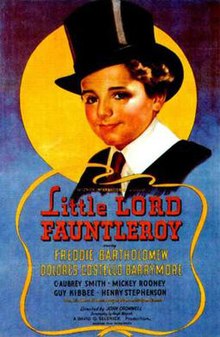
During the winters of 1869 and 1870 the company would play three successive nights a week in Mt. Pleasant, and would also play in the neighboring towns, traveling, of course, in bob sleighs or wagons. They played such dramas as "The Rose of Elrick Hill," "Night and Morning," "The Skeleton Witness," and the "Carpenter of Roan." These were always followed with a farce, such as "Matrimony," "Swiss Swane," "The Forest Rose," etc. Each player received three complimentary tickets, and a settlement was made each spring. I remember once each player got two and a half bushels of wheat for their winter's work. Tickets were about twenty-five cents each. The company after a while owned their own scenery. The played in the Social Hall and in Jessons’ Hall. There was no entrance to the stage in the Social Hall, and the crowds were so large they could not pass through the aisles, so the cast had to crawl through the windows to get to the stage. Mary Katherine Ivie had legs that were too small to look good, and she would fill her stockings with bran; but upon moving about, the bran soon fell to her shoe tops, which were either laced or buttoned high tops. This looked rather funny, of course. The company played "Little Fontleroy," with Annie Woodhouse Cand­land, dressed in a black velvet suit and with white collars and cuffs; as Lord Fontleroy, she looked swell. It was unusual to see a girl dressed in boy's clothing in that day. The Bishop and family, the bishop's counselors and families always had free tickets.


Richard Westwood was one of the main players; Henry Larter was also a lead character. He cast all the parts. John Wallis was the one who did most of the prompting, and was assisted by Tom Coates and Alfonzo Wheelock. The players used no make up, excepting flour on the hair to make it gray. Thunder and lightning was made by using gun powder and sheet iron. When the company's settlement was made one. spring, Stena Tuft found that due her for her share was to pay for a lamp chimney she had broken. Later, the upstairs of the Co-op Store was used for plays. The audience always bought peanuts and enjoyed them between the acts, and oftentimes during the acts. It was very common for almost all the men in the audience to go outside between the acts, and rush in when the bell rang. At the close of the next to last act, the manager would make the following speech, "In behalf of the company, I wish to thank you for your patron­age, and after the third and last act, we bid you all good night."
Several traveling theatrical companies now made their regular visits, and they always played to packed houses. The Johnson Brothers, of Springville, and with them, Pearl and Alfonso Either. While the Stutz Dramatic Company were playing in Moroni, while cleaning with gasoline, Mrs. Stutz's clothing caught on fire and she was burned so badly that she died soon after. There were many real Negro Minstrel shows, too, with brass band and all the trimmings. The Fairview Dramatic Company and the Moroni Dramatic Company, in which Kenneth Kerr played important parts, also put on plays here, but Mt. Pleasant did not patronize the neighboring town companies very well.


Little-Lord-Fauntleroy-Poster.jpg
DRAMATICS IN MT. PLEASANT


By George Christensen, 1934


Personally, my memory does not go back beyond the old Jessen Hall, but I shall never forget some of the soul-stirring scenes we witnessed there.

In the fall of 1869 and on through 1870, a regularly organized Home Dramatic Company furnished the scenery by donation of the members, and Brother C. C. A. Christensen, of Ephraim, painted the pieces.


The next move in the early 70's was up to the new Jessen Hall and the reputation of the Mt. Pleasant players was such that it attracted experienced actors such as Dick (Richard ) Westwood, of Springville, and later of Fairview, and Judge Larter of Moroni. These skilled thespians played the heroic parts and aided in drilling the younger members. Westwood particularly excelled in training the voices to speak loud and clearly, and Judge Larter's specialty lay in the casting of the characters. A little later a fine old actor, Philip Hurst, came from Fairview to help out in several plays.


John Wallis became a pillar of strength to the organization by his accurate prompting, and many escaped chagrin and embarrass­ment by hearing the hoarse whisper of Brother John Wallis. Alfonzo Wheelock ably assisted Wallis when the latter's voice gave out.


There arose another tower of strength in the person of Joseph Wise, who, for many years, Was the stage manager. How often were we thrilled and terrified by the thunder and lightning he conjured up by the aid of gunpowder and a sheet of metal.


In the 80's there seemed to be a lull in the activities of the local home talent. That was when John S. Linsey and Company used to present fine plays to us at stated intervals. We now had a good show house upstairs in the Co-op building, which became known as the Madsen Hall.


However, occasionally local talent came together and put on some very creditable shows. Some of you will remember "Odds with the Enemy," which was put on under the direction of E. A. Day and Abram Johnson. In these performances, Ferdinand Ericksen, Magnus Rolph, Augusta Dehlin Ericksen, Abram Johnson, Amasa Aldrich and Dr. S. H. Allen, E. A. Day and others portrayed their stage ability.


Shortly after this, the Johnson brothers, Mose and Aaron, came to Mr. Pleasant and formed an elocution class, wherein they gave twelve lessons for $75.00 for the lot of us, and they agreed to drill us and take their payout of the proceeds of the play. Thus we put on the "Pearl of Savoy," wherein Miss Edie Dehlin starred in the title role.


About that time, December 2, 1886, a permanent organization, Mr. Pleasant Dramatic Association, was effected, with M. C. Rolph as Manager; Ferdinand Ericksen, Assistant Manager; George Christensen, Secretary; and Joseph Madsen, Treasurer.


Later the Johnson Brothers cooperated with the local associa­tion and put on some very creditable plays, which finally culminated in the famous presentation of "East Lynn," wherein Charlotte Stormfelt played Lady Isabel and Madam Vine; Rose Reynolds played Barbara Hare; Aaron Johnson played Sir Francis Levison; George Christensen, Archibald Carlyle; and Miss Annie Pritchett was little Willie, who soared to heaven before the eyes of the audience; Ella Wheelock Freston played the unforgettable Miss Corny.


A few years later came Alphonso Ethier and his sister, Pearl, and joined the local dramatic association in presenting "Brother Against Brother," and other plays.


I moved away and when I returned new hands had taken up the work. I hope someone else will take up the work where I left it, that a complete story of the development of the drama in old Mt. Pleasant may be prepared and recorded.


PLAY
By Malvina Crane, 1926


The first general gathering place I remember was the Social Hall-still standing on the southwest corner of the square. Later, Yeppa Jessen built a larger house two blocks east, which at once became the most popular place in the little community. This hall had a platform in the east end, which .our theatrical troop could use as a stage, as soon as suitable scenery could be bought from C. C. A. Christensen, a local celebrity. After the scenic equipment had been put in, our troop held forth at regular intervals, crowds of eager people always packing the house to its utmost capacity. You should have been there to witness some of those classical plays! We had no very great artists, of course, but those who took part did the job to the satisfaction of all who came to witness the shows. What more could you ask of a bunch of amateur players?


I am unable to recall a complete list of the men and women who took part in our theatricals during the early years of our dramatic efforts to render public service. The real leader and organizing genius was the Englishman, John Wallis, who had con­siderable ability and did much towards securing the formation of an efficient troop. Assisting him were the following gentle­men, according to my recollection: J. A. F. Beaumann, Alma Bennett, R. N. Bennett, W. W. Brandon, John Carter, Thomas Fuller, Henry Larter, Christopher Johnson, Gus Johnson, H. P. Jensen, Albert Candland, Thomas Gledhill, John Dallin, Cyrus Dallin, Orson Lee, William McArthur, William Morrison, James Reynolds, Bent Rolphson, Alof Rosenlof, Allen Rowe, William Rowe, Conderset Rowe, Joseph Gribble, John H. Seeley, Hans Han­sen, James Wishaw, Richard Westwood, and Cap Clem.


Among the ladies were: Christina Bertlesen, Tina Bertlesen, Alice and Dora Day, Annie and Kate Candland, Mary Katherine Ivie, Hannah Reynolds, Candace Rowe, Nicholena Rolfson, Jane Tidwell, Stena Tuft, Annie Wallis, Lucy Wheelock, and Mrs. C. M. Wheelock.


The musicians were: John Gledhill, Bent Hansen, Hans Han­sen, James Hansen, Peter Almertz, Martin A. H. Myneer, Lars Nielsen, Lorenzo Nielsen, Peter F. Nielsen, and John Waldermar.


The popular dances were: Plain quadrille, Tucker quadrille, French Four, Upper Reel, and some Danish dances. Then there was the Flying Dutchman, the Mazurka, the "Tyrola," Polka or Danish Glide, and many kinds of fancy waltzes too numerous to mention, but which were a great improvement upon the present "jazzy" movements in the sober judgment of old people
It will not do to omit the Judge, Hyrum Seely, from our list of fun-makers, because he always was on the job, full of vim and hopping, skipping, and shouting to the top of his voice, reminding you of the little song which our ever jolly Lars Nielsen used to sing, thus:
When I was a little boy,
My mother used to say
That she used to spank me up and down
A dozen times a day.
For I'd either be up in a tree,
Or rolling down the hill;
It's a fact that whether I sit or stand
I really can't keep still.
No, I really can't keep still,
I really can't keep still;
It's a fact that whether I sit or stand,
I really can't keep still.

Nor could the Judge-not for the fraction of a moment-and while the years have done something to tame and tone his ever-­bubbling and youthful spirits, yet even now he would be willing to go back and live those joyous days over again. Who would not?