Showing posts with label Ericksen Meat and Grocery. Show all posts

Saturday, May 23, 2026

ERICKSEN MEAT AND GROCERY CHANGES HANDS


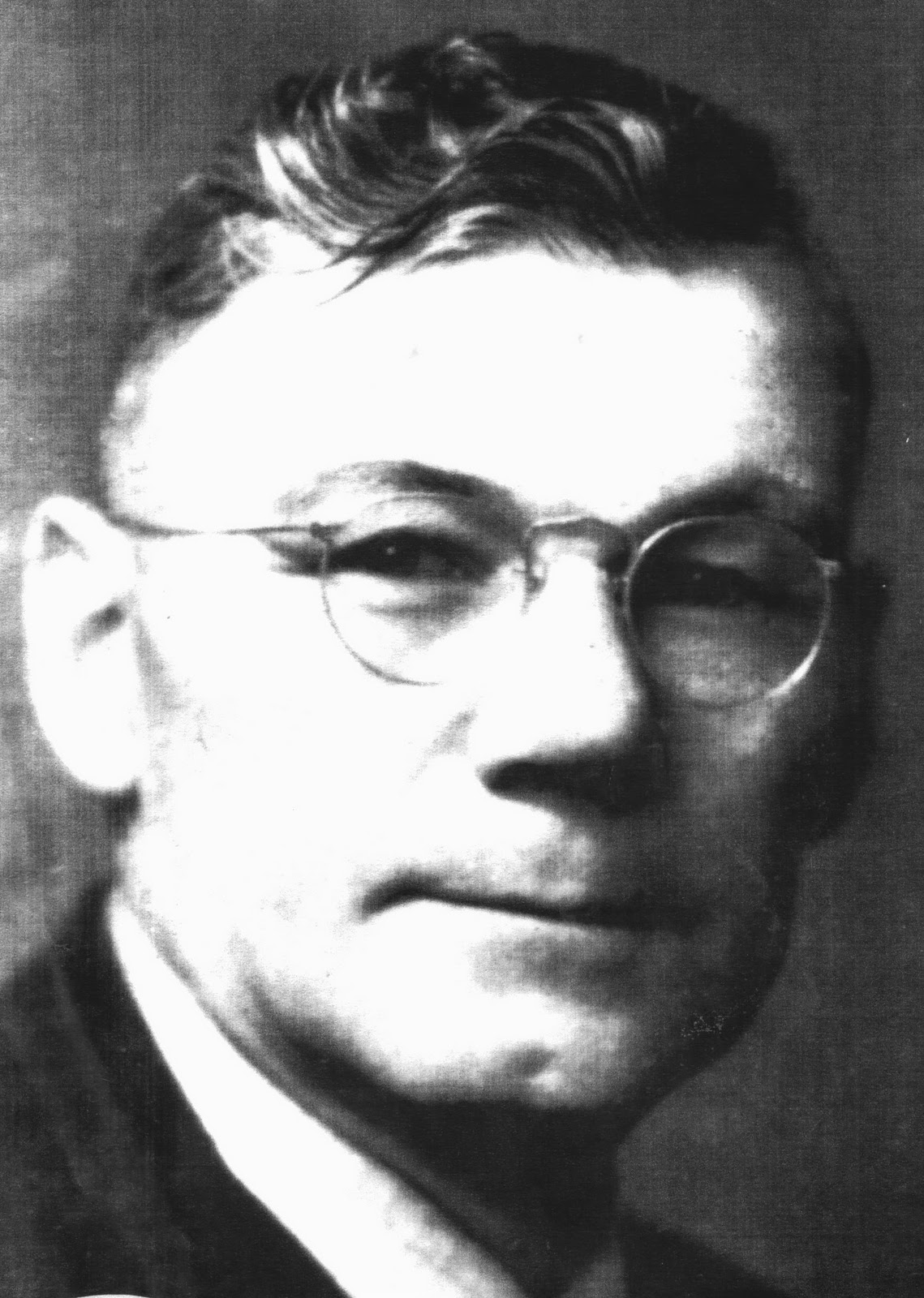
Sgt. Alfred J. Berti, Marries Naomi Ericksen.


 Al was born Feb. 21, 1922 in Wishaw, PA to Enrico Berti and Josephine Messina. He served his country during World War II in the US Army. 

He married Naomi Ericksen, on Aug. 10, 1945, and they moved to Niagara Falls, NY where he worked in bridge and pier construction on the Niagara River. 

In 1950, they moved to Mt. Pleasant, UT where he became owner and operator of Ericksen Meat and Grocery. For many years it was a favorite gathering place for many Mt. Pleasant residents, who enjoyed the warm atmosphere, and a sense of humor. 

He later was employed as a supervisor of the turkey processing plant in Moroni, UT. 

Al was a true example of the perfect gentleman. He was a loving caring husband and father, who will be dearly missed. The family wishes to express their deep gratitude to Dr. LeGrand Belnap, the 4 West nursing staff at St. Mark's Hospital; and the love and kindness shown by the staff at Care Source.

Funeral services were held in his honor on Saturday, Feb. 7, 2004, at 11:00 a.m. in the Mt. Pleasant 4th Ward Chapel (55 S. State).  

~~~~~~~~~~~~~~~~~~~~~~~~~


Naomi Ericksen Berti
Birth: 14 September 1925Mount Pleasant, Sanpete, Utah, United States


Death: 10 July 2008 Salt Lake City, Salt Lake, Utah, United States

~~~~~~~~~~~~~~~~~~~~~~~~~
    RED AND WHITE STORE 

Henry Ericksen 


Naomi's Grandfather Henry Ericksen: 

 In about 1885, Grandpa Ericksen (Henry Ericksen) and his brother Allif started a meat and grocery store in Mt. Pleasant. Grandpa managed the store while Alif ran the farm and livestock; buying, feeding, and slaughtering for the store. They would notify the townspeople that on a certain day they were going to kill a beef in the evening and bring it to the store the next morning so that people could get a "hunk" of meat.


There were steaks, roasts, boils, stews or hamburger - just a chunk of meat. They would start cutting just the back of the ears and end at the hind shank. all the cuts sold for the same price per pound; whether it was the neck or the porterhouse. Then, to carry it home, the customer whittled a sharp stick, jabbed it in the piece of meat, and went home to mama, to have it prepared for the family dinner. There was no paper, twine or plastic to wrap the piece of meat in.

In 1893, they built their store on Main Street and took in another partner; brother-in-law, Judge Ferdinand Ericksen. The store was incorporated as the Ericksen Meat and Grocery Co. Their store was in a two-story brick building with a full basement. It was considered one of the finest institutions in the community.

Ferdinand Ericksen was a lawyer and occupied three rooms on the second floor for his law practice. The town doctor, Dr. W.W. Woodring, occupied the other two rooms on the second floor.

In 1920, Soren M. Nielson and Uncle Harry, Henry's son, bought the store. Then in 1925, Uncle Harry, bought Nielson's half interest and owned and managed the business alone. Uncle Harry put in about forty-five years operating the store. They did their own slaughtering and feed their own livestock such as hogs, lambs, and cattle. Before the meatpackers came into the state, they shipped out daily loads of dressed meat to Salt Lake City, Bingham, Eureka, and also Carbon County.

During those first twenty years of operation, they started to make their own lunch meats, bologna, minced ham, corned beef, head cheese, hamburger and sausage. But when the big packers came into the state that phase of manufacturing was discontinued. Until 1925 they handled the livestock with a first-class saddle horse. After that, motor trucks and trailers were used to move the livestock between range, feedlot, and slaughterhouse.

Ice was used in the store coolers until 1915 when modern refrigeration was installed. Before that, ice blocks were stored in the ice house under sawdust and used to refill the store's ice about once a week. With the advent of electric home refrigerators, the store discontinued using its own ice supply.

After Uncle Harry sold the store, there has been several companies using the Main Street building, including Al and Naomi Berti's Red and White store, Terrel's Red and White Store.
The Ericksen Meat and Grocery Co. had a lot of competitors come and go, but operated for over sixty-two years. And since 1986 it has been the home of the Mt. Pleasant Pyramid, the local newspaper. And now is the Gun Shop. 

Wednesday, August 27, 2025

SOREN M. NIELSEN ~~~ (from our archives)


Soren M. Nielsen was born is Visborg Denmark on June 4, 1886.  He was the son of Soren Christian Nielsen (Gade) and Johanna M. Jensen.  He was the third child in a family of four.


While his father was working in America, an LDS missionary from Mt. Pleasant called on Soren's mother.  The missionary was her sister's son.  Soren's mother, brother and sisters joined the LDS church, sold their home in Denmark and sailed to America.  They arrived in the United States on November 6th, 1895.  They made their way across the United States and settled in Mt. Pleasant, Utah.


In the fall of 1896 Soren started school in the building which later became the Mt. Pleasant City Hall and later Ursenbach Mortuary.  Soren attended school for one year and then went to work for Peter Jensen and occasionally returned to school for the next two years.  This was the end of his formal education.  At the age of 12 it was necessary for him to work alone in the Utah desert, herding sheep.  Later he worked as a miner, then back to livestock in Utah, Wyoming and Colorado.


In 1908 Soren went to work for Ericksen Meat and Grocery on Main Street in Mt. Pleasant.  He managed the store until 1925 when he returned  to the livestock business having large sheep herds and later, cattle in both Millard and Sanpete Counties of Utah.


In 1911 Soren enlisted in the Utah National Guard, along with several other businessmen, to help keep the unit in Mt. Pleasant.  He served seven years and helped patrol the Mexican border as captain of Troop E., First cavalry.


In 1913 he married Florence Ericksen in the Manti LDS Temple.  They had five children:  Forence (Charles E. Peterson), Howards. (Lorine Uhlig), Don E. (Carol Braithwaite), Grant E. (Verna Aiken) and Marjorie (Joseph Beck).


In 1915, Soren became the city marshal, For ten years Soren served on the Utah State Water Storage Commission.  Soren was elected Sanpete County Commissioner in 1932 and served for two years.  During that time he was elected Chairman of the Board of Sanpete County Commissioners.


In 1914 Soren was called to be the Ward Superindendent of the YMMIA in the Mt. Pleasant South Ward.  During this time he was called to be the scoutmaster.  Later he became Scoutmaster in the North Ward.  A short time later he was appointed Scout Commissioner for the North Sanpete Stake.  In 1923 Soren was sustained as President of the North Sanpete Stake after serving as Stake Superintendent of the YMMIA for two years.  He served as Stake President ofor 13 years.  During these years, scouting was organized on a council basis and the Bryce Canyon Council was formed with Soren as President.  Soren received his Siolver Beaver in 1935.  In addition to his church work, Soren was also serving as Vice President of the Board of Directors of Snow Junior College.


Soren later went to work as a bank examiner and was assigned to the liquidation of the BeaverState Bank at Beaver and the Bank of Iron County at Parowan.


Soren was elected Mayor of Mt. Pleasant and served in that position from 1948 to 1950.  During this time Mt. Pleasant saw the addition of Sanpete Valley Hospital and the first street lights were installed.


In 1950, Soren, with two of his sons, transferred his ranching operations to Meeker, Colorado, incorporating under the name "Nielsen Land and Livestock Company.  He spent every summer in Meeker until his health prevented further trips to "the ranch".


He was able to return to his beloved homeland in 1960 while his son, Don and his family were stationed in Germany with the United States Air Force.  His final years were spent living in Salt Lake City with his daughters, Florence and Marjorie.  He died April 14, 1975 at the age of 89.

Sunday, March 9, 2025

HENRY ERICKSEN AND WILHELMINA MORRISON ERICKSEN (from our archives)


Henry Ericksen was born July 28, 1856 in Lehi, Utah; the son of Henrik and Ingeborg Gunderson Ericksen.  Henrik and Ingeborg were Norwegian immigrants and converts to the Church of Latter Day Saints. They first settled in Lehi and then moved south to Mt. Pleasant on the date of August 13, 1864. Not much is known of Henry's childhood.  We know he fell in love with Miss Wilhemina Morrison, the daughter of William and Mary Margaret Farquhar Cruickshank Morrison.  They were married October 24, 1878 in  the Endowment House, Salt Lake City.


 In about 1885,  Henry Ericksen and his brother Allif started a meat and grocery store in Mt. Pleasant. Henry managed the store while Alif ran the farm and livestock; buying, feeding and slaughtering for the store. They would notify the townspeople that on a certain day they were going to kill a beef in the evening and bring it to the store the next morning, so that people could get a "hunk" of meat.


There were steaks, roasts, boils, stews or hamburger - just a chunk of meat. They would start cutting just back of the ears and end at the hind shank. all the cuts sold for the same price per pound; whether it was the neck or the porter house. Then, to carry it home, the customer whittled a sharp stick, jabbed it in the piece of meat and went home to mama, to have it prepared for the family dinner. There was no paper, twine or plastic to wrap the piece of meat in.


In 1893, they built their store on Main Street and took in another partner; brother-in-law, Judge Ferdinand Ericksen. The store was incorporated as the Ericksen Meat and Grocery Co. Their store was in a two story brick building with a full basement. It was considered one of the finest institutions in the community.

Ferdinand Ericksen was a lawyer and occupied three rooms on the second floor for his law practice. The town doctor, Dr. W.W. Woodring, occupied the other two rooms on the second floor.


In 1920, Soren M. Nielson and  Harry, Henry's son, bought the store.


Henry was also a Black Hawk War Veteran and a member of the Mt. Pleasant Pioneer Association.


Wilhemina Morrison Ericksen


Wilhemina was born in Ephraim, Sanpete County March 13, 1959.  She was the daughter of William Morrison and Mary Margaret Farquhar Cruickshank Morrison, immigrants from Aberdeen Scotland.  When she was three months old the family moved to Mt. Pleasant, where they lived in a tent for three months.  Then a one-room adobe house was built just inside the south gate of the Mt. Pleasant Fort, where the family lived until the Spring of 1863.  In those days chances for advancement were limited and what little education she obtained was from her father and mother. 

In 1865 her father, William Morrison was called to help settle Sevier Valley.  Being unable to dispose of their property in Mt. Pleasant, (which proved to be a blessing later on) her mother Mary Margaret Morrison was obliged to remain with her family here in Mt. Pleasant. 

Wilhemina began needlework, and all kinds of handwork, suc as embroidery, millinery, drawing and straw-braiding for hats.  She used to go to the field to glean wheat for the chickens.

She was not quite twelve years old when she made her first temple apron to aid her mother.  At this particular time her mother had a very painful felon on her thumb and was unable to make the temple apron for a Brother McClenehan who had died. So Wilhemina spent all of that Christmas Day 1871, making her first temple apron without assistance. 

Wilhemina received instructions in telegraphy at Ephraim from Miss Helen Armstrong, after which time she was employed in the Mt. Pleasant Telegraph Office which position she held for 18 years.  During that time the telephone system was installed for use between Mt. Pleasant and Fairview.  She being the first to operate the telephone system in Mt. Pleasant.

She married Henry Ericksen in the Endowment House in Salt Lake City on October 24, 1878, by Daniel H. Wells.  They made their journey by team and wagon which took them eight days.  To this union ten children have been born.

In 1892 on account of the dath of her sister Tina, Wilhemina was obliged to give up her office work and take up the responsiblilty of caring for her brother-in-law's two children as well as her aged mother, who was ill at the time.  This continued for six years.  During this time she gave birth to three children and buried two of them at the age of one year each.

Just before her sister's death, she was requested to accept the position of President of the Young Women's Mutual Improvement Association in the Mt. Pleasant Ward.

With all the added responsibility, she continued the M.I.A. work for nine years, when she was called to be the President of the North Sanpete Stake Relief Society.  This new work began in the Fall of 1900 and she held that position for twenty years; being honorably released and retained as an honorary member.

She was a member of the Mt. Pleasant Historical Association from the time  of its first organization.  She was also a member of the Genealogical Association of Utah.  In 1921, she was called to act as a member of the genealogy committe of the Mt. Pleasant South Ward and in that same year she was made chairman of the burial clothes committee of the same ward.

She prepared and laid out for burial hundreds of people for as long as she could.  She always endeavored to fulfill any duty required of her with a willing heart and to her best understanding and always felt blessed by doing so.  She was forever grateful for the sacrifices her parents had made in accepting the Gospel of Jesus Christ, leaving their homeland and all that was dear to them there, coming to the wilds of the west, the chosen land for God's people, where they faced the red men and helped pioneer the country and make it "blossom as the rose". 

In 1920 she was appointed genealogist of the Morrison Family Organization when she gathered many records and helped others with their genealogy as well as did the temple work for their dead.

There is no limit to the work of the faithful in whatever capacity their calling may be. Much is required.  Sacrifice brings for the the blessings of Heaven.  Do your might with a willing heart and God will Bless you.

Tuesday, November 16, 2021


 In about 1885, Grandpa Ericksen (Henry Ericksen) and his brother Allif started a meat and grocery store in Mt. Pleasant. Grandpa managed the store while Alif ran the farm and livestock; buying, feeding, and slaughtering for the store. They would notify the townspeople that on a certain day they were going to kill a beef in the evening and bring it to the store the next morning so that people could get a "hunk" of meat.


There were steaks, roasts, boils, stews or hamburger - just a chunk of meat. They would start cutting just the back of the ears and end at the hind shank. all the cuts sold for the same price per pound; whether it was the neck or the porterhouse. Then, to carry it home, the customer whittled a sharp stick, jabbed it in the piece of meat, and went home to mama, to have it prepared for the family dinner. There was no paper, twine or plastic to wrap the piece of meat in.

In 1893, they built their store on Main Street and took in another partner; brother-in-law, Judge Ferdinand Ericksen. The store was incorporated as the Ericksen Meat and Grocery Co. Their store was in a two-story brick building with a full basement. It was considered one of the finest institutions in the community.

Ferdinand Ericksen was a lawyer and occupied three rooms on the second floor for his law practice. The town doctor, Dr. W.W. Woodring, occupied the other two rooms on the second floor.

In 1920, Soren M. Nielson and Uncle Harry, Henry's son, bought the store. Then in 1925, Uncle Harry, bought Nielson's half interest and owned and managed the business alone. Uncle Harry put in about forty-five years operating the store. They did their own slaughtering and feed their own livestock such as hogs, lambs, and cattle. Before the meatpackers came into the state, they shipped out daily loads of dressed meat to Salt Lake City, Bingham, Eureka, and also Carbon County.

During those first twenty years of operation, they started to make their own lunch meats, bologna, minced ham, corned beef, head cheese, hamburger and sausage. But when the big packers came into the state that phase of manufacturing was discontinued. Until 1925 they handled the livestock with a first-class saddle horse. After that, motor trucks and trailers were used to move the livestock between range, feedlot, and slaughterhouse.

Ice was used in the store coolers until 1915 when modern refrigeration was installed. Before that, ice blocks were stored in the ice house under sawdust and used to refill the store's ice about once a week. With the advent of electric home refrigerators, the store discontinued using its own ice supply.

After Uncle Harry sold the store, there has been several companies using the Main Street building, including Al and Naomi Berti's Red and White store, Terrel's Red and White Store.
The Ericksen Meat and Grocery Co. had a lot of competitors come and go, but operated for over sixty-two years. And since 1986 it has been the home of the Mt. Pleasant Pyramid, the local newspaper. And now is the Gun Shop. 

Saturday, August 7, 2021

ICE BOX HISTORY

We have a lovely icebox at the Relic Home.  It is not known who donated it.  Many of the mainstay items were never cataloged. It may have come from the home of  Hilda Madsen Longsdorf.  Hilda was the secretary of this organization; she had no children and so many of her items were brought to the Relic Home.

We have been told that the ice was taken from Wales Reservoir and cut up in blocks.  Some have said that a wagon would be used to canvas the streets and the ice were sold from there.  The Ericksen Meat and Grocery had an "icehouse" behind their store where they stored their meat and also sold ice to customers.  


Saturday, December 9, 2017

CHRISTMAS MEMORIES FROM THE PAST


In about 1885, Grandpa Ericksen (Henry Ericksen) and his brother Allif started a meat and grocery store in Mt. Pleasant. Grandpa managed the store while Alif ran the farm and livestock; buying, feeding and slaughtering for the store. They would notify the townspeople that on a certain day they were going to kill a beef in the evening and bring it to the store the next morning, so that people could get a "hunk" of meat.

There were steaks, roasts, boils, stews or hamburger - just a chunk of meat. They would start cutting just back of the ears and end at the hind shank. all the cuts sold for the same price per pound; whether it was the neck or the porter house. Then, to carry it home, the customer whittled a sharp stick, jabbed it in the piece of meat and went home to mama, to have it prepared for the family dinner. There was no paper, twine or plastic to wrap the piece of meat in.

In 1893, they built their store on Main Street and took in another partner; brother-in-law, Judge Ferdinand Ericksen. The store was incorporated as the Ericksen Meat and Grocery Co. Their store was in a two story brick building with a full basement. It was considered one of the finest institutions in the community.

Ferdinand Ericksen was a lawyer and occupied three rooms on the second floor for his law practice. The town doctor, Dr. W.W. Woodring, occupied the other two rooms on the second floor.

In 1920, Soren M. Nielson and Uncle Harry, Henry's son, bought the store. Then in 1925, Uncle Harry, bought Nielson's half interest and owned and managed the business alone. Uncle Harry put in about forty five years operating the store. They did their own slaughtering and feed their own livestock such as hogs, lambs and cattle. Before the meat packers came into the state, they shipped out daily loads of dressed meat to Salt Lake City, Bingham, Eureka and also Carbon County.

During those first twenty years of operation they started to make their own lunch meats, bologna, minced ham, corned beef, head cheese, hamburger and sausage. But when the big packers came into the state that phase of manufacturing was discontinued. Until 1925 they handled the livestock with a first class saddle horse. After that, motor trucks and trailers were used to move the livestock between range, feed lot and slaughter house.

Ice was used in the store coolers until 1915, when modern refrigeration was installed. Before that, ice blocks were stored in the ice house under sawdust, and used to refill the store's ice about once a week. With the advent of electric home refrigerators, the store discontinued using their own ice supply.

After Uncle Harry sold the store, there has been several companies using the Main Street building, including Al and Naomi Berti's Red and White store, Terrel's Red and White Store.
The Ericksen Meat and Grocery Co. had a lot of competitors come and go, but operated for over sixty two years. And since 1986 it has been the home of the Mt. Pleasant Pyramid, the local newspaper. And now is the Gun Shop. 

Saturday, May 13, 2017

Peter Azel Peel


Peter Azel Peel was born September 12, 1881 west of Mt. Pleasant, Utah in the bottoms--- as it was called.  He was the son of Christian Fredrick Peel and Mary Miranda Seely.  He attended elementary school that was also located in the bottoms.

Azel had three brothers and two sisters. They were Justus Wellington, Theressa, Orange Frederick, John Henry Lemuel and Jennie Eunice.  When Justus Wellington and Theressa were small children, they became ill with diptheria, and within a week's time of each other, both lost their lives.  They had nothing to give them to check the disease at the time.

Peel Homestead 

In 1894, when Azel was twelve, his father died of rheumatic heart condition.  This was very hard on the family.  Being the oldest son, he took over many responsibilities for a boy of his age.  His mother and all worked very hard to sustain a living on one farm.  Later they  moved to Mary Miranda's mother's home on 5th West and Main Street.
  P.A. Peel is the second from the left on the back row.  
Missionaries to Southern States Mission
Peter Azel attended Snow College for a short time, and then he was called on a mission for the church of Jesus Christ of Latter Day Saints --- to the Southern States.  He left for the mission on November 5, 1902.  After serving an honorable mission, he returned home in March of 1905.

On March 18, 1908, he married Mary Margaret Ericksen in the Manti Temple.  They moved down to the farm and were very happy down there, but Mary Margaret's grandmother Morrison was very ill and she was needed to help take care of her.  So they moved to town before their first daughter, Margaret, was born, February 15, 1909.  They had three other girls.  Alice, Lois and Barbara.


In 1916 they bought 10 acres west of Mt. Pleasant, and they moved down there.  There was only a one-room frame building on the lot.  It was used for their bedroom, kitchen and living room  Mary Margaret's father was wanting to build a bigger barn; the one he had was too small, so he gave it to Azel if he could move it.  He moved it by team to their ten acres, putting it nest to the one room.  He built a platform that served between both barn and kitchen.  Azel put planks on half of the barn for a floor, and Mary Margaret covered it with home-made carpet, and that made their bedroom.  The barn was 30 ft by 20 ft.  It was very cold sleeping in the winter, but they all managed to get along.

In the spring and summer of 1923 Peter Azel and a neighbor , Charlie Peterson, Alice and Lois made twenty thousand adobes.  Then Azel dug a basement and made a foundation.  That fall he moved the barn onto the foundation.  He sold ten thousand of the adobes and made enough money for a mason to line the house with the remaining ten thousand adobes.  By winter they were in their new home, and what a happy day it was.

Pete Azel trained oxen to pull a wagon, and he would drive them in the 24th of July parade.  He tanned many different kinds of hides; he used the leather to repair harnesses, braid whip, and make many useful articles.

He purchased his first sheep dog directly from Scotland. He named Scottie.  He proved to be as useful as an extra farmhand.

Azel was also a butcher for Ericksen Meat and Grocery for many years; he also did butchering for many townspeople.  He raised bees; he kept about 20 hives.  He extracted the honey and sold it to help out with their meager living.

He was an assessor for Mt. Pleasant for many years.  He was ward clerk for four different bishops in the Mt. Pleasant North Ward.  He was bookkeeper for Farmer's Equity, the building where he worked was just west of the old D&RG Depot.  He kept beautiful books, he was a very good penman.


Peter Azel loved his fellow men.  He was never too busy to stop his work and help someone who needed something done.  H was always happy; he always looked on the bright side of life.  His nieces and nephews said he was a peacemaker.  He made the remark one time that he had heaven here on earth.  He loved to hunt and fish whenever he had any spare time. 


On February 14, 1954, at age 73, he died of a heart condition.  How we all loved him and revere his name.  (by Alice Hafen, a daughter)


Peel, Missionary book 1Missionary Log Book  
If this book is lost, holder will please mail to Elder P.A. Peel, Mt Pleasant, Sanpete Co., Utah   For it is of value..


Thursday, May 19, 2016

Eleanor Augusta Dehlin Erickson,

Eleanor Augusta Dehlin Erickson, 1862-1940

"I was born in Salt Lake City, "somewhere on State Street" on 6 Aug.1862. My parents were Paul Paulsson Dehlin and Elna Waldemar Dehlin who immigrated to Utah from Malmohus, Sweden sometime during the 1850s. I remember nothing of the house there. The family moved to Mount Pleasant, Utah, and this is my first recollection. Before I was old enough to go to school I used to go to the neighbor's house and sing for them by the hour. I sat in their big armchair in front of a large fireplace. In the evening one of the boys, Willie Rowe, would carry me home --- so you see I was just small. I must have started school before I was six years old, because I don't ever remember not being able to read. My teacher was "Auntie Hyde". The schoolhouse was a small log building with rough slabs for the benches, no backs, and no tables except a long ledge built along one side of the room. When I was about 11 years old, a certain Mr. Rowley, who was blind, came from Provo to teach someone to play the organ for the choir. They chose Tina Morrison, Celia Jensen and myself to learn. He wrote out the manuscript and told me to watch the notes as he played the melody. Of course, I had a good ear for music and I learned the pieces by ear very quickly. Gradually the other two stopped taking the lessons and the full burden was left to me. I wasn't satisfied to play by ear alone, so any time I could get books on the rudiments of music, I would study them. I put this knowledge and what I could learn by myself together and in that way I figured out what I know today. I never really had any formal lessons or training in learning to play the piano. I have put in over 50 years of Church playing during my life: choir, Sunday School, Mutual, and Relief Society. In the choir work I sometimes did both the conducting and the accompanying at the same time. My closest friends when I was young were Hulda Neilsen and Louise Neilsen. They were not related although they were both my cousins --- one on my mother's side of the family, and one on my father's. My mother died when I was only seven years old. Two years after she died my father went on a mission to Sweden. Edith and I stayed with Aunt Olive Neilsen while he was away. He was back from his mission only two years when he took sick and died. I was only 13 at the time. He had married again, but we girls never lived with him and his new wife. We had a house of our own across the lot from them. Sometimes he lived with us before he died. After his death, Hilda taught school and supported us. Little girls should never mind doing dishes today with plenty of soap and water and good dishtowels. Cloth was so scarce in those days. We would rinse the dishcloth real good and wipe the dishes on that, instead of a towel. Aunt Olive raised one of her babies with only three diapers. Mr. MacMillan, a Presbyterian minister, had a school near his church there in Mt. Pleasant. Hilda taught for him sometime, and then, on the advice of the Church Authorities, she took the position in the Mormon Church school. There was such a crowd of children that the school couldn't accommodate them all, so I took the overflow class when I was just 14 years of age. There were thirty or forty odd pupils in the class which I taught. The Church rented a room close to the school for the overflow class. Mr. MacMillan offered to send me to college and give me a musical education provided I would spend five years teaching for the Presbyterian school. I felt I could remain true to my own belief and still work in another church, but my sisters and guardians were strongly opposed to it, so I reluctantly gave up the offer. Mr. MacMillan seemed to understand, however, and was always most kind to me. Knowing how I loved reading, he made an effort to direct my reading. All my life I have held him in high esteem. In 1879, at seventeen years of age, I attended the University of Deseret in Salt Lake City, where I took the regular course. My father's two sisters, Aunt Olive and Aunt Tildy, saw that I received this training. When I returned home, I taught the school that was in the Social Hall where I had between fifty and sixty pupils. At that time, I was eighteen years of age." (The story of Augusta's life thus far was as she personally told it to her granddaughter, Margaret Erickson Young, daughter of Alif Dehlin Erickson (Lief), eldest son of Augusta. when Margaret lived with Grandma and Grandpa Erickson in Raymond to take her 12th grade of schooling in 1933 - 34. The outline was found upon her death in one of her drawers, and compiled by Augusta's eldest daughter, Elna Erickson Bennett, and her daughter, Catherine B. Masters.) The story continues in Elna's words: "Augusta and Alif Erickson ("Ma and Pa") were married 5 Jan.1882. They met in Mt. Pleasant. They drove in a wagon to the Endowment House in Salt Lake City (about 100 miles) for their marriage so they could be married for Time and all Eternity. The Salt Lake Temple was not finished at that time. They lived in Mt. Pleasant. Their first child, a daughter, named Elna Augusta was born 6 Nov. 1883 and their second daughter, Ina Mae came to join them on 19 Dec. 1885. Alif was called to serve on a mission in Norway on April 9, 1889. Elna was five and Ina three when he left. He sold a team of horses and a wagon to help finance himself. While he was gone, "Ma "taught at the Seminary, gave music lessons and played in a dance orchestra to help support us and him. Ina and I stayed alone at night and tended ourselves."Ma" would just tell us where she was going, turn out the light and go ---we were not afraid. "Pa" was gone for two and a half years, and when he returned, the family got to go to meet him at the train at the Thistle station about thirty miles north of Mt. Pleasant. When "Pa" left for his mission, "Ma" wouldn't go to Moroni to see him off. She wanted to say goodbye at home. So Uncle Ed took a two-wheeled cart, horse drawn, and took me along. Just the two of us took "Pa" to Moroni. While he was on his mission, the railroad was put in. The railroad company wished to buy part of our farmland as a right of way for the railroad. "Ma" sold it to them. She had to forge "Pa's" name to do it, and the railroad company appreciated it, so in return for this kindness they gave the family a pass to go to Thistle to meet "Pa". I always had this over Ina. I was the last one to see him go, and the first to recognize him when he returned. He was wearing a black Van Dyke beard and Ina didn't know him. "I can see him! --I can see him, "Ma!"-----"Oh, you can't either. You won't know him." ----But I did! "Pa" was a farmer when he and "Ma" were married. When he returned from Norway, he and Uncle Henry started "The Erickson Meat and Grocery Store" in Mt. Pleasant. It was called a Green Grocery because it was the only store which sold fresh fruits (bananas and oranges) and vegetables. "Pa" was always interested in cattle. He would have to go out and get meat for the store. He would be up at five and work until dark. He was seldom able to attend Church."Ma' became very tired of the Sunday work, and when the Church advertised for settlers for Canada (Southern Alberta), "Pa" went up to see the country. He made the trip with Moroni Seeley and August Nelson. They went on the train and were gone two weeks. He was impressed with the straw stacks. He was asked why he went up there in the wintertime. His answer was, "I am sure I can stand the summers if I can take the winters."
Alif Erickson family portrait
By now there were five children in the family: myself, Ina, Lief, Daisy and Allan. Ina and I remained in Mt. Pleasant for the time being. Allie and I had married and we had our first baby, Norma, who was only about seven months old. Allie went with "Pa" and the other families. A train was chartered and five families went. They took their furniture, cattle, and everything they owned. There was one coach for the people. They settled in Stirling."Ma" and :Pa" left behind a beautiful new home. It was built of white pressed brick in 1900. There was a new bath, new range, rugs, piano ---everything so lovely ---it was one of the nicest in the town, and was the first to have a bathroom. There were four bedrooms with a beautiful winding stairway. A big watertank pumped water in from the well, and we had a cesspool and a kitchen sink. There was no furnace but "Pa" had planned to put one in. "Pa" said if "Ma" wanted to stay, he would go to Canada alone but she said 'No, she wanted to be with him' so the lovely home was sold. In 1955 I got to go through the home again. It had the same bathroom fixtures and pantry. Allie and I were in Mt. Pleasant visiting and as we were driving by, Allie stopped the car and said he just wanted to look. He went up and rang the doorbell and told the lady, "I was married in that front room." The lady invited us in and took us through the whole house.It was a very happy experience for both of us. The home made quite an impression on the people of the town. Daisy was only about ten when she asked,"Ma" ---"Ma" --are we rich?" ----"NO, NO, we aren't." "All the girls in school think we are." -----"Well, we aren't".---"I'm sure glad they don't know we're as poor as we are." We all laughed about this. The Ericksons lived in Stirling from 1903 until 1910. Alif had been homesteading about 20 miles east in Wrentham but Allie and I had moved to Raymond, about 7 miles west of Stirling, and since Daisy and Ina were both working in Raymond, "Ma" and "Pa" decided to move to Raymond also. Ina and Daisy eventually moved back to Utah, marrying fellows from there. Lief was later settled on the Stirling farm and Allan on the Wrentham one. "Ma" and "Pa" bought a nice home right across the street from Allie and I, where they lived until they were taken in death."Ma", who had played for the choir since she was 12 years old, was organist for both the Ward and the Stake until she was 65 years old. Then Emma Dahl took over in the ward, and N. Lorenzo Mitchell became the stake organist. She was chorister in both ward and stake Relief Society for many years. There was always someone in her home to practise ---either a quartette, a duet, a solo--whatever. When I was a very small girl I made up my mind that when I got my own home, I would never leave dirty dishes for my children to do. All those years I was growing up, "Ma" was always busy giving music lessons or practising as an accompanist with a person or a group, and I think she liked playing the piano better than she liked doing the dishes because that was always my job. I remember staying up so late at night ---so tired, and longing to go to bed, but I had to wait for "Ma" to eat, but while she was at the piano I cleaned up the dishes although sometimes I was so tired I could scarcely keep my eyes open. Having not forgotten this, I have always done my dishes even though I might have to leave other housework for my children to do after school. (End of Elna's story. Continued by Elna's daughter, Catherine Bennett Masters): Grandma Erickson was a quiet, pleasant woman. She was about 5'4" tall and 'a little wide'. She had beautiful long dark hair, which she usually wore in a bun on the top of her head. I remember her brushing it ---she'd brush it forward over her face and it would nearly touch the floor. When she died at 78, she had more brown hair than grey. We used to love to go over to her home and listen to her play the piano, and accompany herself and Grandpa as they sang duets. She sang in a strong mellow alto voice and Grandpa had a beautiful tenor voice, both of them always right on key. They loved to sing together and were asked to perform often. I remember Grandma's Swedish pancakes ---how one of them completely filled her big iron skillet. Mom never made this kind of pancakes so they were a real treat to us. Two more of her specialties were her Christmas cakes and puddings. On a planned day in the fall she would walk across the street to our house, hair freshly done up in a bun, a clean apron covering her house dress, ready to put the holiday goodies together. Each one usually took the better part of one day. After she died, Mom continued on alone. It had become a family tradition. Those cakes and puddings were the very best in the world. I have never tasted any that were any better. We kids would often go over to her place to take milk or fresh butter, or freshly baked bread or the mail and she would often ask us to stay and eat with them. We were shy and would usually say 'No, we were not hungry', then Grandpa would grin and reply, "Any day I'd rather feed a man who admits he's hungry than one who says he isn't. The one who says he isn't hungry always eats the most." Grandma was an avid reader. She would read by the hour while Grandpa was working in the garden and the yard. He always arose about four or five each morning in the summer time, and then by seven at night, although it was still very light outside, he would be in bed. Grandma would sit up until late every night reading, doing some handwork and listening to the ten o'clock news, and then she'd sleep until ten the next morning. She had cataracts on both eyes, had surgery to have them removed and suffered a great deal from this. But the suffering didn't disturb her as much as the fact that she could no longer read with ease. For much of the time she had to be content with just listening to the news on the radio. Sometimes she struggled to read with a big round magnifying glass. Her beloved Etudes (music magazines) would sit stacked up in the front room on a chair or on top of her music cabinet and gather dust --- magazines she had spent so many hours pouring through when her sight was better. She had some sort of infection, probably sinus, that caused her severe headaches. She couldn't tolerate cold air and remained inside the house a good deal, especially in the winter time. This was in the last years of her life. It was very hard for Grandma when Grandpa had his stroke. It happened in July of 1939. He and Grandma had just finished entertaining their Johansen friends from Cardston area, and had sung several duets for them. The company had barely left when Grandpa began acting very strange and was forced to lie down on the living-room couch. The doctor was called and we were told he had suffered a stroke. Weeks later he got so he could walk over to our place but his left side never fully recovered. His leg dragged, his arm was unsteady, and his face, mostly his eye, was affected. Suddenly, after years of being waited on by her husband, Grandma now found the tables turned. It was now necessary for her to do the "waiting" on him. We always thought Grandma would be the first to go because she had had so many health problems over the years. By Christmas time he was completely bed-ridden and finally passed away on the 24th of January 1940. Grandma had been so involved in helping Mom take care of him she was heard to say at his passing,"I hope the Lord will take me fast when it is time for me to go. I don't want to linger and have to have loved ones wait on me day and night. I don't want to be a burden on anyone." She was given her wish. One afternoon that fall she went to her garden to gather potatoes for her dinner. She was carrying them in her apron. As she walked up her stairs to the back door, she suddenly fell forward. Gen, who lived in the other part of her house, and a neighbor, John Kimball, carried her into the house and she was pronounced dead by the doctor when he arrived shortly afterwards. In death she looked so beautiful and peaceful, just like she was sleeping. She had gone so suddenly and looked so natural. This was such a sharp contrast to the way Grandpa looked when he was laid away. He had been ill for so long and was so thin we could hardly believe it was him. As I look back, I am so proud of the manner in which Mother and Dad took care of Grandma and Grandpa Erickson in their later years. Each fall as Dad and the boys filled our coalhouse to ensure us a warm house all winter, they always brought another load or two for our grandparents across the street. As they grew too old to care for their cows and chickens on their own, eggs and fresh milk always found their way across the street to them. Each spring, when loads of manure was hauled from the farm onto our town garden, some of it was always taken to their garden. Many times Mom sent us girls over to to help Gram can her vegetables and fruit. One thing I remember especially was helping her with her pickled beets. As long as a beet was in her garden, we'd can beets! Each fall when sugar and flour and oatmeal and other staples were purchased in 100 lb. sacks for our winter supply, enough always went across the street. I remember Dad asking, "How much will "Ma' and "Pa" need?" when the buying was done or as pig or a beef was slaughtered. Seldom did we eat Sunday dinner without them, and Mother was often heard to say,"I wonder how "Ma" is fixed for bread." when she took her own out of the oven, or "fixed for butter" as she finished churning her cream into butter. Grandpa always loved the fresh, cold buttermilk --- the best drink in the world when he was all hot from mowing his lawn or working in his garden. For several years each Friday after school, I ran over and did the weekly cleaning for Grandma so I would be free to work on Mom's house on Saturday. Mother did their weekly wash for years ---until Gen married and moved into the other part of Gram's house. Then she took over the washing and ironing, much of the cooking and, of course, the cleaning. When Grandma and Grandpa were younger and had better health, they often spent their winters in Utah with Daisy and Ina. They would generally stay until spring, and come home in time for the Old Folks' Party near the end of March. At about this time each year, Mother would send Gen, Bernie and I over to clean up their house. It was quite an experience. There were stacks of old newspapers, paper sacks and empty boxes to burn. Gram was an avid stringsaver. She would wind any piece, no matter how long or how short, into a ball; and we would find string balls all over the house. We had the best fires in her kitchen range, getting rid of all the stuff that we were certain she would never use. If they hadn't gone to Utah every so often, there may not have been room for our grandparents in those rooms! We really cleaned everything out, but I don't think either of them missed the things we did away with. I like to remember Grandma when she was at her beautiful piano practising with someone or playing as she and Grandpa sang duets. They knew many. I particularly loved to hear Grandpa sing, "The other day I nearly found a quarter I've never been so near a thing before (can't remember this line) And with a string they hauled it back again." The other one I remember was one he sang in Norwegian. We had no idea what the song was about but it sounded like "Frog on manure, Fort Mindy adore". I wonder if any in the family but Grandpa knew what it meant. Then there was the cute little chuckle Gram had when she told a joke. She loved to tell the funny things her grandchildren did and said. Sometimes she would be so tickled that tears would run down her cheeks.


Wednesday, May 18, 2016

Alif Erickson

Alif Erickson


by Margaret Young, a granddaughter


Erickson Meat and Grocery


"Alif Erickson, of the Erickson Meat and Grocery Company, was the son of Henry and Ingeborg. He was born in Spanish Fork, Utah, on July 14, 1858, being the seventh child of eight children born to Henrik Erickson and Ingeborg Gunderson. They were converted to the LDS Church in Norway, and later, immigrated to America. In 1860, when he was just two years old, the family moved to Mt. Pleasant where he was raised as a farmer."


I have no information at all on his childhood years, but I do know that his father,Henrik Eriksen was born in Asmundhavn, Senlov, Norway on 4 October,1818, that he married Ingeborg Gunderson in Risor, Norway on 17 December, 1840, that they had three children who died in infancy in Norway, and that they brought two children, a boy (Erick Bertle) and a girl (Torberg Elizabeth) with them when they came to America. I know they crossed the plains in the middle 1850s because I have found a record of that crossing on microfilm. His brother, Henry, was born in Lehi in 1856 and he was born two years later at Spanish Fork and his younger brother, Edward, was born in 1860 at Mt. Pleasant, Sanpete Co., Utah, according to the family group sheets I have from my father, Alif Dehlin Erickson. From this, I must assume that Henrik brought his wife and two young children - a boy and a girl, came across the plains about 1855 or 1856, in time for Henry to be born at Lehi on 28 July 1856. From there, they must have journeyed southward to Spanish Fork where my grandfather, Alif, was born on 14 July, 1858. Four years later, in 1862, the last child, Edward Allen, was born in Mount Pleasant; they, having lived there for about two years. In 1864, Alif's father died suddenly from diphtheria, leaving Ingeborg with 4 boys and a girl to support, so we may well imagine that these children learned early how to work and assume responsibility and to help manage the affairs around the family home. Again, according to the information I have, Erick would have been nearly 14, and Torberg Elizabeth nearly 11 when they came across the plains in 1855, so they were both substantially older than Alif, who was only 2 when they moved to Mount Pleasant; in which case , these two older children would be well into their teen years before their father passed away and old enough to be good help to their mother when she was widowed.
Eleanor Augusta Dehlin


I also know that Alif was married to Eleanor Augusta Dehlin in the Endowment House in Salt Lake City on 5 January, 1882. Augusta was the third daughter of Paul Paulson Dehlin and Elna Waldemar Dehlin who had immigrated from Sweden to America shortly after the gospel was preached in Sweden in the early 1850s. Augusta was born "somewhere on State Street" in Salt Lake City on 6 August, 1862 according to her words. They also went to settle in Mount Pleasant when she was a very small child, so they would have to have met during their growing up years in Mount Pleasant. When Alif began to work for himself, he purchased a farm, a nice 80 acre tract. He was a member of the city council for three years and served with C.W. Peterson. In the Wrentham History book, my Uncle Allan states that he was Sheriff of Sanpete County for a time. He opened the Erickson Meat and Grocery Co. in partnership with his brother, Henry. Ferdinand Ericksen had a law office upstairs in the same building. ("Uncle Ferd", as we always heard him referred to in our family, was no relation, he being a Dane, but his family has always held close ties with ours, since his wife's sister (Aunt 'Mina) was married to Uncle Henry.) It was a fine brick building, and they had a good stock of fresh and canned meats, groceries and provisions. Alif's responsibility was to do the buying and slaughtering of the animals, so he always had many cattle and horses around his place. He was a stockholder in the Electric Light Company and Mt. Pleasant Roller Mills, of which he was a director; which, in my mind qualifies him as a public-spirited individual who was willing to give of his time to the community in which he lived. They had five children: Elna Augusta (Nell Bennett) born 6 November,1883; Ina Mae (Olsen) born 19 December, 1885; Daisy Genevieve (Carlson) born 2 February, 1892; Alif Dehlin Erickson, born 25 November, 1893; Oscar Allan Erickson, born 7 December, 1895. On 9 April, 1889, Alif was called on a mission to Norway, the home of his parents. He sold a fine team of horses and a wagon to help finance his mission. His wife, Augusta, who was talented in music, went to work teaching school, giving music lessons, and playing in a dance orchestra to take care of her needs and those of her two little girls. He was away for two and one half years, and when he returned, his oldest daughter was almost old enough to be baptized. They had lived in an adobe house up to this point, but by 1899 or 1900, Alif had a fine new modern brick home built beside the old one and reputed to be the first home in town with an indoor bathroom. Then he bought his wife the best piano he could find in the country, according to his son, Alif Dehlin (Lief, my father). Around the turn of the century there was much talk of the opportunities available to settlers in Canada. So, in the winter of 1902, Alif came up to explore the prospects of bettering himself financially. He travelled by train, stayed two weeks, and said he needed to see the country in the winter because he knew he could stand the summers. He was favorably impressed, so after settling his affairs at home, he set out on a mixed train with five other families and all their earthly possessions for a destination in Canada. We can only imagine his wife's consternation when he decided to leave that fine, new house and start all over again in a strange new land. They loaded all their possessions onto a mixed train consisting of approximately twenty boxcars for the livestock, machinery and household effects, a passenger coach and a baggage car for the convenience of the people on the train. The people rode in the one passenger car, while the men rode with the animals, machinery and all the household effects, arriving at the Stirling Siding station in Northwest Territories, Canada on April 23, 1903, in company with the families of Moroni Seely, Oscar Barton, Peter Meiling, Nels Eliason, James Bradley, and Edward Erickson, a younger brother. Uncle Allan specifies 52 people coming on that train. My dad remembers how hard the wind was blowing the next morning after they arrived, compared to what he was used to in Utah. Alberta was not in their address yet, but was formed from a part of the Northwest Territories just two years later, in 1905. Alif had intended to settle in the Magrath area when he had seen it the year previous, but they had to unload everything from the train at Stirling because the railroad was not finished any farther, so he bought a small two roomed house on the west side of the village, which the family shared with the former owners for several weeks. They slept in a tent for most of the summer. They weathered the famous "May Snow Storm" of May 15th when they endured drifts 6-8 feet high with 3 feet on the level. The snow cover was so deep that it didn't even freeze the blossoms on the currant bushes and on the gardens. Many cattle and sheep were lost in the storm, but we were fortunate to have shelter in a barn for our animals so we didn't lose any. Two men of the Wrentham district lost their lives in that storm as they were herding their father's sheep. Many were the hardships which were common in those days! His first farm was a 40 acre parcel two miles south of the village, which he broke up with a walking plow and four mules. Later, he acquired another 40 acres adjoining it, and broke it up the same way. Much of his time was spent doing teamwork on the irrigation canal and breaking sod for others in order to get money to expand his own operations. By 1908, he had acquired a homestead near Wrentham (which his son, Allan, later owned), a quarter section west of Stirling (which his elder son, Lief, later bought and farmed until his eight children were grown), and later, two parcels of 80 acres each two miles farther west on which they raised hay. (They called it "The Hay Farm.") At the homestead, they began raising horses because there was almost unlimited free pasture on the prairies. He became prominent in the area for his good stock. He loved his animals and gave them the best of care. He had learned to be a shrewd business man and a hard worker. By being energetic and thrifty, he was gradually able to acquire enough of this world's goods to make his family comfortable. In 1910, he moved to Raymond to live because two of the girls were working there, and one was married there and they could all be together. Also, the Knight Academy was just completed and he had two boys old enough to take advantage of the education it offered them. But he continued his farming operations in the Stirling and Wrentham areas with the help of his two sons, using Raymond as his home base. Since, as was stated before, his wife, Augusta, was talented in music, she was very much involved with the people in the community as a church organist and choir director, a piano player in orchestras and programs, and also as a piano teacher. She was never too busy to give of her time to practise for the enjoyment of others. She instilled in many of her posterity, a real love for music of all types. Alif loved music and had a fine tenor voice. The two of them sang together to her accompaniments on the piano, and were invited to perform often in the three communities. They lived together in their home in Raymond until 1940, when Alif passed away following a stroke on January 24th at 81 years of age, and Augusta on October 10th in the same year at the age of 78. Grandpa Erickson was past 60 years old when I knew him, but I was impressed that he was a tireless worker. He always had a big vegetable garden and kept it carefully. He was generous in sharing his produce with others who needed it. Harvest time was always exciting for him, and he was always on hand to see that everything went on as it should and to help at whatever he was able to do. Since his experience was as a butcher in his younger years, he helped with the butchering on the farm until he had taught my dad what he knew, and he also taught him the fine points of curing of hams and bacon. He was always alert to opportunities that would assist him in providing a better life for his family. I remember meeting an old Raymond native in Calgary in the early 1980s, who had known the Ericksons there. At once, the thought came to him of a wonderful stallion my grandfather had which, to use his very words, "threw the best colts in the country". I I remembered this big roan horse around their place when I was very small. Grandpa used to lead him to drink at the watering trough each day, and stand and wait patiently for him to finish, he often trotted him around the yard for exercise when I thought he was too old to put himself through that. He spent a lot of time brushing and curry-combing his coat, all of which I thought, in those tender years, was too much work for him and that he would do better to get a "pet" that was easier to care for in his old age. Oh, the innocence of childhood! Times were often tough even in my childhood, but nothing compared to the early days in this country. Land had to be broken under adverse conditions, rocks had to be picked from the farmland without benefit of any modern labor-saving machinery which we know today, and life depended on the brute strength and determination one had to survive in a new country. My father and grandfather endured the scorching heat of summer, the chilling blasts of the Canadian winters, the incessant west wind, and often the raging prairie fires which swept through the country in the dry years. Life became better when they graduated to the use of horses in their farming operations, but nothing like the mechanized farm life we know today. How grateful we are for the folks who came early and stayed on to make it the wonderful place it is today! I join my dad as he said in the Wrentham History book-"Homestead Country, Wrentham, Alberta" "Dad, through his energy and thrift, gradually acquired the means to give us, as a family, some of the things that make life bearable and a little more meaningful, and I honor him for the good example he set for us."

The following Story is from Alice Peel Hafen 

In about 1885, Grandpa Ericksen (Henry Ericksen) and his brother Allif started a meat and grocery store in Mt. Pleasant. Grandpa managed the store while Alif ran the farm and livestock; buying, feeding and slaughtering for the store. They would notify the townspeople that on a certain day they were going to kill a beef in the evening and bring it to the store the next morning, so that people could get a "hunk" of meat.

There were steaks, roasts, boils, stews or hamburger - just a chunk of meat. They would start cutting just back of the ears and end at the hind shank. all the cuts sold for the same price per pound; whether it was the neck or the porter house. Then, to carry it home, the customer whittled a sharp stick, jabbed it in the piece of meat and went home to mama, to have it prepared for the family dinner. There was no paper, twine or plastic to wrap the piece of meat in.

In 1893, they built their store on Main Street and took in another partner; brother-in-law, Judge Ferdinand Ericksen. The store was incorporated as the Ericksen Meat and Grocery Co. Their store was in a two story brick building with a full basement. It was considered one of the finest institutions in the community.

Ferdinand Ericksen was a lawyer and occupied three rooms on the second floor for his law practice. The town doctor, Dr. W.W. Woodring, occupied the other two rooms on the second floor.
In 1920, Soren M. Nielson and Uncle Harry, Henry's son, bought the store. Then in 1925, Uncle Harry, bought Nielson's half interest and owned and managed the business alone. Uncle Harry put in about forty five years operating the store. They did their own slaughtering and feed their own livestock such as hogs, lambs and cattle. Before the meat packers came into the state, they shipped out daily loads of dressed meat to Salt Lake City, Bingham, Eureka and also Carbon County.

During those first twenty years of operation they started to make their own lunch meats, bologna, minced ham, corned beef, head cheese, hamburger and sausage. But when the big packers came into the state that phase of manufacturing was discontinued. Until 1925 they handled the livestock with a first class saddle horse. After that, motor trucks and trailers were used to move the livestock between range, feed lot and slaughter house.

Ice was used in the store coolers until 1915, when modern refrigeration was installed. Before that, ice blocks were stored in the ice house under sawdust, and used to refill the store's ice about once a week. With the advent of electric home refrigerators, the store discontinued using their own ice supply.

After Uncle Harry sold the store, there has been several companies using the Main Street building, including Al and Naomi Berti's Red and White store, Terrel's Red and White Store.
The Ericksen Meat and Grocery Co. had a lot of competitors come and go, but operated for over sixty two years. And since 1986 it has been the home of the Mt. Pleasant Pyramid, the local newspaper.