![]() |
L to R: Eli Brazee Kelsey Ferguson, Joseph Moroni Westwood, Rudolphus Nathaniel Bennett |
Showing posts with label Westwood. Show all posts
Wednesday, October 30, 2024
Thursday, June 6, 2024
The Lives of Six Pioneer Girls
Becky Bartholomew:History Blazer, September 1996
The life stories of six cousins--Clarissa Wilcox, Martha Wilcox, Mabel Wilcox, Luella Hurst, Ida Hurst, and Mary Young--born in three Utah towns between 1863 and 1893 reveal what it was like to be a girl growing up in pioneer Utah.
First memories: Martha was only five years old when someone came to the house to tell her mother that Mormon President Brigham Young had died. Martha remembered that moment all her life.
Clarissa received her first pair of buttoned shoes at age five. Her father, a shoemaker, cut them out of the bootlegs of a man's discarded hightops because leather was so scarce.
As a young girl Luella was afraid of the Indians who went house to house begging. Actually, Utah Indians by that time were friendly, but Luella had heard stories from male relatives about the Indian wars of previous decades, and they filled her with imaginary terrors.
Play: When not helping their mothers, the girls played games they called nip-cat, pomp pomp pull-away, Sister Parute, and rounders (a ball game). They also played hide-and-seek in the sagebrush.
Treats: For treats the girls ate parched field corn and homemade molasses candy. As an old woman Clarissa confessed, "I couldn't stand to eat another bit [of molasses candy] to this day." They also gathered grass and shrubs on which honeydew had condensed during the night and then boiled it down into a sweet syrup. As they grew older and went to community dances; the girls sometimes went at intermission to buy crackers, cheese, and tinned salmon for refreshments.
Clothing: In warm weather small pioneer children mostly went barefoot, especially in towns like Moab where they could not have kept the sand out of their shoes anyway when they went to fetch a bucket of water.
Their mothers made all the families' clothing. In summer the girls wore calico dresses (not slacks or shorts) and in winter dresses made of a homespun material they called "lindsey" (actually linsey-woolsey). One girl's mother would get up early on winter mornings and warm the children's clothes on the stove.
Clarissa somehow got the idea that the only dress appropriate for special occasions was black satin. One year her mother made her a black satin dress, and for the rest of Clarissa's life she always owned such a dress. The year before she died her granddaughter made her a maroon satin dress. It took some persuading before Clarissa agreed to wear non-black.
Work: Martha, when eight years old, was sent on an urgent errand. But on the way she met a friend, and they lallygagged until Martha's mother finally sent someone else. When Martha got home, fully expecting to be punished, her mother just told her to go and play. Martha felt so bad she told her mother she needed "a good licking." So her mother sent her to cut a fresh willow stick. Martha brought back a green one, and her mother gave her several stinging lashes. When Martha yelped, her mother asked, "What's the matter? Didn't I give you enough?" Martha answered, "I didn't think you would whip me so hard." "Well," said her mother, "you asked for it."
At age nine or 10 the girls got their introduction to serious work. Mabel, as the oldest daughter in her family, and Ida, because her mother was a midwife and gone frequently, took over most of their families' household duties: cooking, cleaning, scrubbing clothes on a washboard, milking cows, and tending the younger children. Early morning and late evening work was done by the light of coal-oil lamps.
By age 10, especially if there were few boys in the family, the girls began to help in the fields. At first they weeded or dug potatoes, then (for 25 cents a day) gleaned the wheat after the harvesters had gone through. By age 14 they were able to help shock bundles of grain or hire out in other peoples' homes. Since her mother died when Martha was 13, she spent her teenage years cooking and keeping house for her father and older brothers.
Schooling: School was held only a few months a year in one-room, log schoolhouses. The girls started at about age seven and usually quit by 13 or 14 to work. Most did not go past the eighth grade, but they learned the skills needed to survive in their day.
By today's standards these six cousins had hard lives. They could not even go to the store and buy material to make their own clothes. But they had loving families, lots of friends, and games and dances to enjoy.
Source: Histories of Clarissa Jane Wilcox Meiling, Martha Anna Wilcox Westwood Foy, Mabel Wilcox Johnson, Alice Luella Hurst Nielson, Ida Susannah Hurst Patten, and Mary Ethel Young George; in Montel and Kathryn Seely, Seely History, vol. 2 (Provo: Community Press, 1996).
Mabel Wilcox - From The Lives of Six Pioneer Girls
·
Thursday, February 1, 2024
John Carlos Wilcox And Eliza Violet Westwood Wilcox ~~~~~ Pioneers of the Month ~~~ January 2024
![]() |
| Back Row: John Carlos Jr., John Carlos Sr., Eliza Violet Westwood Wilcox, |
Front Row: Henry Webley Wilcox, baby Mabel, Two girls: Grace Wilcox, Eva Wilcox
![]() |
| John Carlos Wilcox |
````
![]() |
| Wilcox Siblings |
Richard Dallin Westwood - Chasing Horse Thieves West of Green River
Sheriff Jesse Tyler and posse consisting of Andrew Tangren J C Wilcox Herbert Day William Wilson and R D Westwood returned from a 12 day trip chasing horse thieves in the San Rafael country west of Green River They brought back two stolen horses but no horse thieves They had a run in with two supposed rustlers in the Robbers Roost country About a hundred shots were filed by both sides but no damage so far as was known The sheriff's party ran out of ammunition and withdrew Looking Backward Through the files and the Ties
~~~~~
Sunday, April 14, 2019
Saturday, October 14, 2017
Monday, February 8, 2016
Early Dramatics In Mt. Pleasant
EARLY DRAMATICS (Taken from the History of Mt. Pleasant pp 301-306)
By Dora Day Johnson
as told Valentine L. Anderson, 1924
I came to Mt. Pleasant March 1860. I was at that time
eight years old. That winter the old log meeting house, in the center
of the fort, was the play house. Some of the players who took part at
that time were Wood Brandon, John Ivie and his wife.
Katherine Ivie, Dolph Bnennett, George Porter, Joseph S.
Day and others whom I do not now remember. They played, "Good
for Nothing Nan," and the "Merchant of Venice." The
scenery was wagon covers and other materials mixed together, but
didn't we children enjoy it! and so did everyone else. The next play
house was the Social Hall, with real scenery. Wood Brandon and
Katherine Ivie were the only two members who stayed with the
company. In 1869 a new dramatic company was formed. Niels Madsen was
always our treasurer, and took care of our cash, which consisted
mostly of wheat, cedar posts, vegetables, etc. Those belonging to the
company from time to time were, Stena Burrison, Lucy Wheelock,
Alice and Laura Day, Jane Tidwell, Kate Candland, Stena Tuft,
Katherine Ivie, Rose Reynolds, and myself. The men were Dick
Westwood, Henry Larter, Alfonzo Wheelock, Jerry Page, John Carter,
Joseph Gribble, and my husband, Gustaf Johnson. Once in a while,
Melvin McArthur and his brother, Duncan, Conderset Rowe, Henry
McKinney, Peter and Hans Gottfredson, Wood Brandon, Tom Coates, and a
number of others whom I do not recall, would join the company.
During the winters of 1869 and 1870 the company would
play three successive nights a week in Mt. Pleasant, and would also
play in the neighboring towns, traveling, of course, in bob sleighs
or wagons. They played such dramas as "The Rose of Elrick Hill,"
"Night and Morning," "The Skeleton Witness," and
the "Carpenter of Roan." These were always followed with a
farce, such as "Matrimony," "Swiss Swane," "The
Forest Rose," etc. Each player received three complimentary
tickets, and a settlement was made each spring. I remember once each
player got two and a half bushels of wheat for their winter's work.
Tickets were about twenty-five cents each. The company after a while
owned their own scenery. The played in the Social Hall and in
Jessons’ Hall. There was no entrance to the stage in the Social
Hall, and the crowds were so large they could not pass through the
aisles, so the cast had to crawl through the windows to get to the
stage. Mary Katherine Ivie had legs that were too small to look good,
and she would fill her stockings with bran; but upon moving about,
the bran soon fell to her shoe tops, which were either laced or
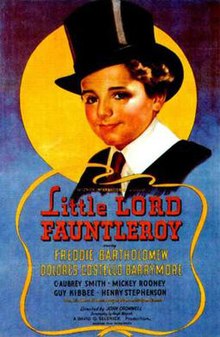
buttoned high tops. This looked rather funny, of course. The company played "Little Fontleroy," with Annie
Woodhouse Candland, dressed in a black velvet suit and with
white collars and cuffs; as Lord Fontleroy, she looked swell. It was
unusual to see a girl dressed in boy's clothing in that day. The
Bishop and family, the bishop's counselors and families always had
free tickets.
Richard Westwood was one of the main players; Henry
Larter was also a lead character. He cast all the parts. John Wallis
was the one who did most of the prompting, and was assisted by Tom
Coates and Alfonzo Wheelock. The players used no make up, excepting
flour on the hair to make it gray. Thunder and lightning was made by
using gun powder and sheet iron. When the company's settlement was
made one. spring, Stena Tuft found that due her for her share was to
pay for a lamp chimney she had broken. Later, the upstairs of the
Co-op Store was used for plays. The audience always bought peanuts
and enjoyed them between the acts, and oftentimes during the acts. It
was very common for almost all the men in the audience to go outside
between the acts, and rush in when the bell rang. At the close of the
next to last act, the manager would make the following speech, "In
behalf of the company, I wish to thank you for your patronage,
and after the third and last act, we bid you all good night."
Several traveling theatrical companies now made their
regular visits, and they always played to packed houses. The Johnson
Brothers, of Springville, and with them, Pearl and Alfonso Either.
While the Stutz Dramatic Company were playing in Moroni, while
cleaning with gasoline, Mrs. Stutz's clothing caught on fire and she
was burned so badly that she died soon after. There were many real
Negro Minstrel shows, too, with brass band and all the trimmings. The
Fairview Dramatic Company and the Moroni Dramatic Company, in which
Kenneth Kerr played important parts, also put on plays here, but Mt.
Pleasant did not patronize the neighboring town companies very well.

DRAMATICS IN MT. PLEASANT
By George Christensen, 1934
Personally, my memory does not go back beyond the old
Jessen Hall, but I shall never forget some of the soul-stirring
scenes we witnessed there.
In the fall of 1869 and on through 1870, a regularly
organized Home Dramatic Company furnished the scenery by donation of
the members, and Brother C. C. A. Christensen, of Ephraim, painted
the pieces.
The next move in the early 70's was up to the new Jessen
Hall and the reputation of the Mt. Pleasant players was such that it
attracted experienced actors such as Dick (Richard ) Westwood, of
Springville, and later of Fairview, and Judge Larter of Moroni. These
skilled thespians played the heroic parts and aided in drilling the
younger members. Westwood particularly excelled in training the
voices to speak loud and clearly, and Judge Larter's specialty lay in
the casting of the characters. A little later a fine old actor,
Philip Hurst, came from Fairview to help out in several plays.
John Wallis became a pillar of strength to the
organization by his accurate prompting, and many escaped chagrin and
embarrassment by hearing the hoarse whisper of Brother John
Wallis. Alfonzo Wheelock ably assisted Wallis when the latter's voice
gave out.
There arose another tower of strength in the person of
Joseph Wise, who, for many years, Was the stage manager. How often
were we thrilled and terrified by the thunder and lightning he
conjured up by the aid of gunpowder and a sheet of metal.
In the 80's there seemed to be a lull in the activities
of the local home talent. That was when John S. Linsey and Company
used to present fine plays to us at stated intervals. We now had a
good show house upstairs in the Co-op building, which became known as
the Madsen Hall.
However, occasionally local talent came together and put
on some very creditable shows. Some of you will remember "Odds
with the Enemy," which was put on under the direction of E. A.
Day and Abram Johnson. In these performances, Ferdinand Ericksen,
Magnus Rolph, Augusta Dehlin Ericksen, Abram Johnson, Amasa Aldrich
and Dr. S. H. Allen, E. A. Day and others portrayed their stage
ability.
Shortly after this, the Johnson brothers, Mose and
Aaron, came to Mr. Pleasant and formed an elocution class, wherein
they gave twelve lessons for $75.00 for the lot of us, and they
agreed to drill us and take their payout of the proceeds of the play.
Thus we put on the "Pearl of Savoy," wherein Miss Edie
Dehlin starred in the title role.
About that time, December 2, 1886, a permanent
organization, Mr. Pleasant Dramatic Association, was effected, with
M. C. Rolph as Manager; Ferdinand Ericksen, Assistant Manager; George
Christensen, Secretary; and Joseph Madsen, Treasurer.
Later the Johnson Brothers cooperated with the local
association and put on some very creditable plays, which finally
culminated in the famous presentation of "East Lynn,"
wherein Charlotte Stormfelt played Lady Isabel and Madam Vine; Rose
Reynolds played Barbara Hare; Aaron Johnson played Sir Francis
Levison; George Christensen, Archibald Carlyle; and Miss Annie
Pritchett was little Willie, who soared to heaven before the eyes of
the audience; Ella Wheelock Freston played the unforgettable Miss
Corny.
A few years later came Alphonso Ethier and his sister,
Pearl, and joined the local dramatic association in presenting
"Brother Against Brother," and other plays.
I moved away and when I returned new hands had taken up
the work. I hope someone else will take up the work where I left it,
that a complete story of the development of the drama in old Mt.
Pleasant may be prepared and recorded.
PLAY
By Malvina Crane, 1926
The first general gathering place I remember was the
Social Hall-still standing on the southwest corner of the square.
Later, Yeppa Jessen built a larger house two blocks east, which at
once became the most popular place in the little community. This hall
had a platform in the east end, which .our theatrical troop could use
as a stage, as soon as suitable scenery could be bought from C. C. A.
Christensen, a local celebrity. After the scenic equipment had been
put in, our troop held forth at regular intervals, crowds of eager
people always packing the house to its utmost capacity. You should
have been there to witness some of those classical plays! We had no very great artists, of course, but
those who took part did the job to the satisfaction of all who came
to witness the shows. What more could you ask of a bunch of amateur
players?
I am unable to recall a complete list of the men and
women who took part in our theatricals during the early years of our
dramatic efforts to render public service. The real leader and
organizing genius was the Englishman, John Wallis, who had
considerable ability and did much towards securing the formation
of an efficient troop. Assisting him were the following gentlemen,
according to my recollection: J. A. F. Beaumann, Alma Bennett, R. N.
Bennett, W. W. Brandon, John Carter, Thomas Fuller, Henry Larter,
Christopher Johnson, Gus Johnson, H. P. Jensen, Albert Candland,
Thomas Gledhill, John Dallin, Cyrus Dallin, Orson Lee, William
McArthur, William Morrison, James Reynolds, Bent Rolphson, Alof
Rosenlof, Allen Rowe, William Rowe, Conderset Rowe, Joseph Gribble,
John H. Seeley, Hans Hansen, James Wishaw, Richard Westwood, and
Cap Clem.
Among the ladies were: Christina Bertlesen, Tina
Bertlesen, Alice and Dora Day, Annie and Kate Candland, Mary
Katherine Ivie, Hannah Reynolds, Candace Rowe, Nicholena Rolfson,
Jane Tidwell, Stena Tuft, Annie Wallis, Lucy Wheelock, and Mrs. C. M.
Wheelock.
The musicians were: John Gledhill, Bent Hansen, Hans Hansen, James Hansen, Peter Almertz, Martin A. H. Myneer, Lars Nielsen, Lorenzo Nielsen, Peter F. Nielsen, and John Waldermar.
The popular dances were: Plain quadrille, Tucker
quadrille, French Four, Upper Reel, and some Danish dances. Then
there was the Flying Dutchman, the Mazurka, the "Tyrola,"
Polka or Danish Glide, and many kinds of fancy waltzes too numerous
to mention, but which were a great improvement upon the present
"jazzy" movements in the sober judgment of old people
It will not do to omit the Judge, Hyrum Seely, from our
list of fun-makers, because he always was on the job, full of vim and
hopping, skipping, and shouting to the top of his voice, reminding you of the little song which our ever jolly Lars Nielsen
used to sing, thus:
When I was a little boy,
My mother used to say
That she used to spank me up and
down
A dozen times a day.
For I'd either be up in a tree,
Or rolling down the hill;
It's a fact that whether I sit or
stand
I really can't keep still.
No, I really can't keep still,
I really can't keep still;
It's a fact that whether I sit or stand,
I really can't keep still.
Nor could the Judge-not for the fraction of a moment-and
while the years have done something to tame and tone his
ever-bubbling and youthful spirits, yet even now he would be
willing to go back and live those joyous days over again. Who would
not?
Sunday, May 31, 2015
Subscribe to:
Posts (Atom)