Showing posts with label Ott. Show all posts

Friday, April 24, 2026

BIOGRAPHY OF HANS ULRICH WINKLER AND MARY THALMAN WINKLER


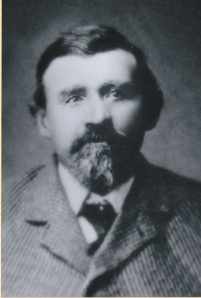
Hans Ulrich Winkler 


Biography of Hans Ulrich Winkler and Mary Thalmann Winkler
Written by Louisa Thalmann Hasler

In a beautiful little valley or Switzerland in the little town of Zell, Hans Ulrich Winkler was born December 21, 1838, His parents were Jacob Winkler and Susanna Burri. He was the youngest of four living children. Four others died in infancy. The three older children were girls, Elisabeth, Susanna, and Anna. Their home was an ideal one and also their family life. The parents conducted an open house or inn, also a bakery and they owned a little farm.

Elisabeth was married to Jacob Ott in 1856. Susanna married John Thalman in 1848. When Ulrich became of age he was sent to the city of Zurich to perfect the bakery trade, and also learned fine bakery. After he graduated he came home and helped his father run a good business. There were large factories In the neighborhood and the town people were supplied with fresh bread every day.

When Ulrich was twenty-two years old be courted and married Mary Thalmann of Hamburg, May 6, 1860. As mentioned before their home was a prosperous and happy one. Their father (Jacob Winkler) was a fine singer and his children had all inherited his talent and had fine voices. Ulrich and Anna also played the guitar. Their home was much frequented by the young people and all would join in singing and playing, especially on Sundays and in the evenings.

Such was the happy condition of their home in the early spring of 1863 when the youngest sister Anna and Mary, his wife, went on an errand to a home where the mother of the family had joined the Mormons. They found a missionary there from Utah. They talked of the Gospel of Jesus Christ of Latter-day Saints and both were so impressed by the doctrine that they promised to return and learn more of the new message. This they did and in a short time they both applied for baptism. They brought the message home to the rest of the family and nobody seemed much opposed to it. Ulrich investigated and was convinced of the truth and entered into the waters of baptism. All went well until the spirit of gathering came upon them. The missionaries worked hard to encourage them to go to Zion, well knowing that the spirit of opposition was so strong that delay might weaken their faith.

It was a great undertaking to leave their aged parents alone and to leave their beautiful home. The work was too hard for their parents to continue to do alone. The parents thought they could keep them from going by refusing them the money to emigrate. But Mary’s mother (Anna Thalmann) came to their rescue. She saw that a great change had come upon this young family for the better. Although she could not then understand the gospel she felt moved upon to help them, seeing their determination to live a better life and their strong desire to go. She borrowed the money to assist them to emigrate.

Sister Anna was to be married; her trousseau was all ready, but the young man broke the engagement at once when she became a Mormon.

Ulrich and his wife had two beautiful children and she was to become a mother again before their journey's end. Therefore they found it advisable to journey together. Sister Anna was very much attached to the children and would be a great help to them.

Preparations were made to start with the first emigrants who were to leave Switzerland on May 6, 1864. By this time the evil one used all his power to stop them from leaving. Relatives and friends combined with their entreaties to hinder their purpose.

On the last evening at home a few of his immediate family had gathered to say goodbye. They were to leave on an early train to the city of Zurich. Soon the house was filled with his young friends who seated themselves at the tables. (I was also present at this occasion.) It was whispered to us that these people, who now fancied in their belief that violence should be done to stop them, were there for that purpose. They were waiting for the two elders from Utah whom they believed had done all this mischief. However, Ulrich was informed of the trouble and warned the elders not to come to the house.

Their young friends sat there sullenly. It was hard telling what they had planned to do. Although they had loved their friend and companion so dearly their sorrow and regrets to lose him were intense and they were surely grave. All at once Ulrich stepped into the room where they were assembled. He addressed them something like this: “My dear friends: I feel the parting from you all just as keenly as you do, but I am convinced of the truth of this unpopular religion.”   He then bore a strong testimony of the truth to them. He wished them all happiness and told them that nothing they could say or do to the contrary could change his conviction. He then told them there was only a short time left before their departure and that he would like to spend the few moments left with his father and mother and dear ones. At this, all assembled rose to their feet and extended their hands. All were in tears, but wished him God-speed and happiness. The next minute the room was empty.

The parting from these parents was indeed a supreme test of their faith. But a spirit of peace and happiness prevailed. What other spirit could exist when such an heroic character is manifested. (Nearly sixty years have elapsed since then, but never can I remember or talk about that scene without shedding tears of joy because this service of his was the means of bringing all their own family into the fold.) And also his true and devoted wife Mary brought her dear ones into the fold and all gathered in Zion. Ulrich's father died a few years later but had received the gospel and was baptized. The aged mother came to Utah with her other daughters and their families, thirteen in number.

The journey of Ulrich Winkler and family was an arduous one. They arrived in London safely but by an unforeseen cause the sailing vessel was delayed and they had to stay in that city a month. When the ship arrived hurried preparations for over a thousand emigrants was made. Facilities for preparing food on the ship were not ample. It was only possible to cook things every two or three days and people suffered on that account. The wind was not favorable to them so it took nine weeks to reach New York harbor.

The young mother suffered a great deal for want of food and it brought on a premature confinement. The baby lived only eight days and was named after the captain of the vessel, Hudson. Mary was so reduced in strength that she had gone nearly blind from weakness. She was tenderly nursed on the overland journey to Wyoming and gained some strength.

In Wyoming they had to wait four weeks again until the emigration teams came from the valley. Having purchased there a wagon and team they started out three days before the main company was ready to start. Some of the Utah brethren had told them they would always be in the lead. However, they were ill advised. They had not gone but a few days journey when one evening they saw Indians prowling around and found these Indians had burned a bridge ahead of them. This company had to make a hasty retreat and wait for another company coming along.

For a time all went well; then the little boy became very sick with what seemed to be scarlet fever. Everything was done for him that faith could do but he grew worse. One evening they reached a farm house where they begged the people to let them come in, but the folks no doubt knew the nature of the disease and refused, but gave them a piece of candle. The dear little boy's spirit took its flight just a moment or two before the candle went out.

They still had the little girl to comfort them but soon she too took sick. Under nourishment brought her down very low and dropsy set in. Then the mother took rheumatic fever and lay on her bed in the wagon helpless as a baby the rest of the journey to Salt Lake City. Ulrich and his sister Anna nursed her as well as they could and then Anna took sick. Of course they were among their brothers and sisters in the faith and they did all they could to help the afflicted family.

But cholera broke out in the camp and many died of it. Every morning the company had to bury some of the dead. In all this sore affliction Ulrich never complained or wished himself back home again.

They reached Salt Lake City the last of October 1864. Ulrich had taken ill the last week of their journey but when they reached the Valley he was kindly nursed by the saints and by November when the first snow was falling they again took up their journey to Richfield where they were advised to go to help settle that place.

When they reached there the weather was favorable for them to dig a dugout as they called it then and make themselves comfortable for the winter. There was plenty of wood there to keep warm with. Before he left Salt Lake he found a brother who loaned him $20.00 for which they got them a hundred pounds of flour. I believe they must have lived a good deal on the plan of the united order. Those who had come and raised grain the year before must have divided with the emigrants for there were a number of them and all out of means.
In the spring Ulrich bought some land. The settlers who lived in Richfield were destitute of clothing and were willing to sell some of their land for clothing and bedding. Ulrich started farming and raised enough bread stuff for the coming year. In spare time he made adobes to build them a home. He finished two rooms the next year.

In July of 1865 Ulrich and his wife Mary, his sister Anna and Claus Peter Anderson went from Richfield to Salt Lake City with ox team to get their endowments. It was then not safe to travel alone, but they took the shortest out through Thistle Canyon, the road being only an Indian trail. When they reached the canyon they found the coals still hot where Indians had camped, and had killed a man and his wife and taken their provisions. They were in the act of unyoking their oxen when they saw how near their danger was and they drove on as fast as the animals could go, none of them daring to speak a word until they reached the mouth of the canyon.

On December 31, 1866, a son Herman came to gladden their hearts. He helped to fill the place of the two little boys they had lost on their journey. In the year 1866 the Indians began to be troublesome. The settlers guarded their few animals and fields, but in the spring of 1867 the people were advised to leave Richfield. A few brethren had been killed and it was unwise to stay. Ulrich and his little family moved to Manti. Many of their friends went still further north to Mt. Pleasant and they soon followed taking up their abode in a one-room school house. Ulrich again went to work making adobes and soon built himself a one-room house. His family now numbered five, a son Henry having been born in April 1868. However, he stayed with there only a short time dying in December of the same year.

The next few years were prosperous ones and they enjoyed health and strength. Since he had left his dear ones in the old home in Switzerland he had always been in communication with them and preached the gospel to them in his letters. This brought its reward for in 1869 they greeted the mother and sister of his wife Mary. They had built onto their home and all lived together for a year.

In 1870 many of the settlers moved back to Richfield but Ulrich sold his house and land there and remained in Mt. Pleasant. Another son, Albert William, was born to them Feb. 28, 1870. In June 1874 he was again rewarded with the joy of greeting his mother and sisters with their families here in Zion. He met them in Salt Lake and brought them home to Mt. Pleasant. Not one of his immediate family was left behind except his father who had died, and he had received the gospel and had been baptized. On April 28, 1875 another son Gilbert was born. About this time Ulrich's mother who was living at Mt. Pleasant with her daughter Susanna took sick and died.

In 1875 Ulrich was called to go to Arizona to help pioneer that country. A company of brethren went late in the fall of that year and traveled with ox teams. Much hardship was experienced as they had to trail their way through unknown mountains and snow. Their cattle had nothing to subsist upon but pine tree boughs. They let their wagons down over cliffs with ropes and chains but reached Mon Copy about February 1876. Ulrich stayed there about one year and gave his labor and time freely. He then returned to Mt. Pleasant for his family. But he found it hard to part with all his relations who were living there and so he did not return to Arizona. On November 18, 1877 another son Ernest was born.


In the fall of 1880 the health of his wife Mary began to fail. As she was in a delicate condition we all held out hope that it was owing to this that her health was poor and that all would be well when her time would come. Another boy Edwin was born on October 1, 1880 and for a little while it was thought that if she could gain her strength all would be well. But this hope could not be realized. She gradually grew worse and on Dec. 9, 1880 her spirit departed. Her baby lived only seventeen days. Her loss was a great trial to the family. She was one of those tried and true and patient mothers who held her husband and her children dear. She was a true Latter-day Saint in every condition in life and was always a peacemaker. She was beloved by all who knew her. Her daughter Lena was then about fifteen years old and able to take hold of some of the household duties. Ulrich's sister Elizabeth was a great help to them and divided her time with the duties of her own home to help with the sewing and things that could not be expected of a girl so young.

In September 1882 Ulrich married again, an emigrant woman, Rosalina Larsen, who had come from Wisconsin. She had been married before and brought four children from her former marriage to this family. In due time two children were born to them, a daughter Amanda and a son John. The mother died September 23, 1886, when John was nine days old and Ulrich was left again with his large family. His daughter Lena had married John Jorgensen in September 1882 and had moved away from Mt. Pleasant. Now again his good sister Elizabeth came to the rescue and helped them with their household duties, and his wife's sister Louisa Hasler took the baby John and kept him for two years.

Brother Winkler had remarkable courage. While he suffered greatly in all this adversity he never despaired and his cheerful disposition upheld him in all of his trials. In 1887 he married again, another widow with four children from Mt. Pleasant. (Leah Fowles.) Five children were born in this last marriage. Four of them and his wife survived him at his death. The five children are Wilford, born Sept. 25, 1888; Mary, born Jan. 15, 1891, Leah born Dec. 16, 1892; Katherine, born Oct. 7, 1894; Montel born Sept. 9, 1897.

Brother Winkler carried his load cheerfully and the Lord blessed him with good health so that he was able to provide for his large family. His faith in the gospel helped him with courage and fortitude that he never despaired. He always took his part in his Church duties and paid his tithes and offerings. He was for many years a member of the choir and the Brass Band. He also played the guitar. And I can never remember when he was not a ward teacher. In this capacity he had much success. He died March 4, 1904 at Mt. Pleasant, Utah.

His sister Anna who gave up her sweetheart and came to Utah for the gospel later married Claus Peter Anderson. He came to Utah as a captain in Johnson's Army. Many of the soldiers were ill because of the lack of salt in their diet. Brigham Young took salt to them but they were afraid to use it, thinking it might be poisoned. President Young asked for someone to come and taste it and then the rest could see that it was only salt and would not harm them. Captain Anderson felt he owed this to his men, many of whom were ill and so he tasted the salt. Its use brought back health to many and Captain Anderson thought that President Young did such a fine Christian act in bringing this salt to the soldiers who had been sent to do harm to the people of Utah that it aroused his interest and he investigated Mormonism and soon became a member.


Hans Ulrich Winkler with 2nd (not plural) wife, Magdelena Hafen

Ulrich Winkler and Magdalena Hafen Winkler
(3rd Wife) 

Tuesday, September 30, 2025

JACOB ARNOLD BIGLER


The following is a composite of information found on Family Search as well as a history in the Relic Home files written by an unknown descendent


Jacob Arnold Bigler
Musingen Switzerland 

Pauline Ott Bigler 
Elizabeth Rosetta Krebs Bigler 


Jacob Arnold Bigler Immigrant from Switzerland. Came to America as a young man seeking excitement and adventure. 

He enlisted in the Army hoping to see the wild west. His calvary was sent to Utah in 1872; their assignment was to stop a minor Indian uprising.

He ended up in Mt. Pleasant, Utah. While camped in Mt. Pleasant just outside the city he first heard the singing of some beautiful hymns in the native tongue of his Swiss countrymen. He was aroused to curiosity and longed to meet those who were singing. He spoke several languages, was well educated and a polished gentleman. He had always had the advantages of a lovely home, money and culture. He visited the Cottage meetings and was immediately impressed by the teachings of the gospel.

He deserted the army at this time because he couldn’t get the religion he had heard about out of his mind. He wanted to be baptized. He had so much faith that the Lord would protect him that even with a warrant out for his arrest, he was not apprehended. He was never identified although several times he was approached by officers and questioned.

He went to the mountains to herd sheep for the winter to be less conspicuous. It was here that he broke his leg. Several days elapsed before he could get help, and he lay there in pain all that time.
His leg was never set properly, and he always walked with a limp. At age twenty-six his hair turned white.


He had felt the wonderful spirit of the cottage meetings he attended.. He said, “I had never heard anything that impressed me like this before. I couldn’t get the teachings out of my mind. To me it seemed a natural way of living. It was just like a picture unfolding and showing me step by step the truths of these teachings. Each time I heard the Elders speak, I became more and more convinced that this was the restored gospel of Christ.” 

Jacob's  family was very wealthy. But he chose to be a Mormon and be poor. His answer was...”this life is so short, and a testing, but the next life is for eternity.”

He met and fell in love with a young Swiss girl. Pauline Ott. Pauline was the daughter of Henry Ott and Elizabeth Winkler.  Elizabeth Winkler Ott, Pauline's mother, and four girls emigrated in the company of Fred Hasler.  Henry Winkler Ott died in Zurich Switzerland before his wife, Elizabeth Winker Ott immigrated.  


Jacob and Pauline moved to Richfield and joined the United Order.  Brother Bigler put in $1000.00   While they were there he took a second wife, Elizabeth Rosetta Krebs, a convert from Switzerland. Her parents were Johannes Krebs and Elizabeth Probst Krebs 

When the United Order broke up in Richfield, he was given an ox team and and was called to Arizona as an Indian Missionary. He had great faith and was successful in teaching the Indians, and was much loved by them.  

He was promised these words in his Patriarchal Blessing....your ministry shall be acknowledged by many, and your testimony shall sink deep into the hearts of those who listen to your words.”

He was called to work as a missionary among the Indians. He served there for 7 years, faithfully. He was as true as steel to his faith and to what he thought was right.

The Bigler family was called by the General Authorities to help settle Arizona. He learned the language of the Indians fluently. He was called on a second mission to Switzerland. He was a true Arizona pioneer. He was on intimate terms with Lot Smith, John D. Lee, and Jacob Hamblin, and many other early Mormon historical figures. Jacob Hamblin was known as the “Apostle of the Lamanites,” trailblazer and a great scout of the American frontier. 


Jacob and his two wives settled at Willow Springs, a desolate place in the desert, and named after a spring which they used to irrigate their garden.  They were able to raise most everything they needed.  They would trade vegetables and melons for groceries when they could, from the people who were traveling through.  They grew corn but not wheat.  They ground their corn in a coffee mill when they could get one.  When they couldn't they ground it like the Indians between two rocks.  

While living in Willow Springs, the black diptheria broke out and Pauline's oldest girl three years old died.  Her death and her burial there nearly killed Pauline.  

Several of Jacob's children were born in Willow Springs.  There was a boy named Hyrum.  Another boy named Joseph died when he was about a year old.  He is buried in Taylor.  Hyrum died about the same time and is also buried there.  

Later Jacob moved his wife, Pauline back to Mt. Pleasant, where he made her a home and where her mother and one sister lived.  He moved his wife Rosetta to Midway where her people were.  

Brother Bigler had seventeen children.  He was a good and faithful Latter Day Saint.  He was loved by all who knew him.  He had a gift of healing and has almost raised the dead through faith in the Lord.  

He loved music.  He sang in the choir for many years.  Young people loved to have him tell his experiences while in Arizona with the Indians.  He loved young people and they loved him.  


Wednesday, August 1, 2018

Jacob Arnold Bigler and Pauline Ott Bigler and also Rozetta Krebs Bigler ~ Pioneers of the Month August 2018

The following is a composite of information found on Family Search as well as a history in the Relic Home files written by an unknown descendent


Jacob Arnold Bigler

Pauline Ott Bigler 
Elizabeth Rosetta Krebs Bigler 


Jacob Arnold Bigler Immigrant from Switzerland. Came to America as a young man seeking excitement and adventure. 

He enlisted in the Army hoping to see the wild west. His calvary was sent to Utah in 1872; their assignment was to stop a minor Indian uprising.

He ended up in Mt. Pleasant, Utah. While camped in Mt. Pleasant just outside the city he first heard the singing of some beautiful hymns in the native tongue of his Swiss countrymen. He was aroused to curiosity and longed to meet those who were singing. He spoke several languages, was well educated and a polished gentleman. He had always had the advantages of a lovely home, money and culture. He visited the Cottage meetings and was immediately impressed by the teachings of the gospel.

He deserted the army at this time because he couldn’t get the religion he had heard about out of his mind. He wanted to be baptized. He had so much faith that the Lord would protect him that even with a warrant out for his arrest, he was not apprehended. He was never identified although several times he was approached by officers and questioned.

He went to the mountains to herd sheep for the winter to be less conspicuous. It was here that he broke his leg. Several days elapsed before he could get help, and he lay there in pain all that time.
His leg was never set properly, and he always walked with a limp. At age twenty-six his hair turned white.


He had felt the wonderful spirit of the cottage meetings he attended.. He said, “I had never heard anything that impressed me like this before. I couldn’t get the teachings out of my mind. To me it seemed a natural way of living. It was just like a picture unfolding and showing me step by step the truths of these teachings. Each time I heard the Elders speak, I became more and more convinced that this was the restored gospel of Christ.” 

Jacob's  family was very wealthy. But he chose to be a Mormon and be poor. His answer was...”this life is so short, and a testing, but the next life is for eternity.”

He met and fell in love with a young Swiss girl. Pauline Ott. Pauline was the daughter of Henry Ott and Elizabeth Winkler.  Elizabeth Winkler Ott, Pauline's mother, and four girls emigrated in the company of Fred Hasler.  Henry Winkler Ott died in Zurich Switzerland before his wife, Elizabeth Winker Ott immigrated.  


Jacob and Pauline moved to Richfield and joined the United Order.  Brother Bigler put in $1000.00   While they were there he took a second wife, Elizabeth Rosetta Krebs, a convert from Switzerland. Her parents were Johannes Krebs and Elizabeth Probst Krebs 

When the United Order broke up in Richfield, he was given an ox team and and was called to Arizona as an Indian Missionary. He had great faith and was successful in teaching the Indians, and was much loved by them.  

He was promised these words in his Patriarchal Blessing....your ministry shall be acknowledged by many, and your testimony shall sink deep into the hearts of those who listen to your words.”

He was called to work as a missionary among the Indians. He served there for 7 years, faithfully. He was as true as steel to his faith and to what he thought was right.

The Bigler family was called by the General Authorities to help settle Arizona. He learned the language of the Indians fluently. He was called on a second mission to Switzerland. He was a true Arizona pioneer. He was on intimate terms with Lot Smith, John D. Lee, and Jacob Hamblin, and many other early Mormon historical figures. Jacob Hamblin was known as the “Apostle of the Lamanites,” trailblazer and a great scout of the American frontier. 


Jacob and his two wives settled at Willow Springs, a desolate place in the desert, and named after a spring which they used to irrigate their garden.  They were able to raise most everything they needed.  They would trade vegetables and melons for groceries when they could, from the people who were traveling through.  They grew corn but not wheat.  They ground their corn in a coffee mill when they could get one.  When they couldn't they ground it like the Indians between two rocks.  

While living in Willow Springs, the black diptheria broke out and Pauline's oldest girl three years old died.  Her death and her burial there nearly killed Pauline.  

Several of Jacob's children were born in Willow Springs.  There was a boy named Hyrum.  Another boy named Joseph died when he was about a year old.  He is buried in Taylor.  Hyrum died about the same time and is also buried there.  

Later Jacob moved his wife, Pauline back to Mt. Pleasant, where he made her a home and where her mother and one sister lived.  He moved his wife Rosetta to Midway where her people were.  

Brother Bigler had seventeen children.  He was a good and faithful Latter Day Saint.  He was loved by all who knew him.  He had a gift of healing and has almost raised the dead through faith in the Lord.  

He loved music.  He sang in the choir for many years.  Young people loved to have him tell his experiences while in Arizona with the Indians.  He loved young people and they loved him.  

Wednesday, November 15, 2017

Assorted Photos from the Alice Peel Hafen Collection

Front Row L to R:  Soren M. Nielsen, John Seely,  Don Nielsen,  Floss Nielsen, Linda Seely, 
Back:  Lou Seely, Carol Nielsen, Don Nielsen?, Nielsen
Airbase Runway, circa 1960
~~~~~

Mary Napier Rowe 
~~~~~

Emil Hafen
Son of Lizetta Ott Hafen 
~~~~~


Clarence Barton, Arthur Mills, Jess Ivie
~~~~~


The General Superintendency of the Deseret
Sunday School Union  1901 
Lorenzo Snow, Joseph A. Tanner, George Reynolds 
~~~~~


(On the back it says: Sheepherder Camp in the early days) 
Maybe an Hunter Camp

Sunday, November 1, 2009

JACOB HAFEN - PIONEER OF THE MONTH - NOVEMBER 2009 - - - His Wives Annie Catherine Naef and Lizetta Ott


Jacob Hafen was born February 16, 1836 in Canter Thurgau, Northeast Switzerland.  Because of old and absolute laws the people in this fertile and productive country suffered much.  The poor people were so limited in their opportunity to make a living, and their schooling was limeted accordingly.  However their working hours were not limited as they are today.  Jacob learned the trade of shoemaking but he had no money to pay for his learning.  After his apprenticeship, he was required to work at the shoemaking bench a year or more without compensation.  From 6 a.m. until 8 p.m., summer and winter Jacob sat at his bench tapping and trimming.  Thrilled with the thought he could soon be master of a trade and then could assist his good parents in the maintaining their humble home.

 Thurgau, his birthplace was known for its fine fruits, therefore the place was nicknamed Ciderindia.  The plentiful production and use of cider gave rise to this name.  The custom was to serve the workmen in the fields a piece of bread and a cup of cider.  The work would then continue til dusk.  Then the evening bell "Angelus" would call the tired workers home to evening chores and supper.   At mid-day the town clock located in the belfry of the village church would announce with twelve strokes the hour of dinner.  Recreations were few indeed for these humble farm folk.  A dance usually started in the afternoon and a recess was called for chores and supper; then back to the dance until midnight, this procedure was really a rare occasion.

Their main recreation was singing.  There were many small singing organizations who would hold joint festivals much like the Welch Eistefodds.  God had given Jacob a wonderful singing voice.  When he sang we heard not only his voice but his heart sang as well.  Jacob was a jocular, good natured fellow.  He made friends easily and held them all through life.  Thus the Mormon Missionaries found our twenty-four year old Jacob in Thurgau.  He and his two sisters accepted the gospel.  The rest of the family couldn't understand the "Spirit of Gathering" that was calling these three away from their family and friends.

Western America was an almost unknown country to these humble swiss farm folk.  In 1861 they embarked on a sailing boat with other immigrants and Mormon converts.  They were tossed to and fro on the ocean for many weeks.  For Jacob, this long journey was an eventful one.  On the boat was a very attractive young woman named Annie Catherine Naef.  She, too had a wonderful singing voice.  So through the gift of song they soon became sweethearts.  The weeks on the ocean were almost too short for these two young adventurers, whose hearts were bursting with songs of love.

How happy they were to put their feet on this, our American soil.  But America was just in the beginning of the Civil War;; hence, new dangers threatened these lovers.  But Jacob had been schooled in hardships and he had fiath that God who led them safely across the ocean would lead them across the mountains and plains to their destination in the valley of the Great Salt Lake.  They arrived in Salt Lake City in the Captain Jones Company in the year 1861.  From there they went to Payson where they were married and lived for three years.  Their next move was to Fort Hambleton which was then a new settlement in Sanpete.  They there took up a homestead and started anew.  Their stay at Hambleton was short. They were called to Richfield.  All went well for two years, then the Black Hawk War forced them to return to Hambleton, now called Mt. Pleasant.  It was here where Jacob and Annie Catherine established the Hafen home.

The boots and shoes Jacob made were of the best workmanship.  Many of the old  people of our community today (early 1900s) remember the happiness that came to them as children when they received a pair of brass tipped shoes made by Hafen, the shoemaker.

He never became wealthy in earthly goods, but every day brought a wealth of joy to the humble shoemaker.  His sense of humor, his charitable nature, his honesty, his faith in God and his righteous living was an inspiration to all who knew him.  Many nights when this tired tradesman would take an inventory of his days work the charity work he did far out balanced the paid jobs.

Because of the Indian trouble there was a militia battalion organized under the leadership of Major James Jorgensen who had served in the Danish Army. Jacob Hafen took part in this and at one time when Jacob was on duty when the drums were calling the men to be ready to fight, he was obliged to lock his wife, Annie Catherine and the baby, Hermina, in their dugout home, lest the prowling redskins would molest them.  She would hide in the corner where she could watch every shadow that came within the range of the one small window that lighted that cellar room.  Suddenly, the window was darkened and as she stared, she saw the face of an Indian pressed close to the window pane.  She didn't know how long he stayed there.  Minutes seemed like hours and an hour seemed an eternity before Jacob returned and found his wife on her knees praying, asking God to keep baby Hermina from awakening and crying.

John Hasler organized a brass band and Jacob played the bass horn.  The village wanted permancy of this organization so ten acres was given to each member.  Jacob received his ten acres along with others and it was known ever after as the Brass Band Field.

There is, however, another episode in Jacob Hafen's life that must be recorded.  With the consent of Annie Catherine, he married and brought across the threshold another wife, Lizetta Ott.  Six children were born to this union.  Three girls and three boys.  She had recently arrived from her native land, in company with her widowed mother, Elizabeth Winkler Ott.  This marriage like the previous one was happy, though troubled by the persecutions of the so called Edmunds Tucker Act.  Consequently, this good man whose family life was exemplary, who was innocent of breaking any criminal law.  Because at this time there was no law in Utah against plural marriage. 

Jacob returned to his native land on a mission in 1883-1885.  On the eve of his departure he sold their best cow to help pay his fare, and he left the wives and children in the hands of God and the community.  These wives and children were equal to the occasion.  The mothers had been schooled in the art of homemaking.  One wife was a fine baker of bread and cakes and the other was a good organizer as well as a good seamstress.  They were educated in the fine arts of lacemaking and embroidery.  They gathered the fruit from the straw stacks and braided it in five and seven strands and sewed the strands to make hats for the next summer trade.  Then all went gleaning over the wheat fields that they might have flour for bread.

The home of the Hafens hummed with activity.  Everything in and out of the house was cleaned and scoured.  The white pine floors and benches were scrubbed with sand and water.  The hand-made lace fillet curtains were taken down from the windows and laundered.  Every cup, plate, pot, and pan was scoured with ashes to give them an extra polish.  Why? Because Father Jacob was coming home! How happy this family of two wives and many children were.  Each doing the different tasks assigned them by their mothers.  There was work for the tiniest hands.  Tiny hands could scour the knives, forks and spoons with ashes.  Tiny hands could polish the shoes of the entire family by applying soot mixed with mutton tallow and brushed with a home made brush.  The brass kettle was made to look like gold scoured with salt and vinegar.  When the house was in order the wives decided to make an arch over the white picket gate for the joyous occasion.  The children were sent out to gather wild flowers to bind it with.  Each child was to bring an armful of flowers and their mothers deft fingers soon arranged them around the green willow arch that was later placed over the gate. "Put my sego lillies on top so Father will be sure to see them." said one little girl.  "No put my blue bells where he will see them." said another.  "He will like them best." said a third child.  Then the wise mothers said, "No, there are no favorite flowers with father and no favorite children or wives."  So the sego lillies, bluebells, indian paint brush, violets and daisies were all twined around the arch that Jacob walked under that never to be forgotten afternoon.  Over the door he entered he read "Welcome Home Father" printed with charcoal on a piece of white muslin tacked above the door.

Jacob had been in hiding for several months which was a hardship on the wives and children as well as himself.  Picture, if you can, two deputies riding up to the house, one went to the front door and one to the back door.  Forcing the door open and demanding to know where their father was.  These children who had been taught to always tell the truth knew that if they told the deputy the truth, their father would be caught so the only answer they could wring from them children was "He isn't here."  Jacob tired in a few months of evading the law and gave himself up.  He was tried with a group of "cohabs" as the prison officers called them and served three months in the Utah Penitentiary.  This was in 1889.  On June 21, Jacob returned to his family in Mt. Pleasant.,

Jacob was a member of John Hasler's Swiss Choir.  They practiced one night each week at different homes.  The object of the choir was to sing at the Swiss meetings, held in the Hague home on South State Street, and they all loved to sing.  This was a great advantage to the children of the Swiss families.  The children would stand around and drink in every note during the practice, and many times had memorized the songs before the older folks did.  Jacob could sing either bass or tenor.  Refreshments of crackers and cakes with cider or beer were served at these practices.

Jacob and his two wives would go serenading at night whenever the spirit of singing would move them.  Especially at Christmas time.  They would share their gift of song with all their neighbors and friends.  No medicine was ever used in the Hafen home except herbs and Hyrum Winters Pills.

Not only the family, but the entire community was happy when Jacob returned.  Many little feet needed shoes Jacob could make.  The Swiss Choir needed the encouragement he could give them.  Young and old needed the jovial salute he would give wherever you would meet him.  His sense of humor made him popular with all people.

One day a man who had "strayed from the straight and narrow" path many times knocked at the Hafen door.  "Brother Hafen", he said, "I know I am not a good man, but I am the father of a baby girl." "Would you come down and give her a name and a blessing?" "I know if any man's prayers reach heaven, yours will."  Needless to say, Jacob complied with the request.

The Hafen children were baptized on their eighth birthday regardless of the time of the year.  Many times the ice on Pleasant Creek had to be broken so baptism could be performed.  The Hafens were an ideal plural family.  In the morning and at the close of day the whole family would kneel in a circle for prayer.  Each child taking his or her turn to thank God for their many blessings.  Jacob was a man of great faith.  He was called out many times at night to administer to the sick. 

Jacob and Annie Catherine Hafen celebrated their golden wedding anniversary on September 21, 1911.

Jacob Hafen was called to the Great Beyond on March 22, 1919.  His wife, Annie Catherine following on the 4th of May 1923.  His wife, Lizetta on the 9th of March 1932.  They left behind a numerous posterity of faithful Latter Day Saints and the God-given gift of singing voices has been handed down to the succeeding generations.  Through the death of Jacob Hafen Jr. in France October 6, 1918, the honor of  Gold Star Mother was bestowed upon Lizetta.