Thursday, June 4, 2026
MT. PLEASANT CREAMERY ON STATE STREET IN 1892
Wednesday, April 29, 2026
1922 FOURTH GRADE ~~~MINA HASLER TEACHER
Front Row L to R: 1. Afton Zabriskie 2.????3. Madsen, 4. Anderson, 5. Lovell, 6. Tidwell, 7. Jensen, 8. Seely, 9. Maiben, 10. Christensen, 11. Myberg, 12. Christensen, 13. Myberg, 14. Anderson, 15. Seely, 16. Boyden, 17. Gunderson, 18. Haylee Ivie, 19. Abraham Burton, 20. Douglas Gunderson, 21. Hugh Barton, 22. Rhoda Jorgensen, 23. Vivian Pritchett, 24. Katie Erickson, 25. Anna Olsen, 26. Romero, 27. Montell Winkler, 28. Margaret Thompson, 29. Vera Poulsen, 30. Traunturine, 31. Hazel Poulsen, 32. Draper, 33. Alpha Madsen, 34. Leora Draper, 35. Eula Seely, 36. MelbaAldrich, 37. Christal Rosenlof, 38. Joseph Larsen, 39. Raymond Naef, 40. Cyril Fowles, 41. Merril Zabriski, 42. Mina Hasler, 43. Anderson, 44. Lawrence Johansen, 45. Hicks, 46. Virgil Bramstead.
Wednesday, March 4, 2026
Tuesday, January 20, 2026
PIONEER DAY (UNKNOWN YEAR) BUT WE HAVE NAMES OF THOSE IN THE PICTURE
Wednesday, December 31, 2025
EARLY SCHOOLS OF MT. PLEASANT ~~~ AS I REMEMBER THEM ~~~ AMASA ALDRICH
![]() |
| Simpson School |
AS I REMEMBER THEM
Amasa Aldrich-1923
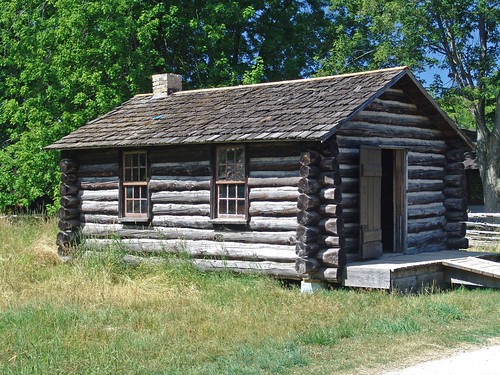
| Replica of what a One Room School House May have looked like. |
![]() |
| Hamilton School |
This schoolhouse was built of white adobies and consisted of one large room. The benches and desks were home-made, and had room for two pupils on each seat. We all sat facing east. In this school began the real educational system of Mt. Pleas¬ant. Besides teaching "Readin,' 'Ritin,' and 'Rithmetic," we studied grammar, geography, and we had a smattering of hygiene, with calisthenics thrown in for good measure. But in my eagerness to make haste, I am forgetting that we had a school in the Social Hall, where Miller, Henniger, and others taught. In passing I must not forget to say that the Rev. Duncan McMillan came to Mt. Pleasant, and opened a school in the Liberal Hall. While not a student of his, only to attend spelling matches in the evening. in which I took extreme delight, this school was patronized by a number of the young men and women of those days. From that beginning had developed the present splendid Wasatch Aca¬demy. What strides have been made since "Auntie" Hyde, Day, Page. Miller, and Carter taught in the humble one room log huts, with scarcely a facility compared with today. This is in brief the picture of the schools of yesterday, as I remember them after the lapse of half a century.
God bless the teachers of yesterday, who have long since been gathered to that better land. And now, I am wondering what fifty years hence will bring to the generation still unborn.
Wednesday, November 12, 2025
CHARLOTTE STAUNTON QUINDLAN JOHNSON HYDE ~~~OBITUARY and History
Charlotte Staunton Quindlan Johnson Hyde
You would think that a wife of Orson Hyde would be buried in Spring City next to him. You would think that she would have a very distinctive, monolithic marker of granite and stand very tall. Not so for Charlotte Staunton Quindlan Johnson Hyde. Of those many names by which she was called, we can only verify that her name was Charlotte Quindlan Hyde. She lived in Mt. Pleasant, taught school in Mt. Pleasant and died in Mt. Pleasant. Her grave marker is about 18 inches tall made of marble. You literally have to kneel down to read her epitaph there.
Charlotte Quindlen was born 22 of August 1802 at Lower Pensnock, Salem, New Jersey. Charlotte Quindlan was the name used at the Endowment House in Salt Lake City when she was sealed to Orson Hyde in 1852. The marble marker lists her as Charlotte Staunton Hyde as does the Mt. Pleasant History Book. Perhaps the name Staunton came from another marriage. From the dates we find that she was fifty years old when she married Orson Hyde.
The following is taken from the book “Orson Hyde Olive Branch of Israel”
“Orson Hyde was chosen as an original member of the Council of the Twelve in 1835, when the Mormon Church first organized this governing body. Orson's most well-known accomplishment was as a Mormon missionary to Jerusalem (1840-1842) to dedicate the land for the return of the Jews. Because his words have proven prophetic in the many decades since his entreaty, a peaceful garden on the Mount now honors him and his supplication. In 1979 civil authorities in Jerusalem invited the development of a five-acre hillside garden in honor of Orson Hyde.
“Orson Hyde was a remarkable individual. He received esteem in many roles, among them apostle, teacher, missionary, orator, scriptorian, journalist, editor, lawyer, judge, statesman, colonizer, and administrator; also as the husband of eight wives, the father of thirty-three children, a friend of mankind, and a servant of God.” MYRTLE STEVENS HYDE,
During the years 1850-1852 Charlotte Quindlin Johnson lived in Kanesville, Iowa at the home of Orson Hyde as a domestic assistant to his first wife Marinda. She was already a member of the L.D.S. Faith. She had been divorced from a man named Johnson. She was described as a seamstress who also liked children. She helped Marinda with her children Alonzo, Frank and baby Delila. She was with the Hyde Family at Winter Quarters and as they traveled across the plains to Salt Lake, arriving in 1852. Marinda and Charlotte got along very well.
Orson and Marinda discussed the possibility of inviting Charlotte to become a wife rather than a domestic. Orson had also married Mary Ann Price who for a time was a domestic in his household. Orson and Mary Ann were married in Nauvoo in 1843. Orson talked with Brigham Young about taking Charlotte as another wife and Brigham Young approved. Orson proposed to Charlotte, she accepted and they were sealed as husband and wife in the Endowment House 22nd of November, 1852. She was the fourth wife of Orson. Besides Marinda and Mary Ann, Orson had married Martha Rebecca Browett, who he later divorced in 1850. Martha went on to become the wife of Thomas McKenzie who also divorced her.
In the spring of 1853 we find Marinda, Mary Ann and Charlotte all living together under one roof in Salt Lake. Charlotte, however, was having a hard time adjusting to being a plural wife and departed the family, a mutual decision between she and Orson. They were separated, but never divorced. Brigham Young granted official separation for Charlotte and Orson Hyde in 1859.
Charlotte came to the Sanpete Valley long before Orson shows his influence here. It was during the “big move” with the earliest Saints first to Fort Ephraim, then north to resettle Mt. Pleasant. The first pioneers had been driven out of Camp Hambleton, located one mile west of the current city of Mt. Pleasant. She first made her living as a seamstress then as a school teacher while the settlers still lived inside the fort. A schoolhouse was then built outside the fort. She was fondly called "Aunty Hyde" by her students. She inspired many of her students to become teachers themselves.
In Mt. Pleasant History by Hilda Longsdorf the following description of Aunty Hyde school: “In a little log house about 12x15 feet, on the south side of the street on First North, about midway between State and First West, (in the area where Mary Ursenbach now lives-2008) Charlotte Staunton Hyde taught school. The building was also known and later used for Lesser Priesthood meetings and similar Church gatherings. Mrs. Hyde was a woman who no doubt had earlier in life received quite a liberal education, and although described as “a little old woman who smoked a pipe and was quite deaf,” she was affectionately called "Aunty Hyde". Many amusing stories were told of her school, but with all her students there remained pleasant memories. There being no handbell, as in later years, the children were always called from their play to the schoolroom with her familiar call, “To Books. To Books. To Books.””
“Mrs. Hyde lived in a little log house west of the school. She often brought her bread to the schoolhouse to bake. She had a skillet with a tight-fitting lid and in this, by heaping on it coals from the fireplace, which was in one end of the building, she baked the bread during school hours. She was paid for her services as a teacher with any produce or garden stuff available.
Mrs. Hyde taught for some time in the log meeting house in the fort. Many attended school. A number of the pioneers were polygamist families and usually were large families. In some cases the entire family had attended her school as was the case in Abraham Day’s family, Joseph, Abraham Jr., Eli A., Ezra, and Ephraim, children of the second wife, all attended; among others who also in later days became prominent citizens were her students Emaline Seely Barton, Oscar Anderson, William Morrison Jr., Sylvester Barton, Joseph Nephi Seeley, Annie Porter Nelson, Melvina Clemensen Crane, Peter Johansen, Chastie Neilsen, Benta Neilsen, Peter Jensen, Allen Rowe, Henry Ericksen, Miranda Seeley Oman, Wilhemina Morrison Ericksen, Hans Neilsen, William D. Candland, Charlotte Reynolds Seeley, Sarah Wilcox Bills, Celestial McArthur Barton, William A. Averett, Amasa Aldrich, James B. Staker, Maria Tidwell Larsen, Libby Barton Averett, Morgan A. Winters, Eli A. Day, W.W. Brandon, Sarah Davidsen Wilcox, Maggie Peel Seely, Samuel H. Allen, Harry Candland, Albert Candland, Charles Averett, Hazard Wilcox, and Hans Neilsen.
Although records show that Mrs. Hyde was not the first teacher in the community, in the Mt. Pleasant Cemetery on the south side of the center driveway, is a little marble slab now yellowing with age, upon which is engraved: “Charlotte Staunton Hyde, wife of Apostle Orson Hyde, born in Penn., Died in Mount Pleasant, December 3, 1881, age 78. At rest now---Through the kindness of pupils of early days, this stone is erected to her memory, she is the first school teacher in Mt. Pleasant.” M.M.F.C.M.”
Many, many children benefited from her talents, from her love, and from her example.
Tuesday, October 14, 2025
Friday, July 25, 2025
Wednesday, July 16, 2025
Monday, March 3, 2025
RUDOLPH N. BENNETT ~ (From our archives)
| Birth: | Oct. 7, 1843 Nashville Jackson County Iowa, USA |
| Death: | Dec. 29, 1927 Manti Sanpete County Utah, USA |
Rodolphus N. Bennett, Indian war veteran, pioneer settler and colonizer, and the oldest man in Mt. Pleasant, died at the family home Thursday after a long illness due to the infirmities of old age. Mr. Bennett was born October 27, 1843 in Nashville, Iowa. His parents, David and Johannah, Lovelith Bennett and their ten children were among the earliest converts to the L. D. S. faith, coming to Utah in 1850 in the company of which David Bennett was captain. Mr. Bennett came to Mt. Pleasant among the earliest settlers in 1852, and had resided here ever since, with the exception of some years spent in colonizing settlements and on missionary labors. His first wife died May 2, 1900, and two years later he married Mrs. Matilda A. Burns, widow of Sheriff Milton Burns, who survives him. Three sons and three daughters by his first marriage also survive. Family links: Parents: David Alma Bennett (1801 - 1853) Joanna Lowell Bennett (1803 - 1856) Spouses: Hannah E Allred Bennett (1848 - 1900)* Matilda Josephine Anderson Burns Bennett (1853 - 1936)* Children: William Rudolphus Bennett (1864 - 1930)* Ann Laura Bennett Madsen (1885 - 1976)* Isaac Rowlin Bennett (1887 - 1964)* Siblings: Laura Elizabeth Bennett Young (1826 - 1880)* Alma Harrison Bennett (1831 - 1905)* Mahetable Mahala Maria Bennett Beers (1834 - 1888)* Rudolphus Nathaniel Bennett (1843 - 1927) Emma Euphrasia Bennett Porter (1848 - 1928)* *Calculated relationship | |
| Burial: Mount Pleasant City Cemetery Mount Pleasant Sanpete County Utah, USA Plot: A_36_3_8 ![]() | |
More Wives Than One: Transformation of the Mormon Marriage System, 1840-1910By Kathryn M. Daynes
The following are snippets from Mt. Pleasant History by Hilda Madsen Longsdorf
Among other prominent pioneer musicians, who also contributed necessary pioneer music were Levi B. Reynolds, violinist; George Nielsen, tambourine; Orin Clark, the Jaw Bones of an Ox on a stick; Alma Staker, Bone Clapper; Rudolph Bennett, Triangle; Bent Hansen, Bass Fiddle; Soren Hansen, Clarinet; Andrew Bramsted, Violin; and August Mynear, Violin.
As Rowe drove up, the Indian took Conderset's hat and put it on his own head and stood astraddle of the fire. We did not understand why. Rowe looked at the Indian and said, 'Boys, he is here for no good.' Conderset told his father what the Indian said about the Indians killing eight men in Provo Canyon. Rowe began asking the Indian questions about it. The Indian said that it was eight sleep
ya-tes, eight days since, holding up eight fingers. Rowe said, 'You are mistaken, for if it were so, the papers would talk about it.' The Indian became uneasy and wanted to go to his saddle. Rowe said, 'I will go with you.' The Indian seemed willing that he should do so, till he got his horse, when he said his horse's back was sore, which was very common with Indian horses. Rowe told the Indian that he would walk for he was anxious to keep the Indian with us all night. He also told the Indian that there would be ten men there by morning, and ten more later, word having reached Mount Pleasant that the Indians intended making a raid on Thistle Valley. Upon hearing this, the Indian became more eager to go than ever, he jumped on his horse and was gone, and we saw no more of him. Mr. Rowe remarked that trouble was brewing and that we would have to shift for ourselves as best we could. About midnight, after we had conversed about what we would do in case we were attacked, we heard a yell down in the valley in the direction of the road. Rowe said: 'there comes the boys.' We boys fearing that it might be Indians, planned what to do if such should be the case. It proved to be four boys from Mount Pleasant, namely, R. N. Bennett, Don C. Seely, Peter Miller and James Hansen. They told us that as they were coming up from the road, they saw a small fire up Indian Hollow, and started towards it, when they got into a ridge and saw our fire, and came to it. We got supper for them. We looked for more men in the morning, but they did not come. We gathered the stock and sheep and drove to Mount Pleasant. At Fairview we got supper at Gammet's. There was no further trouble with Indians that fall, but we always believed that if we had not received timely help, we might have been murdered."
pp 106,107: Concerning the expedition, R. N. Bennett stated: "Not all Indians were bad. There were many good ones living near Nephi and in Utah County, but on account of so many renegades, as they were called, it was hard to tell the good from the bad. So naturally, we were suspicious of all. In the spring of 1866 old Chief Kanosh sent word to the effect that a lot of Indians, who had stolen cattle, etc., were camped in Nephi Hills. This was told to officers Snow and Allred. Jake, a son of Kanosh, had been raised among the white people and Kanosh said if the Mormons wanted him to, he would send him to pick out the renegades or bad Indians. The outcome was they secured a bunch of those who had killed, and started with them to Manti to be tried and put in jail. However, on the way we had some trouble. At daybreak we heard the dogs barking. We were camped in a flat. Jake called to the other Indians in a tone that made the mountains echo and told them to keep still or be killed. The Indians were unruly and in the skirmish one was killed. They held court at Manti. Jake gave evidence against the Indians; four were condemned to be killed and the rest put in jail. A bunch of white men were detailed or drafted to get rid of the four."
March 20th, orders were again received at Mount Pleasant for men, this time for ten to go to an Indian camp in Salt Creek Canyon, near Nephi. They at once responded and they, with others from other settlements, captured four Indians who had been with Chief Black Hawk at Ephraim the year previous, when so many depredations were committed. According to orders, the captives were shot and killed in a ditch below Nephi. The men were away from Mount Pleasant on this expedition three days. April 15th, a call was made by the church for men to go east for immigrants. The following men, Hans Brotherson, Charlie Hampshire, George Tuft, Christian Petersen (Peel), Neils Jensen,
107
Hans Scholft, Fredrick Petersen, Neils L. Lund, August Mynear,
Oscar Barton, Don Carlos Seeley, and Jorgen Hansen, with Lyman Peters as night guard, were fitted out by the colonists and left Mount Pleasant April 19th with eleven wagons and 44 oxen for Salt Lake City, where they joined with others. The entire company leaving Salt Lake City consisted of 456 teamsters, 49 mounted guard, 89 horses, 134 mules, 304 oxen, and 397 wagons.
On October 20th they returned with a company of immigrants who were chiefly from Scandinavia. This company consisted of a part of Abner Lowry's company. On the journey crossing the plains, 'George Farnsworth had rendered efficient service in waiting on the cholera patients as he was the only man with the company who was acquainted with the disease. Fifty-six persons died on the plains, leaving Farnsworth in charge of fifty-three orphans, whom he brought to Utah. They were distributed among the saints who applied for them.
On April 18th, Indian Chief Sanpitch and other Indians, broke jail at Manti. A posse was at once in close pursuit and three Indians were killed within the city limits. R. N. Bennett, Peter Miller, Niels Madsen, Peter Christopherson and others, started in pursuit of the remainder of the party.
They were joined by a group of men from Moroni and other places. Concerning this, we quote R. N. Bennett: "George Tucker was my captain in the fore part of 1866. In the spring we captured nine Black Hawk Indians in the mountains east of Nephi, and put them in the county jail at Manti. About April 14th they broke jail, three of them being killed while trying to escape, and others went so far north as Fountain Green, then called Uinta, going into the mountains on the west.
p 112: A cavalry consisting of about eighteen or twenty men, including Colonel Ivie, George Tucker, Orange Seely, R. N. Bennett (Dolph), Martin Aldrich, Aaron Oman, Niels Madsen, and Peter Fredricksen started with great speed for Dewey's camp, at Fairview, others joined them.
Andrew Rolph states that to build this wall, people were organized in companies with captains. Mortin Rasmussen, he remembers, was captain over one group. The wall was constructed on a straight line, for about three blocks on the east side of Fourth East. Orin Clark's house, about southeast of the corner of the interdiction of Main and Fourth East was east or outside of the wall. North of Main, the wall ran about a block north, then northwest one block, and ended there. Svend Larsen's and Jim Walker's houses, about southeast of the corner of intersection of Fourth East and Main, and the house on the northeast corner of interdiction of First North and Third East was west, or inside of the wall. The rocks from this wall were later used to wall up cellars all about the city. R. N. Bennett stated that a bastille was started In this wall but not completed.''
An act to pension the survivors of certain Indian Wars from
January 1, 1859, to 1891 was approved March 4, 1917. Coming at this late date the majority of those who had served in the early days had passed away. The following named are those who at that time proved up in Mt. Pleasant: Martin Aldrich, Claus Anderson, C. W. Anderson, Rasmus Anderson, Oscar Barton, Rudolph Bennett, Andrew Beckstrom, Martin Bohne, Martin Brotherson, Joseph Burton, John Carlson, James Christensen, Robert Eiertson, Rasmus Frandsen, James Hendricksen, Neils Johansen, Andrew Jensen, Sophus Johnson, John Knudsen, Brigham Lee, Peter Monsen, Bennett Monk, James Olson, Ole Arlson, Olof Rosenlof, Conderset Rowe, Hyrum Seely, John H. Seely, William Seely, Olof Sorensen, John Waldermar, August Wall, Thomas Wrest, Hazzard Wilcox, Alma White, Joseph Wise, Oscar Anderson, Wesley Bills, Joseph Coates, Henry Ericksen, Peter N. Jensen, Peter Rasmussen, Joseph N. Seely, Andrew Rolph, S. A. Barton, Edmond C. Johnson, William Olson. The last four named are living in Mt. Pleasant, in 1939, as are the widows of Martin Aldrich, Joseph Burton, Sophus Johnson, Oscar Barton, Hazzard Wilcox, John Carlson, Peter M. Jensen, Oscar Anderson and A. G. Omen.
Sunday, February 9, 2025
AUNT MARANDY
AUNT MARANDY
This is a copy of a poem written by Stanley Peterson.
Folks call her Aunt Marandy and to them, she's very dear,
Because she's worked as a slave for them for many many a year.
No sacrifice too great for her, no duty will she shun,
She'll keep on trying day and night until the job is done.
She's raised a family of her own, of them she's very proud,
Like all good mothers of the town, she'll praise them right out loud.
And then because of her ministrations, there are so many others
Who worship and adore her so and gladly call her mother.
She's cooked and darned and scrubbed so much, til not she cannot see,
But yet ambition drives her on, content she will not be
You'll find her busy, unafraid, quilting every day
Until each grandchild has a quilt to keep the cold away.
And there she sits all soul alone, her hair turning grey,
Her friends so rarely visit her and none with her will stay.
And still, she keeps plugging on, doing all she can,
She'll keep on striving to the end, dependent on no man.
Her love of God and man and beast is, oh, so very real,
Her place in heaven on God's right hand, from her no one can steal.
And when her years upon this earth have been awhile suspended,
Her noble spirit with that of God will be completely blended.
~~~~~~~~~~~~~~~~~~~~~~~~~~~~~~~~~~~~~~~~~~~~~~~~~~~~~~~~~~~~
Peter Hafen's Memory of Aunt Marandy
She was his great-grandmother. He was only six years old when she died.
He remembers her bringing Keneflei when anyone was sick. She did this for everyone in town.
Saturday, February 8, 2025
Sunday, January 19, 2025
Tuesday, January 7, 2025
THE SYNOPSIS OF THE THIRTY SIXTH ANNUAL CELEBRATION OF THE MT. PLEASANT PIONEER HISTORICAL ASSOCIATION


%2B.jpeg)