jpeg.jpg)

Showing posts with label Clark. Show all posts
Showing posts with label Clark. Show all posts
Friday, April 3, 2026

Thursday, April 2, 2026

Saturday, January 10, 2026
WILLIAM CLARK SHELLEY
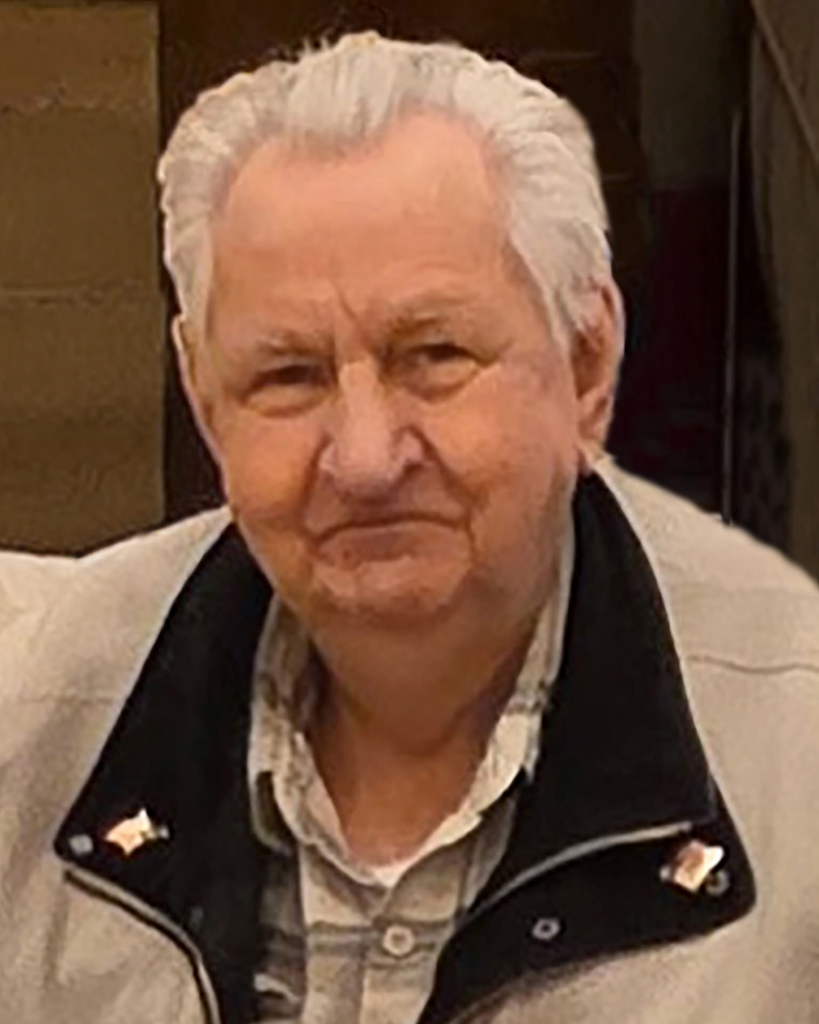


William Clark Shelley
July 23, 1940 — December 25, 2025
Listen to Obituary
William Clark Shelley, or Clark was born July 23, 1940 to Elmer J. and Rega Clark Shelley in Mountainville, Utah. He was the second of ten children. The first of three boys and brother to seven sisters. Clark spent his early years working the farm with dad. When he turned nineteen he joined the United States military serving in the Army as Marksman. His hard work and service earned him two Good Conduct Medals as a Sharpshooter as well as from the National Defense Service. He was honorably discharged in April 1967.
Clark earned an associate degree from Snow College and began work in Salt Lake as a RV mechanic repair technician. He later married Vivian Kathleen Bawden in the Manti Utah Temple and became a step-father to her two children Bryan and Maria.
After retirement Clark moved back to live in the home he grew up in and became dedicated to family history work. He provided thousands of names to family members and the Church for Temple work. He also taught community members around him how to research their own family history and prepare names for the Temple.
Clark has always had a gentle and generous heart. In addition to family history, in the last years of his life Clark developed a love of sewing. His first attempts were rough but before long he was
quickly completing hundreds of chair cushions, eyeglass cases, and quilts. His creations were quietly and lovingly donated to those in need.
Clark loved his family. He would write in his journal about the gratitude and joy he felt spending time with them. While he and Kathy were not blessed with additional children, we are grateful for the promises of continued and eternal families in the eternities. He passed away quietly in his home December 25, 2025.
He is survived by his siblings: Veone Ontiveros (Limhi), Linda Davis, Patricia Bills (David, Susan Allred (Phillip), Douglas Shelley (Julie, Leslie Arnoldson, and Sara Johansen and stepson Bryan Christensen.
He was preceded in death by his wife Kathy and step daughter Maria Christensen. As well as parents Elmer and Rega, brother Darrell, sister Colleen Robinson and brother-in-laws, John Davis, Gary Arnoldson and Tommy Johansen.
Monday, May 5, 2025

Wednesday, April 23, 2025
MARY MARIE MERRIAM URSENBACH

Mary Marie Ursenbach
May 4, 1931 — April 15, 2025
Mount Pleasant
With hearts full of both sorrow and gratitude, we announce the passing of our beloved Mary Marie Merriam Ursenbach on April 15, 2025, in the comfort of her home in Mt. Pleasant, Utah. A devoted wife, nurturing mother, cherished grandmother and great-grandmother, loving sister, and loyal friend—Mary’s legacy is one of compassion, strength, and a life joyfully and generously lived.
Born on May 4, 1931, in Manti, Utah, Mary was the daughter of Edgar and Vonda Merriam. She married the love of her life, Earl Jay Ursenbach, on August 15, 1953, in Orem, Utah. Together, they built not only a home, but a life of purpose, service, and community.
Mary is lovingly remembered by her children: Kathy (Alan) Rowe, Robyn (Bob) Norman, and Christian Ursenbach; her grandchildren: Nackole Norman, Tex Norman, Kortny (Edwyn) York, and Tyson Rowe; and great-grandchildren: Caden (Jake) Snow, Javon Norman, Jocile Norman, Keiston Norman, and Paxton Norman. She is also survived by her dear sisters Vonda Rae Poulsen, Diana Clark, and JoLynn Lund, along with her honorary sisters Suzanne Winters and Sandy Johnson.
She was preceded in death by her devoted husband; her parents; siblings Drew Merriam, Anna May Thomas, Connie Hansen, Louise Kump, Wayne Merriam and Burdell Merriam; and her beloved grandson, Wade Rowe.
Mary lived a life marked by dedication and tireless service. Side by side with her husband, she helped operate their family-owned funeral home and provided essential ambulance service for the North Sanpete area—offering comfort and care in the most difficult moments of others' lives.
Her boundless energy extended far beyond her professional roles. Mary was the heart and soul of every community she touched. A proud member of several senior groups in Mt. Pleasant, Moroni, and Fairview, she also joyfully participated in the Red Hat Society, the Daughters of the Utah Pioneers, and the VFW Ladies Auxiliary. Her home was always open—especially for a game of cards, where laughter echoed and friendships deepened.
Mary had an abiding love for nature and adventure. She found joy in the mountains, in long walks, hikes, shopping trips, and travel. And in true Mary fashion, she never passed up a good plate of French fries—her simple, guilty pleasure that always brought a smile to her face.
Animals found a champion in her as well; Mary was known for rescuing and caring for both cats and dogs with the same tenderness she showed all living things.
Her spirit of service knew no bounds. She was one of the most beloved and impactful 4-H leaders in the community, shaping the lives of generations with her wisdom and encouragement. Whether offering rides to appointments, lending a helping hand around the house, or simply being present with a listening ear, Mary’s kindness was as constant as it was selfless.
Mary’s legacy is one of service, joy, and deep, enduring love. She leaves behind a tapestry of memories that will continue to inspire and comfort all who were blessed to know her.
Funeral services will be held Tuesday April 22, 2025 at 11:00 a.m. at Rasmussen Mortuary (96 N 100 W) Mount Pleasant, UT. Viewing on Tuesday from 9:45-11:00 a.m. at Rasmussen Mortuary prior to funeral. Interment in the Mount Pleasant City Cemetery.
A special thanks to IHC Hospice, Dr. Eileen Jackson and her son Chris for his loving care, during Mary’s declining years. Contributions can be made to the Mt. Pleasant City Library in Mary's name.
To Watch Funeral Services Live, Click Here. The Live Zoom Link will Activate at 10:45 a.m. MST prior to services.
Wednesday, January 29, 2025
HISTORY OF ANNA ASENIETH SWENSEN CARLSON (from our archives)

I was born to Hansena Pauline Poulsen, and Peter
William Swensen, May 26,1897, at Mount Pleasant; Sanpete
county in the state of Utah. My mother was of Danish
descent, and my father was of Norweign descent. I was
born at home, which is the house located at 3rd West
and 4th South. The home is presently owned by Eva
Cordgy.
Sometimes when I wake up early and hear the birds
singing in the trees, I think of when I was a young child
helping my mother before I would leave to work for other
people.
On wash day I would get up early to pump water
from the well out in the yard. With buckets I would
fill all the wash tubs. Then I would take a rope and
go to the wood pile, where I would pile sage brush
on the rope to bundle it so I could drag it to where
we heated the water. We would set the tubs on a three
legged metal stand about 18- high and build a fire
under it. This stand was called the three leg. I
remember well how mother would pin up her long dresses
to go to the corral to milk the cows. The dresses then
were real long and this was necessary to keep them
from dragging in the manure. My grandmother lived just
across the road east of us at the time. Sometimes when
mother was upset and scolded us, grandmother would
come over and tell us poor drain·in. In Danish, this
meant (poor children).
Some of the other Danish words I remember her
useing were as follows. Smurr-butter, Ust-cheese,
Kaclue-dish cloth, Catuffla-pototes, Hesst-hors~ Godoutgood
day, Vodoun feeledee Ie dout-how do you feel todaY
Draina-children, Go dee to saints-go to bed,Tem legotfairly
good.
I remember well my first days in school. These
were spent in the old Hamilton Elementary,which was
located at 1st East and Main Street. My teacher's name
was, Miss Clawson. One thing that stays in my mind, was
that we all wore our hair long, and one girl by the name
of Ella Freston, was forever pulling mine it seemed. I
attended this school to and including the 7th grade.
After the 7th grade, I had to quit school and go to work
to help the family.
This work consisted of general household duties
such as house cleaning, baby care, chopping wood for the
many stoves, and bringing in buckets laden with coal.
Coal and wood were used at this time to provide heat for
the home and also heat water. The water was also brought
into the homes in buckets. Most homes had their wells
out near the barn and yards where the stock was kept.
Usually on Saturdays, the job of packing water was a
much bigger job,:because it was customary to bath the
family Saturaay afternoon and evening. This was accomplished
by heating water in a #3 wash tub on top of the
cook stove, plus what could be heated in the reservoir
on the side of most cook stoves of this era. When the
time come to bath the children, the #3 tub was usually
set on two chairs for a more convenient height. The
children were then placed in the tub one at a time,
and washed with homemade bar soap.
Along about this same time I did attend 1 year
at the Wastach Academy. This would be the 8th grade.
At age 16 years, I went to Price, in Carbon
county, to work for the E.C. Lee family. This was
on a ranch 34 miles East of Price, Utah. This ranch
was used by the overland stage coach company, as a
way station, to change teams and for layovers. Stages
coming from the East thru Green River, would stop
before continuing on to Price, and the East bound
stages stopped for fresh teams before starting across
the desert to Green River, and points on East.
After working here about 3 months, I went to 3rd Avenue in
Salt Lake City. Here I worked for the family of a
manager for J.C. Penny Co, I worked there about 2 months
after which I returned home to work for O. M. Aldrich
a local merchant. He owned and operated the O. M. Aldrich
Mercantile, which is still operated by a son at about
150 West Main in Mount Pleasant. I later went to work
for the James Monson family. James Monson's wife was a
sister to my mother. After this my next job was with
Ervin and Elvine Draper. This family was operating a
livery stable at 2nd West and about 50 North. Some of
the barns were later used to house a company that made
sheep camps under the direction of W.E. Madsen and Sons.
It was during the time I was working for the Drapers
that I met the man that later became my husband. His name
was, John Lawrence Carlson. I was now 17 years old. This
was in February. We went together until October of the
same year. On October 27,1915, we were married in the
Manti Court House. Lawrence continued to work for the
Draper's Livery Stable. Some of his duties were to meet
the trains at the station and bring passengers and
freight from the depot to town. He also spent a lot of
time taking salesman around to the neighboring towns by
horse team and buggy.
In May 1916, Lawrence left with.the town militia
to help quell a Mexican upraising on
This about concludes the story of my life up
to the present, but I hope to have many years to come yet.
I HAVE ENJOYED LIFE VERY VERY MUCH!
1973
Asenteth died two years after this was written. August 26th, 1975.
In those two years she had surgery for cancer, suffered from a
stroke, leaving her in a wheelchair until her death. She also lost
her eyesight about two weeks before she died.
the border of Old and New Mexico. In June of this year
my first baby was born, a baby girl. We named her Betty.
She was born in the home at 2nd South and 4th West.
Lawrence came home in September of this year, and got a
job with the Sanpete Coop. It was located at 150 West
Main, in Mt. Pleasant. He continued to work here in the
grocery and dry goods department, until about 1930, when
they closed their doors forever due to the depression.
On June 27,1917, we borrowed a model T Ford from
Ervin and Elvine Draper, and traveled to Manti Temple
to be married for time and all eternity. My Aunt Ida
Poulsen went with us.
On May 27,1918, my second baby, a boy was born.
We named him after his dad, John Lawrence. He was born
at home at 2nd West and 5th South. At the time or his
birth I developed partial paralysis. This affected to
a great degree the use of my right leg and to a lesser
degree my right arm. The paralysis left my face disfigured
and I was unable to close my one eye for at least a year.
I got my first glasses at this time. In October 1918,
both my new baby and I contacted the flu that was terrible
this year. On February 24,1920, I gave birth to another
son, Francis William. He was born at a home owned by
my parents.lt was located at 5th West and 3rd South.
My parents were living in Magna at the time.
In the fall of 1920, we moved to our present home an the southwest
cornwr of 2nd West and 2nd North. We bought this
home from Lawrence's Mother and her brother. It had
been owned by Lawrence's grandmother Beckstrom.
By this time, through many visits to doctors Olsen,
Jackson, and Monk, who were Chiropractors, my paralysis
had almost disappeared.
On March 5,1922, I gave birth to another daughter,
Maxine. On March 18,1924, she died of an ear infection.
The same month we lost our precious little girl, My
half brother, Cleon Poulsen, asked if we would take
his infant son into our home for a while. He had lost his
wife to the flu when her baby was seven months old.
We went to Magna at this time to get the little boy. His
name was Shirley Don. He lived with us until he was
14 years old. At this time he went to his dad who had
remarried and was living in Salt Lake City on Yale Ave.
In 1925, or there about, Francis came down with
diphtheria and was one of the first in Mt. Pleasant to
receive the new serum that had been developed for this
disease. During this period of sickness, Betty and John
went to stay with Grandma Carlson. Grandpa Carlson
moved into our home to help us and set up with us through
the nights to keep watch on Francis' condition. By this
arrangement the others were able to get their sleep and
keep up their work. Our family doctor, Dr. Holman, removed
the quarantine sign on Christmas Eve of this year.
Lawrence and the other two children were then able to come
home and celebrate Christmas with us.
Lawrence continued to work for the Coop until 1930,
when he went to work for the Consolidated Wagon and Machine
Co. It was located at about 25 West Main. He traveled all
over the County with this company. One of his jobs with
them was that of bill collector. We had many enjoyable
times traveling with him from farm to farm and town to
town. He had the use of a little model T ford pickup.
Many times we would pack a lunch and go with him to
make his rounds.
On November 14,1925 I gave birth to another
daughter, Barbara. She was just weeks old when
Francis had diphtheria, but we were very lucky that she
never contacted the disease.
On August 20,1928, I gave birth to another daughter
LaRae. After about 2 months we found it necessary for me
to go back to work outside the home. I did more of the
same work I had done earlier in life. Besides doing
housework in their homes, I would take their laundries
home to do on many occasions. Things progressed along
these lines until November 29,1935 when I gave birth
to another son. We named him, Carrol Bud. At age one
this baby developed pluricy pneumonia and was real sick
nearly all winter.
On August 2,1938 I gave birth to a daughter Sena
Joan. After she was born I continued to take in washings
and ironings to help with the finances.
About 1940, Lawrence went to work for Harry
Erickson, at the Red and White Meat & Grocery, at about
50 West Main. Here he worked as a clerk and butcher.
He and Mason Burnside, did most of the slaughtering
for the meat shop along with some custom slaughtering
for indiviuals. Harry always raised and fattened from
50 to 100 head of steers for this purpose. This was
near the same year that I begin having so much
trouble with my legs. From that time on I have had
open ulcers on at least one of my legs. As the years
passed by the ulcers have grown bigger because of the
diabetes.
On December 7,1941, the Japanese bombed Pearl
Harbor and threw us into the Second World War. In
February 1942, my son John joined the navy and left
for training in California. My son Francis soon followed
his brother John into the service, He enlisted in the Sea
Bees, a branch of the Navy. John served in the Atlantic and
Mediterranean areas and Francis served in the Pacific
areas of the war. Francis was married and had a boys
Jay and Johnny at this time. John was married in November
1942, while home on a leave.
In July 1946, my youngest son, Bud was shot
while hunting with 2 friends in the foothills East of
town. On the 24th of the same month, our home suffered
tragedy in.the form of a massive flood. We were not at
home when~the flood hit town. We were having a picnic
at Milburn. We returned just after the crest of the flood
had passed. The mud and water reached up to the front
door of the house but did not enter the main floor. It
did however fill our cellar under the house. It completely
covered our yards with about 2 feet of mud and debris.
Most of the fences were knocked down, but we didn't
suffer any loss of human life. Within a few days they
had set up health clinics and everyone had to go get
shots against possible disease. The Church asked for
volunteers from the towns around us, and many men come
to help us dig out from the flood. Those that come to help us
with our yards were from Milburn for the most
part. All they asked for pay was their meals while they
were there.
In the years that followed Lawrence had a number of
different jobs that I don't remember the dates of.
He went to work for Jay Winkelman for a while around
1946 to about 1949. Here he set up some of the first
bottle gas units in this part of the country. He also
did some logging for Jay, along with some farming. After
this he went to work for Mt. Pleasant City Corp. This
was mostly in the water works department. Along with
this job we took care of the North Ward Church and the
Seminary building. We did this until the he retired.
On September 16,1965, Lawrence died in his sleep.
We were to celebrate our golden wedding anniverary the
following month.
On New Years night following the death of my husband,
I fell off my back porch and broke my one hip and my left
arm. I nearly died of exposure before a neighbor heard
my calls for help and came to my aid. From that day to
this I have been unable to walk with out the use of
crutches. This was a big turning point in my life. I
had always been self sufficient until now. My children
have all been a big help to me in adjusting to this new
way of life, and I have always enjoyed them very very
much. I might add that this is true also of my grand
and great grand children.
Over the years all of my remaining children were
married, and moved from home. Two of my daughters
still live in Mt. Pleasant, one in Moroni, and one
in Lehi. My sons live in Magna, Kearns, and Midvale.
At the time this is being written I am still able
to live alone and take care of myself for the most
part. My children come and help me with the things that
I am unable to do for my self. I have the loveliest
children in the world and they are simply wonderful
to me.
my first baby was born, a baby girl. We named her Betty.
She was born in the home at 2nd South and 4th West.
Lawrence came home in September of this year, and got a
job with the Sanpete Coop. It was located at 150 West
Main, in Mt. Pleasant. He continued to work here in the
grocery and dry goods department, until about 1930, when
they closed their doors forever due to the depression.
On June 27,1917, we borrowed a model T Ford from
Ervin and Elvine Draper, and traveled to Manti Temple
to be married for time and all eternity. My Aunt Ida
Poulsen went with us.
On May 27,1918, my second baby, a boy was born.
We named him after his dad, John Lawrence. He was born
at home at 2nd West and 5th South. At the time or his
birth I developed partial paralysis. This affected to
a great degree the use of my right leg and to a lesser
degree my right arm. The paralysis left my face disfigured
and I was unable to close my one eye for at least a year.
I got my first glasses at this time. In October 1918,
both my new baby and I contacted the flu that was terrible
this year. On February 24,1920, I gave birth to another
son, Francis William. He was born at a home owned by
my parents.lt was located at 5th West and 3rd South.
My parents were living in Magna at the time.
In the fall of 1920, we moved to our present home an the southwest
cornwr of 2nd West and 2nd North. We bought this
home from Lawrence's Mother and her brother. It had
been owned by Lawrence's grandmother Beckstrom.
By this time, through many visits to doctors Olsen,
Jackson, and Monk, who were Chiropractors, my paralysis
had almost disappeared.
On March 5,1922, I gave birth to another daughter,
Maxine. On March 18,1924, she died of an ear infection.
The same month we lost our precious little girl, My
half brother, Cleon Poulsen, asked if we would take
his infant son into our home for a while. He had lost his
wife to the flu when her baby was seven months old.
We went to Magna at this time to get the little boy. His
name was Shirley Don. He lived with us until he was
14 years old. At this time he went to his dad who had
remarried and was living in Salt Lake City on Yale Ave.
In 1925, or there about, Francis came down with
diphtheria and was one of the first in Mt. Pleasant to
receive the new serum that had been developed for this
disease. During this period of sickness, Betty and John
went to stay with Grandma Carlson. Grandpa Carlson
moved into our home to help us and set up with us through
the nights to keep watch on Francis' condition. By this
arrangement the others were able to get their sleep and
keep up their work. Our family doctor, Dr. Holman, removed
the quarantine sign on Christmas Eve of this year.
Lawrence and the other two children were then able to come
home and celebrate Christmas with us.
Lawrence continued to work for the Coop until 1930,
when he went to work for the Consolidated Wagon and Machine
Co. It was located at about 25 West Main. He traveled all
over the County with this company. One of his jobs with
them was that of bill collector. We had many enjoyable
times traveling with him from farm to farm and town to
town. He had the use of a little model T ford pickup.
Many times we would pack a lunch and go with him to
make his rounds.
On November 14,1925 I gave birth to another
daughter, Barbara. She was just weeks old when
Francis had diphtheria, but we were very lucky that she
never contacted the disease.
On August 20,1928, I gave birth to another daughter
LaRae. After about 2 months we found it necessary for me
to go back to work outside the home. I did more of the
same work I had done earlier in life. Besides doing
housework in their homes, I would take their laundries
home to do on many occasions. Things progressed along
these lines until November 29,1935 when I gave birth
to another son. We named him, Carrol Bud. At age one
this baby developed pluricy pneumonia and was real sick
nearly all winter.
On August 2,1938 I gave birth to a daughter Sena
Joan. After she was born I continued to take in washings
and ironings to help with the finances.
About 1940, Lawrence went to work for Harry
Erickson, at the Red and White Meat & Grocery, at about
50 West Main. Here he worked as a clerk and butcher.
He and Mason Burnside, did most of the slaughtering
for the meat shop along with some custom slaughtering
for indiviuals. Harry always raised and fattened from
50 to 100 head of steers for this purpose. This was
near the same year that I begin having so much
trouble with my legs. From that time on I have had
open ulcers on at least one of my legs. As the years
passed by the ulcers have grown bigger because of the
diabetes.
On December 7,1941, the Japanese bombed Pearl
Harbor and threw us into the Second World War. In
February 1942, my son John joined the navy and left
for training in California. My son Francis soon followed
his brother John into the service, He enlisted in the Sea
Bees, a branch of the Navy. John served in the Atlantic and
Mediterranean areas and Francis served in the Pacific
areas of the war. Francis was married and had a boys
Jay and Johnny at this time. John was married in November
1942, while home on a leave.
In July 1946, my youngest son, Bud was shot
while hunting with 2 friends in the foothills East of
town. On the 24th of the same month, our home suffered
tragedy in.the form of a massive flood. We were not at
home when~the flood hit town. We were having a picnic
at Milburn. We returned just after the crest of the flood
had passed. The mud and water reached up to the front
door of the house but did not enter the main floor. It
did however fill our cellar under the house. It completely
covered our yards with about 2 feet of mud and debris.
Most of the fences were knocked down, but we didn't
suffer any loss of human life. Within a few days they
had set up health clinics and everyone had to go get
shots against possible disease. The Church asked for
volunteers from the towns around us, and many men come
to help us dig out from the flood. Those that come to help us
with our yards were from Milburn for the most
part. All they asked for pay was their meals while they
were there.
In the years that followed Lawrence had a number of
different jobs that I don't remember the dates of.
He went to work for Jay Winkelman for a while around
1946 to about 1949. Here he set up some of the first
bottle gas units in this part of the country. He also
did some logging for Jay, along with some farming. After
this he went to work for Mt. Pleasant City Corp. This
was mostly in the water works department. Along with
this job we took care of the North Ward Church and the
Seminary building. We did this until the he retired.
On September 16,1965, Lawrence died in his sleep.
We were to celebrate our golden wedding anniverary the
following month.
On New Years night following the death of my husband,
I fell off my back porch and broke my one hip and my left
arm. I nearly died of exposure before a neighbor heard
my calls for help and came to my aid. From that day to
this I have been unable to walk with out the use of
crutches. This was a big turning point in my life. I
had always been self sufficient until now. My children
have all been a big help to me in adjusting to this new
way of life, and I have always enjoyed them very very
much. I might add that this is true also of my grand
and great grand children.
Over the years all of my remaining children were
married, and moved from home. Two of my daughters
still live in Mt. Pleasant, one in Moroni, and one
in Lehi. My sons live in Magna, Kearns, and Midvale.
At the time this is being written I am still able
to live alone and take care of myself for the most
part. My children come and help me with the things that
I am unable to do for my self. I have the loveliest
children in the world and they are simply wonderful
to me.
This about concludes the story of my life up
to the present, but I hope to have many years to come yet.
I HAVE ENJOYED LIFE VERY VERY MUCH!
1973
Asenteth died two years after this was written. August 26th, 1975.
In those two years she had surgery for cancer, suffered from a
stroke, leaving her in a wheelchair until her death. She also lost
her eyesight about two weeks before she died.
Wednesday, November 27, 2024


Wednesday, September 11, 2024
ISAAC NEWTON PHIPPS AND EMALINE MARIAH TIDWELL PHIPPS (from our archives)


Isaac Newton Phipps
24 May 1845 - 27 Nov. 1911 Son of Isaac Phipps and Mary Eleanor Dean Lettie Phipps Peterson wrote this life story date unknown. Additional stories were added from a document called, A1979 remembrances by Lettie Phipps Peterson recorded for her son, Wayne.@ [During his life, he went by Isaac Newton Phipps, Jr. because the Smith family had told him he was named after his father. After further research it has been determined that his father did not carry the middle name A Newton, therefore, he should not be referred to as Jr. Since this life story was written without this knowledge, we are leaving the Jr. and Sr. in this version. His birthdate was also found to be 24 May 1845, but he did not know this, so always celebrated on June 18th. His siblings were Sarah Jane, Lemmon Washington, William Harrison, and Enoch Ferman.] Isaac Newton Phipps, Jr., son of Isaac Newton Phipps, Sr. and Mary Eleanor Dean, was born June 18, 1845, in Slippery Rock, Butler County, Pennsylvania. He came to Utah when a very small boy with Uncle and Aunt Smith (Joseph and Abigail Smith) reared him after the death of his mother. They came to Salt Lake City and settled in West Jordan. Later they moved to the Dixie Country and resided in a small settlement called Sappi. They moved to Mt. Pleasant, Utah in 1864. Isaac was one of eight children the Smiths reared B, not of their own. Opal Scoville's great grandmother, Sarah Clark, was one of them. Isaac was three years old when his mother died; his brother Enoch was six weeks old. Enoch was given to Uncle and Aunt Smith, but he died in infancy. One day Isaacs's father brought Isaac to the Smith home and left him in the yard, kissed him, and told him to be a good boy. Never again did Isaac see or hear from his father. Isaac had two brothers and one sister older than him. The brothers were George Harrison and Lamuel Washington; the sister was Sarah. After moving to Mt. Pleasant, he went away to various places for employment. He returned and was married to Emeline Maria Tidwell on December 24, 1875, by David Candland. Later he went to the Endowment House and was sealed to Emeline. They also had their three oldest children sealed to them at that time. They were Louisa Jane, Mary Eleanor, and Charity Rosalia. Later five other children were born. When Isaac went to the temple for sealings, he was instructed to take his own name and establish it. Instead of Smith, it was Phipps. After that, he went by both names B Isaac Smith and Isaac Phipps. (In later years Isaac and Emeline received their second anointings in the Manti Temple.) Isaac was baptized at the age of 8 years, in 1853. He was religious and held the gospel very dear to him. His greatest desire was to live the gospel and have his family do likewise. He wanted them to be religious and to have faith in the gospel. He bore his testimony of its truthfulness often to his children at home. Just a few days before he died, he said, if I could leave my family either wealthy or with a testimony of the gospel, I would leave them a testimony of the gospel. He was active in the church and attended sacrament and priesthood meetings regularly. He was a High Priest and a ward teacher for many years and was a full tithe payer. When I was a little girl my father would tell me stories while I scratched his head and combed his hair after he had gone to bed. He would do his chores early in the evening and have his supper and go to bed to read. He got up in the morning really early so he was tired. He told me about a little bird that saved his life when he was a boy. He was plowing for a man and had gone around the field several times. When he came to some bushes he stopped to let the horses rest and he lay down under a bush to rest, too. A little bird came and lit on the bush above his head and then flew and lit on the toe of his shoe and then back on the bush above his head. The bird did this three or four times. The last time he didn=t light on his toe but on the ground by his feet. Father raised up to see where the bird had gone and there was a large rattlesnake all curled up and ready to strike him. Father lay down quickly and rolled out into the plowed ground away from the snake to where he was safe. The little bird saved his life. When Father was about nine or ten years old he got lost and didn't know which way to go to find his home. He was up in the hills where there were a lot of cedar trees. This was when they were living in Southern Utah. Quite a few Indians were living there and the white people were afraid of them. While Father was up in the hills an Indian came by and Father hid among the cedars until he passed by. When the Indian got a ways off, Father would call out and the Indian would come back. Then father would hide again so the Indian would ride away. This happened two or three times. Father was afraid of the Indian and he was afraid to let him go because he was lost. The last time the Indian came back Father let him see him and told the Indian that he was lost. The Indian put Father on his horse with him and took Father where he could see the town where he lived. This Indian was good and Father was glad he came by and showed him how to go home. After Isaac and Emeline were married, they moved to Vermillion, which was later named Venice. It was located east of Richfield, Utah. There Louisa Jane, their first child, was born. About one year later they made a trip to Mt. Pleasant to visit Emeline's parents and the Smiths B John and Jane Tidwell and Joseph and Abigail Smith. After much consideration at that time, they decided to sell their place in Vermillion and move to Mt. Pleasant. Isaac took up a homestead of 160 acres of land half-mile south of the city cemetery on the south side of town and built a log cabin on it. They lived in the cabin while he built a large frame house. There they resided the rest of their lives and the other children were born: Mary Eleanor, Charity Rosalia, Sarah Abbie, Lettie, Isaac Leslie, Leo Raymond, and a baby girl who died at birth. During the first few years, Isaac raised sheep and cattle. He later sold the sheep and most of the cattle and the land (all but 30 acres). Then he went away from home and found employment for awhile. On returning home, he put part of his farm in fruit trees and small berries B strawberries, raspberries, currants, blackberries, gooseberries, etc. He also raised watermelons, cantaloupes, and many different kinds of fruits and vegetables for the market. He was a successful farmer and a good horticulturist for his day. He also raised some grain, had milk cows and other farm animals. At one time he had a beautiful team of horses and a buggy horse which was the pride of the family. Her name was Bess. On Sundays crowds of people would come out to the farm to buy fruit and melons. That was a part of their recreation in those days. Ella can remember when we could go out and pick strawberries by moonlight. The berries were large, and the father had the plants in perfect rows. For years he never had to take his produce to market because people would come to the farm to get it. The farm was made into a pretty place, a happy home; and it remained so for years until after father=s death. The children remember the happy days they spent on the farm and also the work they had to do in helping both on the farm and in the house. I remember the large threshing machine and the big horses that went around and around while the wheat came rolling out of the side of the machine and filled the large sacks. Mother would cook big dinners for the men who ran the thresher. It was a holiday for us children. It wasn=t all work on the farm; there were times for play too. Father put up a large swing and a merry-go-round for the children. Large crowds of young people would come out from town to swing and eat watermelons. They could see Moroni when they swang as high as the swing could go. (This was Ella's comment). When the younger children were in their teens, father bought a hammock and a large lawn swing which the family enjoyed, as did many others. Andrew courted me in the hammock by the light of the moon and in the evening breeze. While clearing part of the land of sagebrush, the younger children would pile up the brush and at night have large bonfires. They would roast potatoes and play outside games by the light of the fire. As soon as the young people in town would see the fire, they would hurry out to join in the fun. Nine ranch families lived neighbors to the Phipps family: Hyrum Branstead, Chris Rassmussen, Arnold Bigler, Jerome Zabriskie, Arthur Averett, Jacob Bigler, Oscar Barton, John Zabriskie, and Willie Winkler. We would have parties and would get together for suppers and then spend the evening playing games. There was one family that was special friends to the Phipps family. They were the members of the Jacob Bigler family. They had the same number of children in their family as we had in ours and all of us were good friends all their lives. Isaac learned to play the violin when a boy. He used a violin he made from a gourd until he was a young man and bought himself a violin. He played for many dances which were held in the homes, as well as for other small gatherings for many years. Father bore his testimony many times of the truthfulness of the gospel and the power of the priesthood to his family. He told of an experience he had once when he was rounding up his cattle west of his home (where the airport is now). While riding fast the saddle turned on his horse, throwing him among the rocks, hitting his head a blow, and breaking three ribs. He said his spirit left his body and went home. He saw Mother raking leaves on the west side of the house as it was the fall of the year. He saw a personage and asked what this was all about. He said your spirit has left your body. He could see his body lying on the ground. His thoughts were, AWhat will Mother and the children do? He said when his spirit entered his body it was like two trains coming together and every inch of his body tingled with pain especially his head. Some way he managed to drag himself as far as the cemetery where he met a man who took him home. They immediately wanted to send for a doctor, but father said, ANo, just sends for grandfather Tidwell. John Tidwell, Sr. my mother=s father.) They did as he requested; and when John Tidwell gave him a blessing and administered to him, he almost immediately felt his ribs go into place, and within a few days, he was back to work again. John H. Tidwell had great faith and loved the Lord and my father had great faith, too. When he recovered, he related the incident to Mother and asked her if she was raking leaves at the time of his accident. She recalled that she was. Another time the power of the priesthood was manifested in our home. Rosalia Phipps Tripp (Delmer's mother) was ill with brights disease when she was about 14 years old. The doctor came out every day and did what he could for her, but nothing seemed to help her. So he quit coming. One day she got much worse and looked as if she would pass away. Father went for the doctor who refused to come out because he said he had done all he could for her. When father came home he said to mother, all the help we can get will come from the Lord. I can remember all of the children kneeling down by her bedside while father and mother placed their hands on her head and blessed her. Immediately after taking their hands from her head, she raised up in bed and said, AI am well. I feel like getting up and doing mother=s work. In a few days, she was up and well again. Father died November 27, 1911, and was buried in the Mt. Pleasant City Cemetery. Mother continued to live on the farm and carry on the work until the time of her death February 20, 1926.
Subscribe to:
Posts (Atom)