Tuesday, May 10, 2011

Driving of the Golden Spike ~ 1869

May 10, 1869

Completing the last link in the Transcontinental Railroad with a spike of gold was the brainchild of David Hewes, a San Francisco financier and contractor. The spike had been manufactured earlier that year especially for the event by the William T. Garratt Foundry in San Francisco. Two of the sides were engraved with the names of the railroad officers and directors. A special tie of polished California laurel was chosen to complete the line where the spike would be driven. The ceremony was originally to be held on May 8, 1869 (the date actually engraved on the spike; see below), but it was postponed two days because of bad weather and a labor dispute that delayed the arrival of the Union Pacific side of the rail line.


The Last Spike (1881) by Thomas Hill
On May 10, in anticipation of the ceremony, Union Pacific No. 119 and Central Pacific No. 60 (better known as the Jupiter) locomotives were drawn up face-to-face on Promontory Summit, separated only by the width of a single tie. It is unknown how many people attended the event; estimates run from as low as 500 to as many as 3,000; government and railroad officials and track workers were present to witness the event.
Before the last spike was driven, three other commemorative spikes, presented on behalf of the other three members of the Central Pacific's Big Four who did not attend the ceremony, had been driven in the pre-bored laurel tie:
  • a second, lower-quality gold spike, supplied by the San Francisco News Letter was made of $200.00 worth of gold and inscribed: With this spike the San Francisco News Letter offers its homage to the great work which has joined the Atlantic and Pacific Oceans.
  • a silver spike, supplied by the State of Nevada; forged, rather than cast, of 25 ounces of unpolished silver.
  • a blended iron, silver and gold spike, supplied by the Arizona Territory, engraved: Ribbed with iron clad in silver and crowned with gold Arizona presents her offering to the enterprise that has banded a continent and dictated a pathway to commerce. (Source: Deseret Morning News, Salt Lake City, April 24, 2007)
The golden spike was made of 17.6-karat(73%) copper-alloyed gold, and weighed 14.03 troy ounces (436 g). It was dropped into a pre-drilled hole in the laurel ceremonial last tie, and gently tapped into place with a silver ceremonial spike maul. The spike was engraved on all four sides:
  • The Pacific Railroad ground broken January 8, 1863, and completed May 8, 1869.
  • Directors of the C. P. R. R. of Cal. Hon. Leland Stanford. C. P. Huntington. E. B. Crocker. Mark Hopkins. A. P. Stanford. E. H. Miller Jr.
  • Officers. Hon. Leland Stanford. Presdt. C. P. Huntington Vice Presdt. E. B. Crocker. Atty. Mark Hopkins. Tresr. Chas Crocker Gen. Supdt. E. H. Miller Jr. Secty. S. S. Montague. Chief Engr.
  • May God continue the unity of our Country, as this Railroad unites the two great Oceans of the world. Presented by David Hewes San Francisco.
A second golden spike, exactly like the one from the ceremony, was cast and engraved at the same time. It was held, unknown to the public, by the Hewes family until 2005. This second spike is now on permanent display, along with Thomas Hill's famous painting The Last Spike, at the California State Railroad Museum in Sacramento.[2]
With the locomotives drawn so near, the crowd pressed so closely around Stanford and the other railroad officials that the ceremony became somewhat disorganized, leading to varying accounts of the actual events. Contrary to the myth that the Central Pacific's Chinese laborers were specifically excluded from the festivities, A.J. Russell stereoview #539 shows the"Chinese at Laying Last Rail UPRR" (8 Chinese laid the last rail, and three of these men, Ging Cui, Wong Fook, and Lee Shao, lived long enough to also participate in the 50th anniversary parade. At the conclusion of the ceremony, the Chinese participating were honored and cheered by the CPRR officials.)
To drive the final spike, Stanford lifted a silver spike maul and drove the spike into the tie, completing the line. Stanford and Hewes missed the spike, but the single word "done" was nevertheless flashed by telegraph around the country. In the United States, the event has come to be considered one of the first nationwide media events. Immediately afterwards, the golden spike and the laurel tie were removed and replaced with a regular iron spike and normal tie. At exactly 12:47 p.m., the last iron spike was driven, finally completing the line.
After the ceremony, the Golden Spike was donated to the Stanford Museum (now Cantor Arts Center) in 1898. The last laurel tie was destroyed in the fires caused by the 1906 San Francisco earthquake.

Aftermath

Although the Promontory event marked the completion of the transcontinental railroad line, it did not actually mark the completion of a seamless coast-to-coast rail network. The Mossdale Bridge, which was the final section across the San Joaquin River near Lathrop, California, was finally completed in September 1869 connecting Sacramento in California. [3] Passengers were required to cross the Missouri River between Council Bluffs, Iowa and Omaha, Nebraska by boat until the building of the Union Pacific Missouri River Bridge in 1872. In the meantime, a coast-to-coast rail link was achieved in August 1870 in Strasburg, Colorado by the completion of the Denver extension of the Kansas Pacific Railway.
In 1904 a new railroad route called the Lucin Cutoff was built by-passing the Promontory location to the south. By going west across the Great Salt Lake from Ogden, Utah to Lucin, Utah, the new railroad line shortened the distance by 43 miles and avoided curves and grades. Main line trains no longer passed over Promontory Summit.
In 1939, following the premiere of the Cecil B. De Mille motion picture Union Pacific in Omaha and Council Bluffs a gold-colored concrete spike 56 feet (17 m) in height was unveiled on 9th Avenue in Council Bluffs on the approximate location of milepost 0.0 of the First Transcontinental Railroad.


The Utah state quarter.
In 1942, the old rails over Promontory Summit were salvaged for the war effort; the event was marked by a ceremonial "undriving" of the last iron spike. The original event had been all but forgotten except by local residents, who erected a commemorative marker in 1943. The years after the war saw a revival of interest in the event; the first re-enactment was staged in 1948.
In 1957, Congress established the Golden Spike National Historic Site to preserve the area around Promontory Summit as closely as possible to its appearance in 1869. The site contains working replicas of the locomotives present at the original ceremony, which are drawn up face-to-face each Saturday during the summer for a re-enactment of the event.
For the May 10, 1969 centennial of the driving of the last spike, the High Iron Company ran a steam powered excursion train round trip from New York City to Promontory. The Golden Spike Centennial Limited transported over 100 passengers including, for the last leg into Salt Lake City, actor John Wayne. The Union Pacific Railroad also sent a special display train and the US Army Transportation Corp sent a steam powered 3-car special from Fort Eustis, Virginia.
On May 10, 2006, on the anniversary of the driving of the spike, Utah announced that its state quarter design would be a depiction of the driving of the spike. The Golden Spike design was the conception of Syracuse, Utah Junior High School special education students under the direction of instructor Scott Price. The design was selected as the winner from among several others by Utah's governor, Jon Huntsman, Jr., following a period during which Utah residents voted and commented on their favorite of three finalists.

From Wikipedia, the free encyclopedia


Comments from Lee R. Christensen:


“Interestingly enough, there were actually two grades built, both parallel and adjacent to each other. Both the Union Pacific and Central Pacific were under contract by the U.S. Government to build, and each were paid by the mile. It wasn't until after the construction crews passed each other (working in opposite directions) that the meeting point was established. The Central Pacific grade is now the famous one, and is the one preserved by the BLM. The Union Pacific grade was abandoned in 1870, less than a year after the Golden Spike was driven, qualifying it as one of the oldest abandoned grades that it still clearly visible”  

Kathy:”   I’ve always thot the above was an interesting comment on  the two construction  crews –  they went past each other  I think for over 100 miles until the government told them to hook up.  lee


Today I think is the yearly celebration of the driving of the Golden Spike.  For years I’ve thought  my great grandfather Charles Parke played a part in the building of the railroad and could be in  the famous photo  taken at the time.  He lived in Willard, Utah and supposedly  worked on the Echo canyon part of the building.  Years ago I wrote Union Pacific and they had no  personnel records covering that period.  Now! Today! I’ve learned the Brigham  Young had a contract with the railroad companies to build the road in Utah and that Mormons  built  all of it thru Weber Canyon.  Could you (I’m hiring you this time) check with the History division and see what records they have>? 

Sunday, May 8, 2011

Parley Christian Madsen and Family

The Parley Christian Madsen Family 
              ~ shared by  Ardith Madsen Renning Milner

Large group photo is the Parley Madsen family in the mid-fifties.  Middle row is all of Parley and Rosina's children and center is Parley and Rosina.
Left to right:  Thelma Madsen Hair, Ardith Madsen Renning, Olive Madsen Bray, Rosina and Parley, Jay Madsen, Margaret Madsen, Myrl Madsen and Clark Madsen.  Standing behind each family member is their spouse and in front Parley and Rosina's grandchildren at that point.


The following note has been added May 9, 2011:Middle row, second person from right, looking at the photo, should be listed as Myrl Madsen Rasband.
 Middle row, third person from right, looking at the photo, should be listed as Margaret Madsen Jensen. 


The Lars Madsen family  - wife, Bodil/Bodel Nielsen Madsen, and children - Mads, Niels Peter, Anders (Andrew), Ann Margarethe, Jacobine, Niels and Lars Christian, came to the United States from their home in Holbaek, Denmark as members of the Latter Day Saints.


The family came in two groups - most of the children first, followed by Lars, Bodil and their youngest son, 
Lars Christian in 1856.  The oldest son, Mads, followed the others after collecting payments for the sale of the family’s farm in Denmark.


Unfortunately, Lars Madsen, husband and father, lost his life north of  Devil’s Gate Wyoming during November of 1856 and did not reach Utah.  Lars, Bodil, and Lars Christian were members of the William B. Hodgett  Company in 1856.  After the death of Lars, Bodil and young Christian, who was about eight years old, continued on to Utah.


After reuniting with her children, Bodil and most of the others eventually settled in Mt. Pleasant, Utah.  Members of the family married, had families and prospered.  Lars Christian married Hannah Poulson Lindstrom.  Born to them in Mt. Pleasant in 1881 was Parley Christian Madsen.  Hilda Electa Madsen Longsdorf born in 1877 in Mt. Pleasant to Andrew and Joanne E. Widergreen Andersen Madsen was, of course, Parley Christian’s cousin.  Hilda wrote, “The History of Mt. Pleasant.”


In 1909, Parley married Rosina Abigail Clark of Mt. Pleasant.  She was born in 1880.  Rosina (Sina) was the daughter of Ferdinand Clark (Klerk) and Hannah Christena Christensen also settlers of Mt. Pleasant.  Parley and Rosina’s family consisted of:  Jay, Olive, Clark, Ardith, Thelma, Margaret and Myrl. The children were raised for the most part in Springville. 


Parley was employed by the U.S. Forrest Service in 1906 and worked in Wyoming and Utah,  He retired after thirty-five years of service.  Rosina was an organist and soloist and while living in Mt. Pleasant, she and her father sang at gatherings and funerals.   In her later years in Springville, she enjoyed  church, handiwork, TV, and visiting with friends and family.


The fourth child, Ardith Bodel Madsen Renning, born in 1914, was my mother.  She graduated from Springville High School in 1931 and entered the LDS School of Nursing in Salt Lake.  After receiving her RN, she was employed by United Air Lines, flying from Salt Lake City to Oakland, California.  (Having an RN was a requirement of the airlines in the 30’s.)  In California Ardith  met and married, October 22, 1937, my father, Albert Weldon Renning of Collingswood, New Jersey.  He had been sent to San Francisco by the insurance company he was employed by in Philadelphia, Pennsylvania.  Ardith had to retire after marrying as this was a regulation of United Airlines then.  It was determined that she had flown some 500, 000 miles for United.  


The Rennings relocated to Collingswood, New Jersey, residing in South Jersey until their deaths, Albert in 1970 and Ardith in 1991.  Two daughters were born to this union and reside in Southern New Jersey near their families and grandchildren.


Parley Christian Madsen died in Provo, Utah in October 1957.  Rosina Abigail Clark Madsen died in April,  1979 in Heber, Utah.  Parley and Rosina have one living daughter as of this date in 2011.  The family is survived by many members who reside in Utah, California, Colorado and New Jersey.

Ardith Madsen Renning Milner


Parley and Rosina as a very young couple


Ardith B. Madsen in her United Airlines uniform


also see:http://mtpleasantpioneer.blogspot.com/2011/04/ardeth-madsen-shared-by-ardith-madsen.html


  Parley Christian Madsen (son of Christian Madsen and Hannah Poulson Lindstrom) .


Parley Christian, Rosina Abigail Clark Madsen, Olive Madsen Bray.  Back row:   Clark Christian Madsen and Jay Madsen.


 Rosina Abigail Clark Madsen was born on Oct. 24, 1880 in Mt. Pleasant,  Utah.


She was the daughter of Ferdinand Clark (or Klerk) born in 1859 in Jutland,  Denmark and his wife, Hannah Christena Christensen.  Hannah was born in Mt.  Pleasant on April 27, 1862.  Her father was James Christian Christensen.   Hannah married Ferdinand Clark on October 1, 1879 in Mt. Pleasant, Utah.


Rosina Abigail Clark married Parley Christian Madsen (son of Lars Christian  Madsen  and Hannah Poulson Lindstrom and great grandson of Lars Madsen and Bodil  Nielsen Madsen).  Rosina and Parley were married in Mt. Pleasant on June 30,  1909. 


Lars and Bodil  Madsen were  "Pioneers of the Month, Sept. 2010."


Parley and Rosina raised their children:  Jay, Olive, Clark, Ardith,  Thelma, Margaret and Myrle for the most part, that I know of, in Springville,  Utah.  Myrle is the only surviving child and resides in St. George, Utah.   Parley was a forest ranger and Rosina (Sina) a homemaker.

It appears to me that the Clark Furniture and Hardware Company of Mt.  Pleasant was managed (and perhaps owned by Ferdinand Clark). This information  comes to me from a paper written by Ruth Louise Clark Reynolds.


Ardith Madsen Renning Milner
Publish Post

Wednesday, May 4, 2011

WILLIAM E. HALL ~ Wasatch Academy Graduate Class of 1932. ~ Shared by Lee R. Christensen


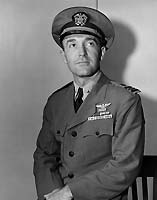
Lieutenant Commander William E. Hall, USNR, (1913-1996)


William Edward Hall was born on 31 October 1913 in Storrs, Utah. Graduating from University of Redlands, in California, he enlisted in the U.S. Navy Reserve from his native state in May 1938. After flight training at Naval Reserve Aviation Base, Long Beach, California and at Naval Air Station, Pensacola, Florida, in September 1939 he was designated a Naval Aviator and commissioned in the rank of Ensign. He then reported to Scouting Squadron Five (VS-5) on board USS Yorktown, his assignment until February 1942.

 In early February 1942, soon after the United States entered World War II, he took part in raids on Japanese bases in the Marshall and Gilbert Islands. Later in that month he transferred to USSEnterprise and, in April, was sent to Scouting Squadron Two (VS-2), operating from USS Lexington.

On 7 and 8 May 1942, Lieutenant Junior Grade Hall and his squadron participated in the Battle of the Coral Sea. His dive bombing skill contributed to the destruction of the Japanese aircraft carrier Shoho on the Seventh. The following day, as U.S. and Japanese carriers exchanged attacks, he aggressively engaged superior numbers of enemy planes, resulting in the shooting down of three. Despite serious wounds, he brought his SBD "Dauntless" scout-bomber safely back aboard his ship. For his "extreme courage and conspicuous heroism" on these occasions, Hall was awarded the Medal of Honor.

During most of the rest of 1942, Hall recovered from his injuries at the Naval Hospital, San Diego, California, receiving promotion to Lieutenant during this time. Early in 1943 he began duty as an instructor at the Naval Air Station, Daytona Beach, Florida. Achieving the rank of Lieutenant Commander in March 1944, he served for a few months at Naval Air Station, Miami, Florida, then transferred for staff duty at Naval Air Station, Seattle, Washington.

Hall also briefly served with the Night Attack Combat Training Unit, Pacific, during the War's final months. For his last duty station, he was ordered for staff duty with Commander Fleet Air, Western Pacific in September 1946, from which he was released from active duty a month later. William E. Hall remained in the Naval Reserve for nearly another decade and a half, retiring in November 1960. He died on 15 November 1996 and is buried at Fort Leavenworth National Cemetery, Fort Leavenworth, Kansas.
http://en.wikipedia.org/wiki/William_E._Hall


Note from  Lee:
Kathy:  I  wonder if Wasatch has some local info on William  Hall>?   Something from the 31 - 32 yearbooks.  Did he score the winning touchdown against North Sanpete>?  He was, I think. an outstanding athlete.  I don’t remember watching him compete  tho I do remember watching his classmate, Fremont Draper, compete in the high jump 1932.  But then I knew Fremont.   I wonder if he donated his MOH to Wasatch>? 

Tuesday, May 3, 2011

Our Most Popular Recipe ~ Honey Candy

HONEY CANDY RECIPE 
2 cups of honey 
1 cup of sugar
 1 cup of cream
 Cook to hard ball. Pour on a buttered platter. Cool. Cut into 1 inch pieces. 
 Note: Do not make candy in stormy weather, as it may not set up like it should. 
 Alice Peel Hafen

Royal Allred Funeral Program ~ He died December 16, 2002


Sunday, May 1, 2011

Christian Brotherson & His Family ~ Pioneers of the Month ~ May 2011 ~ Compiled by David R. Gunderson

The Life Sketch of Christian Brotherson and His Family

The life sketch of Christen Brothersen (Brodersen) is presented in two parts. The first part focuses on the family’s early life in Denmark and their emigration to America. The second part focuses on their life in their new homeland. 

Part 1: Focuses on Life in Denmark and the Family’s Emigration


Christian Brothersen was born, 14 June 1811 at Idrstrup, Maribo, Denmark. a son of Bohne Brothersen and Anne Margrette Rasmussen. At the age of thirty-five years, he married, Anne Mortensen on 13 February 1846. Anne was born 3 February 1824, a daughter of Martin Jensen Menboe and Dorthea Knudsen. Three children were born to Christian and Anne in Denmark: Dorthea was born 19 Dec. 1847; Hans on 15 Feb 1849; Bohne on 4 April 1851.

A sorrowful event occurred in this family when Bone was an infant of only a few weeks of age. The mother, Anne Mortensen Brothersen. passed away on 26 May 1851. Mainly out of symphony for her sister’s children; Elsie Mortensen went into the Brothersen home, married Christian and cared for the children. It seems that Christian was a wealthy man. When missionaries of the Church of Jesus Christ of Latter-Day Saints visited his home and brought the message of the restored gospel, the father embraced it with all his heart, as did Elsie. Quick preparations were made and this family planned on going to Zion. Two children were born to Christian and Elsie; Martin, who was born 30 May 1853, at (Faister?) and Ane who born on 8 Jan. 1856.


Map showing the location of
Idestrup, Denmark, the home of
Christian Brotherson


The following year, 1857, this family joined a company of emigrants and sailed to America. Hans was Seven and Martin was only three years of age at the time. (Reference -pp 401- 403 Vol. 6. "Heart Throbs of the West" a History of the Daughters of Utah Pioneers.) The company journeyed westward immediately. At Iowa City, Iowa, they became a part of an Overland Emigration Company and were outfitted there and were bound for Utah, beyond the plains.


There were 330 people, 3 wagons, and 68 handcarts with which to make the journey. The journey was hazardous and eventful. The leader also walked and tried to keep up the spirits of his people. On13 September 1857, the company arrived in Utah, with a division of the United States Army hot on its heels. They with many others, moved southward from the Salt Lake Valley into Sanpete.


Brothersens on the Passenger List of the Westmoreland (1857)
(Family Members are Indicated by Arrows)


Christian Brothersen settled his family at Fort Ephraim where the settlers from Springtown, or the Allred Settlement, had fled for protection from the Indians. They remained there until early in 1859, when
Christian went to Mount Pleasant to assist in the building of the fort. This was completed in July of 1859. Like many others, the family lived in dugouts, until log or adobe houses could be built.


After moving to Mt. Pleasant, the Brotherson family went through a period when they had only a small bit of wheat for food which they kept in one corner of the room. Each day, Christian would prey that they could make the food last until they could get more. The Lord did bless them and the food did last so that the family did have something to eat.


Martin moved to Indianola to plant and cultivate crops. They also had cattle and sheep. Those were the days that tried their soul, Hans, Martin, and Christian Brotherson and other members of the family stood guard against Indians led by Chief Black Hawk from April 1865 until a treaty of peace was signed in Mt. Pleasant at Bishop Seeley’s home in 1872.


A close up map of the location of Idestrup, Denmark
  

Part 2: Focuses on their Life in Utah
BIOGRAPHY OF CHRISTIAN BROTHERSEN (BRODERSEN)
by Ila Brotherson Tidwell
My great grandfather, Christian Brotherson, was one of the noble pioneers who entered the Salt Lake Valley in 1857. He it was, who gave to our family our pioneer heritage, a gift for which should be forever grateful and thankful. It is a great challenge to us as his posterity to achieve through our own efforts. We must improve and build upon the faith, standards and ideals he so valiantly preserved for us. It was he who looked beyond his own time; he had the foresight and vision. He saw the necessity of freedom. He accepted the restored gospel of Jesus Christ when missionaries came to his door. It was his soul who first accepted the principles and truths that has been a guiding star for us to follow. It was he who had the faith and courage to want to establish a new home and new way of life for his family and posterity.


Christian Brotherson was not only a pioneer, he also helped to conquer this western land and make it a frontier civilization. In doing this, he gave us a land of freedom in which to live. He gave us the opportunity to live under the protection of the Stars and Stripes of America. It is a glorious privilege and blessing to live in a land, where by our own choice, selection and work, determine our progress and status in life. He also represented the vision, faith, culture and strength of our ancestors in the Old Country of Idestrup, Maribo, Denmark.
He was born 14 June 1811. One record says Idestrup the other says Veggerlose, Maribo, Denmark. His father's name was Bohne Broderson Magnesson. He came from Germany as a German Soldier to Denmark. He married Ann Margrethe Rasmussen. They had a family of ten children. The first four were boys and the last six were girls. Christian was the second son. This is all we know of his childhood.
Grandfather married Ann Mortensen in Denmark on 13 February 1846, he, being thirty-five years old and Ann only twenty-two. There were three children born to this couple. Dorthes Brotherson, born 18 December 1846; Hans Brotherson, born 15 February 1849; Bohne Brotherson, born 3 April 1851. From what we can get from memories handed down---the young mother had complications from the last childbirth. When the little son, Bohne, was only six weeks old, his mother, Ann, died. This was 26 May 1851. She left three small children under four years of age to the care of her husband, Christian. The family was very fortunate in having Ann's younger sister, Elsie. She came into their home and cared for this new baby, a little girl four, and a small boy of two. This was a handful for Elsie, but she loved and wanted to care for her sister's children.


This presents a sad beginning in the life of Christian Brotherson. He did not loose the desire to care for his babies even though his heart was broken at the loss of his sweetheart in the beautiful years of their youth. Those who know grandfather, lived with him, those who lived near him and those who remember him now, tell us he was a devoted and kind father from the very beginning. He was now forty years old and had always had responsibilities on his shoulders. It hadn't been too easy living in a family of twelve children. Each one must take his share of the load. Great grandfather, being old when he was married, had accumulated much. He was prepared to stand on his own two feet. We have a tithing receipt given him in Denmark in 1857 for 349.00. That was a big tithing to be paid in the Old Country at one time. This tithing receipt is really very valuable. There aren't many in keeping. It was issued before they counted money in Krones. Money was then rigs dollars. I took this tithing receipt to Johanna Madsen, who is from Denmark.
She said we should have it put in a museum so people could see it. It was among the first tithing receipts given in Denmark.


Maybe it was the feeling of loyalty and responsibility for the children of her sister; we hope it was love for both the children and their father that prompted Elsie to become a mother to Christian’s three small children. They were married on March 19, 1852 in Denmark.
These children were very fortunate in having a second mother come into their home to help care for them. But as the story unfolds, Great Grandfather Christian had more dark clouds on the horizon as well as sunshine.
During the time, or shortly after he married Elsie, while they were still on their honeymoon, missionaries from America, representing the Church of Jesus Christ of Later-Day Saints, (Mormons as they were called) knocked at their door. Christian said in his own words, "I know from the first, their message was true." Erastus Snow brought the gospel to these Scandinavian people. Maybe it was he who knocked at Great Grandfather's door. However, he and his wife, Elsie, soon become loyal converts to the Mormon faith. There were two children born to this union.
Their first, a baby boy, was born 14 May 1853. They named him Martin after his Maternal Grandfather. On January 8, 1856, a little girl came to bless their home. They named her Ann. (Her home was where the Pioneer Relic Hall now stands in Mt. Pleasant, Utah).


After the Restored Gospel had come into their lives, their ideals and ambitions were to come to America. When their little boy, Martin, was only five; their baby girl only eighteen months old, they decided to come to America.
This was a big sacrifice in those days, as well as a blessing. They had to part with friends and relatives, home and it's comforts, worldly possessions, all for the Gospel of Jesus Christ and the desire to worship God in a new world. Their ideals as parents were high education, culture, patriotism, and freedom was the pattern of their lives, the desire for their children.
They were patriotic and loyal to the Church they loved so much. Great Grandfather was a well to do man in Denmark. He had servants who helped care for household and did much of his work. When he was almost ready to come to America, he hired a man by the name of Hyrum Arnoldsen to help him and his family to America. He paid his way to this new land.


They sailed on the Westmoreland, from Liverpool, 25 April 1857. The leader of their company was Matrthias Cowley. There were some 544 souls who come to America on this ship.
They landed in Philadelphia. It was only two months since they had left their home in the Old Country. On 15 June 1857 they were prepared to begin their trek across the plains to the Great Salt Lake Valley.


They joined the 7th Handcart Company under the leadership of Christian Christiansen. (Interesting to me was this notation. He was the first Elder ordained in Scandinavia. This was done by Erastis Snow in 1851.)
There was much to be done in preparation for the journey to Zion. The conditions they had left in their homeland were heart rendering---friendly relationships and family ties were often broken. Fathers, Mothers, sisters and brothers became almost strangers. Many showed enmity towards their loved ones, who had embraced Mormonism. With sad and broken hearts, but with the testimony burning in their soul, they faced another new experience different than crossing the water. Now they must pull a handcart across the plains. These activities were carried out with joy and anticipation.


There were 330 souls in this company, three wagons, and 68 handcarts. Rightly, it was named the "Christian Christiansen Handcart Company". In one these handcarts were all their possessions. Christian had a family of five children, his wife, himself and a hired man. He had a baby of two who had to ride or be carried and a little boy almost five. I have heard him (Martin) tell many times how he walked all the way, or most of the way, barefoot. His feet were so callused that he could step on prickly pares and not even flinch. He told how happy he was when his mother would pull the handcart and his daddy would carry him a little way. He also told of how his father would hold him at night until he went to sleep. He also told how he liked to see the campfire at night, hear them sing, climb on his daddy's lap and go to sleep.


They built fires only once in a while because the Indians were beginning to attack the Saints. In fact the first attack they had by Indians was in 1857.


The weary travelers moved slowly every day, stopping only long enough to eat and sleep. Behind them was the Johnson Army. They preferred to keep out of their way. But one afternoon some supply wagons that were ahead of the army caught up with the handcart company. They moved slowly pulling the handcarts and so many walking. The army had a lame oxen. They told the pioneers they could have half if they would dress it by the next evening. During the night a heavy rainstorm made the roads so muddy the army wagons mired deep in the mud and moved very slowly. The Saints pulled their light carts out of the ruts and moved on, soon leaving the army wagons far behind. The Saints had all the oxen. That night they camped near a large stream of water. The Indians helped the women and children across the stream. The Saints didn't ever see Johnson's Army again.
They had many hardships but I feel my Great Grandfather was really blessed. He and all his family reached their destination.


Here is one experience Grandpa told that happened while coming across the plains. A little girl that was the same age as baby Ann died. They had nothing to bury her in, so they wrapped her little body in a blanket, put her head in a brass kettle to keep the dirt from her face and placed her in a lonely grave. These were the heart-rending experiences that tested their faith. Sometimes they felt they couldn't carry on.


One of the abilities that God gave us when he created us was the ability to see ahead, the vision to do today what will be best for us tomorrow. Great Grandfather's faith was really tested.


Besides the hardships they endured crossing the plains, he could see every day he was loosing his wife's love. For reasons we do not know, she became the object of another man's desire to covet a lovely woman. Great Grandfather was very kind and understanding with her. He loved her very much. He needed her to help rear their children. His oldest girl was only nine years old. He had a baby only two and three other children. They all needed a mother's love and tender care. Christian told her this, "If you are dissatisfied, I will not prevent your leaving." He must have been a good man with an understanding heart. The man who took his wife was none other than the man whom Great Grandfather had hired to help him while crossing the plains. He had paid his way and in return Mr. Arnoldsen took his wife. We can't find if Great Grandfather took his wife with him into the settlement at Ephraim or if when they reached the Great Salt Lake Valley she went with this other man.


They reached the valley on Sunday, 13 September 1857. They lacked two days of being three months crossing the plains. When they had finished their journey over, in fear of Johnson's Army, most of the company was sent by the church leaders to Ephraim. The tired souls struggled on to Fort Ephraim. There Christian housed his family in a cellar or dug-out until the spring of 1859.


I have read from history that trail of the Saints, who went to Ephraim, could be followed by blood on the snow. The first winter they almost starved. Grandfather Martin tells of the winter of 1858 when they only had a little mound of wheat, in a corner to last until the next harvest. His father would raise his hands, close his eyes and pray to the Father in Heaven to bless this little bit of food that it would last them. Martin, only a boy, testified that it seemed to not diminish very fast and it lasted so that these faithful pioneers could subsist until the weeds began to grow in the spring and they could dig roots to eat.


My heart aches for Great Grandfather Christian with the sadness that he must carry in his heart alone. He had five children under ten years of age whom he must love, instruct, feed and care for. He must be a mother and father to them. What his faith and courage must have been. We owe him so much.
In the spring of 1859 he came among the first settlers to what they called Hamilton Settlement. He helped to build the stone fort. His name appears on the Pioneer Monument erected in honor of the first settlers. He took up land and built his first home in America. It was on the corner just south of where Alton Brotherson now lives. He lived in a cellar or dug-out until he and his boys finished their first home in Hamilton Settlement which later became Mt. Pleasant.

They lived here until the children all married. Then Christian moved to the north part of town. This was in his declining years. They say even then Great Grandfather's home was the play ground for all the neighborhood children. He always had lump sugar, raisins, or candy to give to them. Sometimes when he didn't have these, he would give them an egg and let them take it to the store and get what they would like. Many people of Mt. Pleasant have told me Christian always wore a long beard, and it was white as long as they could remember. If the children loved to play around his door, I think the story of his life and what he was has been pictured.
After his wife, Elsie, had gone with the hired man, they settled in Ft. Green. Later, they moved to Moroni where they made their home. Great Grandmother Elsie regretted what she had done before very long. She wanted her children but her new husband did not. She would come and get the children and have them one or two days. She still loved them and realized she had made a mistake. When they were with her, her new husband was mean to them.


One time, when Martin, my grandfather, was only seven, he was going from Mt. Pleasant with Arnoldsen to see his mother. They got to what we all know as Fiddler's Green. Later it was known as Riverside Park. (It was a dance hall, race track, and swimming pool). A nice place at one time but it was rather wild and was disbanded. They said they called it "A place between Heaven and Hell".


Arnoldsen stopped the wagon and told Martin to get out. He said he was going to stop and water and rest the horses. So the little fellow climbed down from the wagon. The man hurriedly whipped the horses to a run and drove away. The child was astounded when he realized he was left alone and it was getting dark. He was all alone, the Indians were real ferocious. He might get lost or even perish in the darkness of the night. He sadly thought, "What shall I do, go home to Dad or go on to see Mother?" He quickly made up his mind and began to run after the wagon. He thought, "If I can just stay far enough behind so he doesn't see me but I can see the dust of the wagon, I wont' be afraid."


After separating from his step-father, he fairly flew. He began to tire after he had followed a trail out through the fields and over the hill for a long way. It was a shorter way. He said, "I prayed in my heart as I ran faster and faster that the Lord would help me get to my mother first. I did get to Mother before he did and told her what he had done." Grandfather tells of how his mother took him in her arms and cried like her heart would break. "You must go back and live always with your father. He is a good man and will always be good to you." When Arnoldsen arrived, he was surprised to see the boy and also angry. He made Martin go to bed without any super. Great Grandmother sent him home the next day with a friend as I remember. I do remember what his father said to him when he returned, "My little Mart, I felt I should never have let you go after you had gone."


On another occasion when Martin was helping Arnoldsen haul hay, he was pitching the hay on the wagon and I felt impressed to move. He looked up just in time to dodge a pitch fork. The man had aimed it at his head.
Martin tells this story about his boyhood also. "I went for a walk up in the hills. I was sitting on a big rock, I felt the presence of someone, I knew not whom. I knew I was being watched, likely by Indians. What should I do? Suddenly, I began singing loudly, so I could be heard by anyone nearby. The fear left me; I was not molested or harmed, for which I was thankful."


Great Grandfather Christian probably loved or had a great deal of respect for Elsie. He always knew how she was and when she needed help. Grandfather said, "My father often took her flour, meat, fruit and other foods and clothing for her and her children." She had a real hard life and many times didn't know which way to turn. Her husband lived in polygamy. He had four wives. It was hard for him to care for all in those days.
Great Grandmother was a beautiful woman. She had light brown hair with beautiful dark blue eyes. She was slender and average height; had a pleasing disposition but was quiet. Sometime in her life she hurt her shoulder. Some say it was from her helping pull the handcart across the plains. We don't know. But we do know her one shoulder drooped and hurt all her life.


She was sealed to Arnoldsen in the old endowment house in Salt Lake City on 16 August 1862. She told Christian many times she wished she could break that sealing.
She didn't want Arnoldsen. Christian[1] evidently wanted his first wife because he went and had her sealed to him 19 September 1889. His children were married at this time and so they made the choice of who they would be sealed to. My Grandfather, Martin Brotherson said, "I want my father." He was sealed to his father and his mother's sister, Ann, Christian's first wife. Christian died on 9 August 1893. He was buried in Mt. Pleasant City Cemetery. Christian was 82 years old when he died. Elsie was 67 years old when she died. He lived a year and four months after she passed away.


A picture of the Hans Brotherson family circa 1901
Soon after the Death of Hans Brotherson
Background:  Hans Brotherson .(In Picture Frame)
                 
Back Row (Left to right)t: Parley [Parley Pratt], Tina [Clementine], Francis [Francis], Boone [Bohney], Lora [Lorenza Christine], Hans [Hans}, Chris [Christian],

Middle Row (Left to right)Orsen [Orson Hyde], Rakkie, [Fredrickka], Rhea [Maria], Maggie [Annie Margaret], Grandma Frederikka [Frederickka Andrea], Nels [Nels Douglas]

Front Row: Floyd [Ferdnand Floyd] on the left, Vernon [Vernon Hamlet] and Heneretta [Heneritta] on the right.


A Portrait Picture of Hans Brotherson 


[1] Christian Brothersen (Brodersen) was endowed in the Salt Lake Endowment House on 8 July 1865.